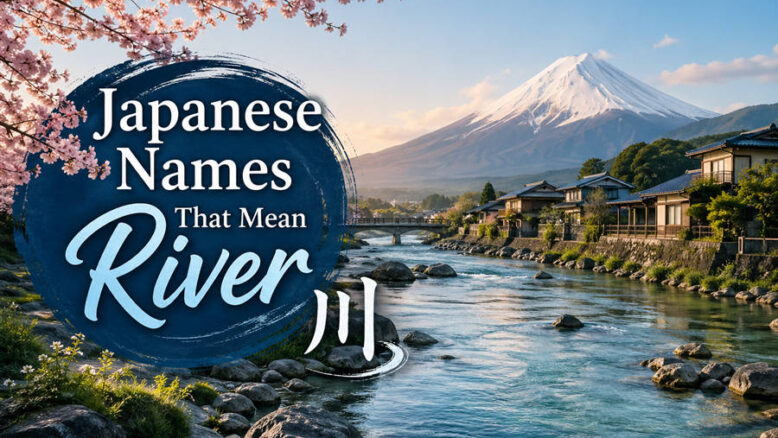
River names in Japanese can feel calm, graceful, and close to nature. Some names directly include kanji that mean “river,” while others suggest streams, currents, clear water, riverbanks, or places shaped by flowing water.
The most important thing to remember is that Japanese name meanings depend on kanji. The same sound can be written in different ways, and each spelling can change the meaning. In this guide, you’ll find names that directly include river kanji, surname-style river names, and softer water-inspired choices for babies, characters, pets, and creative projects.
What “River” Means in Japanese Names
The clearest kanji for “river” is 川. It is commonly read as kawa, though it often becomes gawa inside compound names. This kanji appears often in Japanese surnames, place names, and words connected to rivers and streams.
Another kanji for river is 河. It also means “river,” and it can feel a little broader, more formal, or more literary depending on the word or name. Both 川 and 河 can create a direct river meaning, but 川 is especially common in family names.
River-inspired names may also use related kanji. For example, 瀬 can suggest rapids, shallows, or a current. 沢 can refer to a stream, marsh, or wetland. 流 means flow, while 水 means water. These kanji do not always mean “river” by themselves, but they can give a name a flowing, water-like feeling.
Japanese Names That Directly Include River Kanji
Names with 川 or 河 are the most direct choices if you want a river meaning. Many of these names sound more like surnames, place names, or creative names than common modern given names, so they work especially well for fictional characters, pets, pen names, and symbolic naming.
Kawa — 川
Meaning: river, stream
Kawa is the simplest Japanese word for river. As a name, it feels very direct and minimal. Because it is also an ordinary word, it may work better for a pet, character, username, or nature-inspired project than as a real baby name.
Kō / Ka — 河
Meaning: river
河 means river. As a single-kanji name, it is short and bold, but it may feel unusual on its own. It often works better when paired with another kanji or used in a poetic or fictional context.
Kawase — 川瀬
Meaning: river + current, shallows, or rapids
Kawase has one of the strongest river images on this list. It combines 川, meaning river, with 瀬, which can suggest shallow water, rapids, or a current. It is more natural as a surname, but it is a beautiful choice for a character with a calm, flowing, or water-connected personality.
Kawana — 川奈 / 川名
Meaning: river + name kanji
Kawana can be written with 川 for a river meaning. In spellings such as 川奈 or 川名, the second kanji helps shape the sound and name-like feeling. This name can feel gentle and elegant, though it may still sound surname-like depending on the context.
Kawato — 川戸
Meaning: river + door, entrance, or household
Kawato has a place-like feeling, as if it belongs to a family or settlement near a river. It is a good option for stories, games, or character naming, especially if you want a name that feels connected to a riverside home or village.
Japanese Surnames That Mean River
River kanji are especially common in Japanese surnames. These names often describe landscapes: an upstream area, a river mouth, a village by a river, an island in a river, or land along the riverbank.
Most of the names in this section are best understood as family names rather than given names. They are useful for characters, worldbuilding, family-name inspiration, or anyone who wants to understand river meanings in Japanese surnames.
Kawakami — 川上
Meaning: upper river, upstream
Kawakami combines 川, meaning river, with 上, meaning upper or above. The name suggests the upper part of a river or a place located upstream. It has a calm, grounded, and natural feeling.
Kawaguchi — 川口
Meaning: river mouth
Kawaguchi combines 川 with 口, meaning mouth or opening. Together, the kanji can suggest the mouth of a river or the place where a river opens out. It is a strong surname for a character connected to a waterside town or coastal area.
Kawashima — 川島
Meaning: river island
Kawashima combines 川 with 島, meaning island. The image is peaceful and scenic: land surrounded, shaped, or touched by river water.
Kawamura — 川村
Meaning: river village
Kawamura combines 川 with 村, meaning village. It suggests a community near a river and has a warm, rural feeling.
Kawahara — 川原 / 河原
Meaning: riverbank, riverside plain, or dry riverbed
Kawahara is a beautiful river surname because it points to the land beside a river. It can be written with either 川 or 河, depending on the family or context. The name feels open, natural, and strongly tied to the riverside landscape.
Kawasaki — 川崎
Meaning: river + cape or promontory
Kawasaki combines 川 with 崎, which can mean cape or point of land. Many people know Kawasaki as a place name or brand name, but the kanji themselves carry natural imagery of river and land.
Kawada — 川田
Meaning: river rice field
Kawada combines 川 with 田, meaning rice field. It suggests farmland near a river, making it a simple, earthy, and landscape-based surname.
Ogawa — 小川
Meaning: small river, stream
Ogawa is one of the clearest Japanese surnames connected to rivers. 小 means small, and 川 means river, so the meaning is “small river” or “stream.” It has a soft sound and peaceful feeling.
Ichikawa — 市川
Meaning: market or city + river
Ichikawa combines 市, meaning market or city, with 川, meaning river. It has a place-name feeling and may suggest a town or market area near a river.
Hasegawa — 長谷川
Meaning: long valley river
Hasegawa combines 長, meaning long, 谷, meaning valley, and 川, meaning river. The image is of a river running through a long valley. It is a well-known surname with strong nature imagery.
Japanese Boy Names Inspired by Rivers
Direct river kanji are more common in surnames than in given names. Because of that, many boy names in this section are best described as river-inspired rather than names that literally mean “river.” They may suggest flow, clarity, streams, movement, or water.
Seiryū — 清流
Meaning: clear stream
Seiryū combines 清, meaning clear or pure, with 流, meaning flow. Together, 清流 means a clear stream. It is a beautiful and poetic choice, though it can feel more like a word or title than a common everyday given name. It works especially well for fictional characters.
Ryūsei — 流星
Meaning: meteor, shooting star
Ryūsei does not mean river, but it includes 流, the kanji for flow. The full word 流星 means meteor or shooting star. It can suit readers who want a name with movement, brightness, and flowing energy rather than a direct river meaning.
Harukawa — 晴川
Meaning: clear weather or sunny + river
Harukawa combines 晴, meaning clear weather or sunny, with 川, meaning river. The image is bright and peaceful, like a river under a clear sky. It feels more surname-like than a standard given name, so it is especially useful for fiction.
Kawatarō — 川太郎
Meaning: river + Tarō
Kawatarō combines 川 with 太郎, a traditional masculine name element. The result has an old-fashioned, folktale-like feeling. It is better for a story character than for a modern baby name.
Minato — 港
Meaning: harbor
Minato means harbor, so it is water-related rather than river-specific. It can still fit a river-inspired list because harbors, river mouths, and waterways all suggest movement, travel, and connection. Compared with many direct river-word names, Minato feels more natural as a modern given name.
Japanese Girl Names Inspired by Rivers
Girl names inspired by rivers often focus on softness, clarity, water’s edge imagery, and gentle movement. Some are established names with different possible kanji spellings. Others are more creative and should be used with care.
Mina — 水奈 / 美奈
Meaning: meaning depends on kanji
Mina can be written in several ways. When written with 水, the first kanji means water, giving the name a water-inspired meaning. Other spellings, such as 美奈, may point more toward beauty and name sounds rather than water. Mina is not a direct river name, but it can carry a soft water feeling with the right kanji.
Kiyomi — 清美
Meaning: clear or pure + beauty
Kiyomi does not mean river, but it has a clean, fresh feeling that pairs well with clear water imagery. 清 suggests purity or clarity, while 美 means beauty. It is a lovely option for readers who want the feeling of a clear stream without using direct river kanji.
Nagisa — 渚
Meaning: shore, water’s edge
Nagisa means shore or water’s edge. It is often associated with the sea or beach, but it can also fit a wider waterside theme. For a river-focused name list, it is best described as water-edge imagery rather than a name that literally means river.
Sanae — 早苗
Meaning: young rice seedlings
Sanae is not a river name, but it carries a fresh nature feeling. Rice seedlings grow in watery fields, so the name can suggest growth, green landscapes, and water-shaped countryside. It is a gentle nature-inspired choice, not a direct river meaning.
Serika — 瀬里香
Meaning: current or shallows + village/inside + fragrance
Serika can be written creatively with 瀬, which suggests rapids, shallows, or a current. This gives the name a river-like image. Because this spelling is more creative, it is best for a fictional character, pen name, or symbolic name unless the exact kanji are checked carefully.
Kawana — 川菜 / 川奈
Meaning: river + greens or name kanji
Kawana can feel gentle when written with 川菜 or 川奈. 川 gives the direct river meaning, while the second kanji softens the name. It may still sound surname-like, but it can work well as a creative feminine name for fiction or naming inspiration.
Gender-Neutral Japanese River Names
Many river-inspired Japanese names can feel gender-neutral, especially when used for characters, pets, usernames, or creative projects. The kanji choice matters more than the sound alone.
Kawa — 川
Meaning: river
Kawa is simple and direct. It works best when the goal is clear symbolism rather than a natural everyday given name.
Sawa — 沢
Meaning: stream, marsh, or wetland
Sawa has a soft sound and a nature-rich meaning. It can suggest a stream, wetland, or water-filled landscape, making it a lovely choice for a gentle water-inspired name.
Seiran — 清瀾
Meaning: clear ripples or clear waves
Seiran is poetic and elegant. 清 means clear or pure, while 瀾 can suggest waves or billows. It is not a simple everyday river name, but it works beautifully for fiction, poetry, fantasy names, or artistic projects.
Ruka — 流花
Meaning: flowing + flower
Ruka can be written in many ways. With 流花, it suggests a flowing flower or flowers carried by water. This is a creative interpretation rather than a standard “river” meaning, but it has graceful movement and strong visual appeal.
Minato — 港
Meaning: harbor
Minato is not river-specific, but it is a strong water-related name. It can suggest gathering, travel, connection, and a place where water leads somewhere new.
River Names Best for Babies, Characters, Pets, and Creative Projects
Not every beautiful Japanese river name works the same way. Some names are established surnames. Some are poetic but unusual. Others sound natural as given names but only have a loose connection to water.
Best for Baby Name Inspiration
For baby name inspiration, it is usually safer to choose names that already feel natural as given names or have flexible kanji options. Names such as Minato, Mina, Kiyomi, and Ryūsei may feel more name-like than direct river words such as Kawa or Kawase.
Parents should always check the exact kanji, reading, and cultural impression before choosing a Japanese name for a child. A name can look beautiful on paper but feel unusual, surname-like, or overly literal in real life.
Best for Fictional Characters
For fictional characters, river names can be more expressive. Kawase, Seiryū, Harukawa, Kawatarō, and Seiran can create strong visual imagery. They may suggest calmness, movement, mystery, purity, or a life shaped by nature.
Best for Pets or Usernames
Short river-inspired names often work well for pets and usernames. Kawa, Sawa, Mina, Ruka, and Nagisa are easy to say and remember. They also carry a soft nature feeling without being too complicated.
How to Choose a Japanese Name That Means River
Choosing a Japanese river name becomes much easier when you separate direct meaning from symbolic feeling. A name with 川 or 河 is much closer to “river” in a literal sense. A name with 水, 流, 瀬, 沢, 清, or 渚 may feel river-like, but the meaning is usually broader.
Check the Kanji First
Japanese names are not defined by sound alone. The name Mina, for example, can have several different kanji spellings and meanings. If you want a water or river meaning, the kanji must support that meaning.
Decide Between Direct and Symbolic Meaning
If you want a direct river name, look for 川 or 河. If you want something softer, choose kanji connected to clear water, streams, flow, shores, or ripples. Symbolic names often sound more natural than literal word names.
Think About Natural Usage
Many river names are more common as surnames than given names. Kawakami, Kawaguchi, Kawamura, and Ogawa are beautiful, but they are usually family names. This makes them excellent for characters, but less direct as baby given names.
Avoid Over-Translating
A name can suggest river imagery without literally meaning “river.” For example, Nagisa means shore, Kiyomi means clear beauty, and Minato means harbor. These names are water-related, but they should not be presented as exact translations of river.
Quick List of Japanese River Names
Here are some of the best Japanese names and surname-style choices connected to rivers, streams, and flowing water:
- Kawa — 川 — river, stream
- Ka / Kō — 河 — river
- Kawase — 川瀬 — river current, shallows, or rapids
- Kawakami — 川上 — upper river, upstream
- Kawaguchi — 川口 — river mouth
- Kawashima — 川島 — river island
- Kawamura — 川村 — river village
- Kawahara — 川原 / 河原 — riverbank or dry riverbed
- Ogawa — 小川 — small river, stream
- Hasegawa — 長谷川 — long valley river
- Sawa — 沢 — stream, marsh, or wetland
- Seiryū — 清流 — clear stream
- Nagisa — 渚 — shore, water’s edge
- Kiyomi — 清美 — clear beauty
- Minato — 港 — harbor
Final Thoughts
Japanese names that mean river can be peaceful, poetic, and full of natural beauty. The clearest river meanings usually come from kanji such as 川 and 河. Softer river-inspired names may use kanji for water, flow, clear streams, shores, wetlands, or currents.
For real-life naming, it is important to know whether a name feels natural as a given name or is mainly used as a surname. For characters, pets, stories, and creative projects, river names offer many moods, from quiet and graceful to strong, flowing, and adventurous.
The best choice depends on the feeling you want: a direct river meaning, a gentle stream image, a waterside surname, or a poetic name that carries the calm movement of flowing water.