
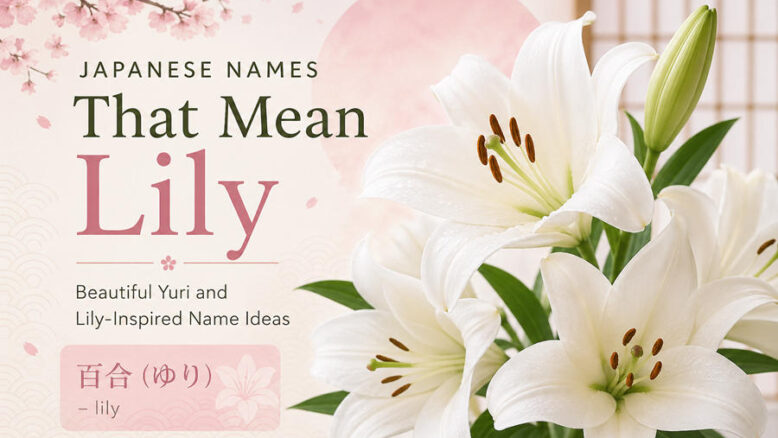
Lilies have a soft, graceful beauty, which makes them a lovely source of name inspiration. In Japanese, the clearest word for lily is 百合, read as yuri and written in hiragana as ゆり. This word can appear on its own as a name or become part of longer names such as Yuriko, Yurika, and Sayuri.
Japanese names can change meaning depending on the kanji, so the writing matters as much as the sound. A name pronounced Yuri does not always mean lily unless it uses 百合. Below, the direct lily names are separated from broader lily-inspired names so each meaning stays clear.
What Does Lily Mean in Japanese Names?
The Japanese word for lily is 百合, pronounced yuri. When this kanji appears in a name, the lily meaning is direct. The same word may also be written in hiragana as ゆり, especially in simpler or softer name styles.
In a name, Yuri can feel gentle, floral, refined, and feminine. It is one of the most straightforward Japanese names connected to lilies. However, Yuri can also be written with other kanji, such as 由理, 友里, or 悠理. These may still be read Yuri, but they do not mean lily.
That is why it is helpful to look at both the romanized name and the Japanese writing. If the goal is a name that truly means lily, look for 百合. If the goal is a softer lily-like feeling, names connected to flowers, fragrance, purity, beauty, or white blossoms can also work beautifully.
Direct Japanese Names That Mean Lily
The names in this section include 百合, so the lily meaning is clear. Some are familiar Japanese names, while others are more creative combinations that may be better suited for character names, pen names, or inspiration lists.
Yuri — 百合 / ゆり — Lily
Yuri is the most direct Japanese name meaning lily. Written as 百合, it refers to the lily flower itself.
The name is short, graceful, and easy to understand. For accuracy, it is best to write it as Yuri (百合) when explaining the lily meaning, since other kanji forms of Yuri may mean something completely different.
Yurika — 百合花 / ゆりか — Lily Flower
Yurika can be written as 百合花. The kanji 百合 means lily, and 花 means flower, so this writing gives the meaning “lily flower.”
Yurika feels bright, delicate, and feminine. Another possible lily-related writing is 百合香, where 香 means fragrance. In that form, the name suggests “lily fragrance.”
Yuriko — 百合子 / ゆりこ — Lily Child
Yuriko can be written as 百合子, meaning “lily child.” The kanji 子, read as ko, means child and is a classic ending in many Japanese girls’ names.
Yuriko has a traditional, elegant feeling. It keeps the lily meaning clear while adding a familiar Japanese name structure.
Sayuri — 小百合 / さゆり — Small Lily
Sayuri is a beautiful lily-related name often written as 小百合. The kanji 小 means small, and 百合 means lily, giving the name the meaning “small lily.”
Sayuri feels gentle, poetic, and feminine. It is one of the prettiest Japanese names connected to lilies and may appeal to readers who want something softer than Yuri.
Yurina — 百合奈 / 百合菜 / ゆりな — Lily with a Gentle Ending
Yurina can be written with 百合 at the beginning, such as 百合奈 or 百合菜. In these forms, the name begins with the direct meaning “lily.”
The final kanji adds sound and style. 奈 is often used as a graceful name-ending kanji, while 菜 can suggest greens, freshness, or a natural feeling. Yurina sounds soft, modern, and gentle.
Yurine — 百合音 / ゆりね — Lily Sound
Yurine can be written as 百合音. The kanji 音 means sound, so this writing can be understood as “lily sound.”
Yurine has a delicate, musical feeling. It is less common than Yuri, Yuriko, or Sayuri, so it may work best as a creative name idea or a character name.
Yuriha — 百合葉 / ゆりは — Lily Leaf
Yuriha can be written as 百合葉. The kanji 葉 means leaf, creating the image of a lily leaf.
This name feels fresh and botanical. Because it is more unusual than classic lily names, it is worth checking carefully if it is being considered for real-life naming.
Yurimi — 百合美 / ゆりみ — Lily Beauty
Yurimi can be written as 百合美. The kanji 美 means beauty, so the name can be read as “lily beauty.”
Yurimi has a graceful and feminine sound. It is more creative than Yuri or Yuriko, but the meaning is easy to understand when the kanji are shown.
Beautiful Girl Names Inspired by Lilies
Some Japanese names do not literally mean lily but still match the flower’s gentle image. These names may connect to flowers, fragrance, softness, or beauty. They are best described as lily-inspired rather than direct lily names.
Hana — 花 / はな — Flower
Hana means flower when written as 花. It does not mean lily specifically, but it is one of the clearest and simplest Japanese flower names.
Hana feels bright, natural, and easy to love. It works well for readers who want a floral name without choosing one specific flower.
Hanako — 花子 / はなこ — Flower Child
Hanako can be written as 花子, meaning “flower child.” The kanji 花 means flower, and 子 means child.
Hanako has a classic Japanese feeling. It does not mean lily, but it belongs naturally with flower-inspired names.
Kaori — 香 / 香里 / かおり — Fragrance
Kaori is often written with 香, a kanji connected to fragrance or scent. Another possible writing is 香里, which combines fragrance with 里, meaning village or hometown.
Kaori does not mean lily, but it fits the mood of lilies because the flower is often associated with scent. It is elegant, soft, and sensory without being too literal.
Miyuri — 美百合 / みゆり — Beautiful Lily
Miyuri can be written as 美百合. The kanji 美 means beauty, and 百合 means lily, so this writing can mean “beautiful lily.”
Miyuri has a decorative and graceful sound. It is less common than Yuri or Sayuri, but it keeps a clear lily meaning when written with 百合.
Riri — 莉々 / 梨々 / りり — Delicate Floral Sound
Riri can be written in several ways, including 莉々 or 梨々. The kanji 莉 often appears in names with a delicate floral feeling, while 梨 means pear.
Riri does not mean lily. It belongs here as a style match: light, sweet, and gentle in sound.
Rika — 莉花 / 梨花 / りか — Floral Name Depending on Kanji
Rika can be written as 莉花 or 梨花. The kanji 花 means flower. Depending on the writing, the name may suggest a floral image or a pear blossom image.
Rika is not a lily name, but it feels graceful and botanical. It is a simple choice for readers who like flower-related names.
Karen — 花蓮 / かれん — Flower Lotus
Karen can be written as 花蓮. The kanji 花 means flower, and 蓮 means lotus.
Karen does not mean lily, but it has an elegant flower image. It may also feel familiar to English-speaking readers, though the Japanese kanji meaning is separate from the English name.
Mika — 美花 / みか — Beautiful Flower
Mika can be written as 美花, meaning “beautiful flower.” The kanji 美 means beauty, and 花 means flower.
Mika is not specific to lilies, but it fits the same soft floral theme. It is simple, pretty, and easy to understand when the kanji are included.
Rare and Creative Lily-Inspired Japanese Names
The names below are more unusual or decorative. They may be useful for stories, character names, pen names, or personal inspiration. For real baby naming, it is best to check the kanji and reading with a reliable Japanese naming source or a native speaker.
Yurisa — 百合沙 / ゆりさ — Lily and Sand
Yurisa can be written as 百合沙. The name begins with 百合, meaning lily, while 沙 can mean sand and is sometimes used for its soft sound in names.
Yurisa feels gentle and creative. It is not as familiar as Yuri or Sayuri, so it may be better for fiction or a distinctive name list.
Yurino — 百合乃 / ゆりの — Of the Lily
Yurino can be written as 百合乃. The kanji 乃 is often used in names and gives a soft, classical feeling. A loose interpretation of the full name is “of the lily.”
Yurino sounds elegant and poetic. It keeps the lily meaning visible while adding a refined ending.
Yurinae — 百合苗 / ゆりなえ — Lily Seedling
Yurinae can be written as 百合苗. The kanji 苗 means seedling, so this writing creates the image of a young lily plant.
This is a very creative name idea rather than a common everyday name. It may work best for a character with a gentle, growing, nature-based image.
Yurihime — 百合姫 / ゆりひめ — Lily Princess
Yurihime can be written as 百合姫. The kanji 姫 means princess, giving the name the meaning “lily princess.”
This name is highly decorative and story-like. It may sound charming in fiction or fantasy settings, but it can feel too ornate for ordinary use.
Yurinao — 百合奈緒 / ゆりなお — Lily with Graceful Name Kanji
Yurinao can be written as 百合奈緒. The name starts with 百合, so the lily meaning is present. The remaining kanji create a longer and more elaborate name sound.
Yurinao is best treated as a creative option. It may be useful for a character or symbolic name, but it should be checked carefully before being used as a real given name.
Japanese Names With Lily-Like Meanings
Lilies often bring to mind purity, elegance, freshness, and pale flowers. These names do not mean lily directly, but their kanji meanings create a similar mood.
Kiyoka — 清花 / きよか — Pure Flower
Kiyoka can be written as 清花. The kanji 清 means pure or clean, and 花 means flower.
This name fits the symbolic feeling of white lilies especially well. It sounds calm, graceful, and fresh.
Sumika — 澄花 / すみか — Clear Flower
Sumika can be written as 澄花. The kanji 澄 suggests clarity, clearness, or purity, while 花 means flower.
Sumika has a quiet, transparent beauty. It does not mean lily, but it has the same clean and delicate feeling.
Shirahana — 白花 / しらはな — White Flower
Shirahana can be written as 白花. The kanji 白 means white, and 花 means flower.
This name is more descriptive and surname-like than many common given names, but the image is clear. It naturally brings to mind white flowers, including white lilies.
Miyuka — 美優花 / みゆか — Beautiful, Gentle Flower
Miyuka can be written as 美優花. The kanji can suggest beauty, gentleness, and flowers.
Miyuka does not mean lily, but it has a soft and feminine floral feeling. It may appeal to readers who want a modern-sounding name with gentle kanji.
Ayaka — 彩花 / あやか — Colorful Flower
Ayaka can be written as 彩花. The kanji 彩 suggests color or vividness, and 花 means flower.
Ayaka gives the floral theme a brighter feeling. It is not lily-specific, but it works well for readers who like flower names with a colorful image.
Haruka — 春花 / はるか — Spring Flower
Haruka can be written as 春花. The kanji 春 means spring, and 花 means flower.
Haruka feels fresh, seasonal, and gentle. It is lily-like in mood rather than direct meaning.
Reika — 麗花 / れいか — Lovely Flower
Reika can be written as 麗花. The kanji 麗 suggests beauty, loveliness, or elegance, while 花 means flower.
Reika has a refined and polished feeling. It fits the graceful image many people associate with lilies.
Yuka — 優花 / ゆか — Gentle Flower
Yuka can be written as 優花. The kanji 優 can suggest gentleness, kindness, or excellence, and 花 means flower.
Yuka is not a lily name, but it has a warm floral meaning. It is a simple and lovely lily-inspired option.
Boy Names and Gender-Neutral Names Connected to Lily
Names written with 百合 are usually feminine in Japanese, especially names like Yuri, Yuriko, Yurika, and Sayuri. For boys or more gender-neutral ideas, broader nature names may be a better fit. These names do not mean lily, but they carry a calm botanical or seasonal feeling.
Ren — 蓮 / れん — Lotus
Ren is often written as 蓮, meaning lotus. It does not mean lily, but it is a strong and elegant plant name.
Ren is commonly used as a boy’s name and has a clean, modern sound. It works well for readers who like floral or plant imagery but want something less directly feminine than lily.
Haru — 春 / 陽 / はる — Spring or Sunlight
Haru can be written with kanji such as 春, meaning spring, or 陽, suggesting sunlight.
Haru does not mean lily, but it has a fresh nature feeling. Depending on kanji and context, it can be used for boys, girls, or gender-neutral naming.
Kaede — 楓 / かえで — Maple
Kaede means maple when written as 楓. It is a nature name rather than a lily name.
Kaede has a soft sound and a strong seasonal image. It may suit readers who want a plant-based Japanese name without using a flower directly.
Aoi — 葵 / あおい — Hollyhock
Aoi can be written as 葵, a kanji associated with hollyhock. It can also have different meanings when written with other kanji.
Aoi is a well-known Japanese name with a gentle botanical feeling. It does not mean lily, but it belongs naturally with nature-inspired names.
Yuri — 由理 / 友理 / 悠理 / ゆり — Non-Lily Kanji Forms
Yuri can also be written with kanji such as 由理, 友理, or 悠理. These forms do not mean lily.
This distinction is important. Yuri written as 百合 means lily, while other Yuri spellings may suggest ideas such as reason, friendship, calmness, or personal name symbolism depending on the kanji.
Japanese Last Names Connected to Lilies and Flowers
Some Japanese surnames and surname-like combinations also carry lily or flower imagery. A few may be rare or more useful for fictional names than everyday naming, so it is best to treat them carefully.
Yurihara — 百合原 / ゆりはら — Lily Field or Lily Plain
Yurihara can be written as 百合原. The kanji 百合 means lily, and 原 can mean field or plain.
The image is open and natural: a field where lilies grow. It can work beautifully as a poetic surname or fictional family name.
Yurino — 百合野 / ゆりの — Lily Field
Yurino can be written as 百合野. The kanji 野 means field or plain, giving the name the image of a lily field.
Yurino may feel surname-like or given-name-like depending on context. With this kanji, the lily meaning is clear.
Hanada — 花田 / はなだ — Flower Field
Hanada can be written as 花田. The kanji 花 means flower, and 田 means rice field.
Hanada does not mean lily, but it has a grounded floral image. It feels natural and surname-like.
Hanamura — 花村 / はなむら — Flower Village
Hanamura can be written as 花村. The kanji 村 means village, so the name can be understood as “flower village.”
Hanamura has a warm, scenic feeling. It may be useful for writers looking for a Japanese surname with a gentle floral atmosphere.
Hanasaki — 花咲 / はなさき — Flower Bloom
Hanasaki can be written as 花咲. The kanji suggest flowers and blooming.
This name does not mean lily, but it has a bright blossom image. It fits well with flower-themed Japanese surnames and fictional names.
Shirahana — 白花 / しらはな — White Flower
Shirahana can be written as 白花. The kanji 白 means white, and 花 means flower.
For a character name, Shirahana gives a clear visual impression: pale petals, quiet beauty, and a clean floral mood. It can easily remind readers of white lilies, even though it does not name the lily flower directly.
Conclusion
The clearest Japanese name that means lily is Yuri, written as 百合 or ゆり. Names like Yurika (百合花), Yuriko (百合子), and Sayuri (小百合) add extra meaning while keeping the lily connection clear.
For a direct lily meaning, choose names that include 百合. For a softer lily-inspired feeling, names connected to flowers, fragrance, purity, beauty, or white blossoms can also be lovely. The most important detail is the Japanese writing, because in Japanese names, kanji decide the meaning.