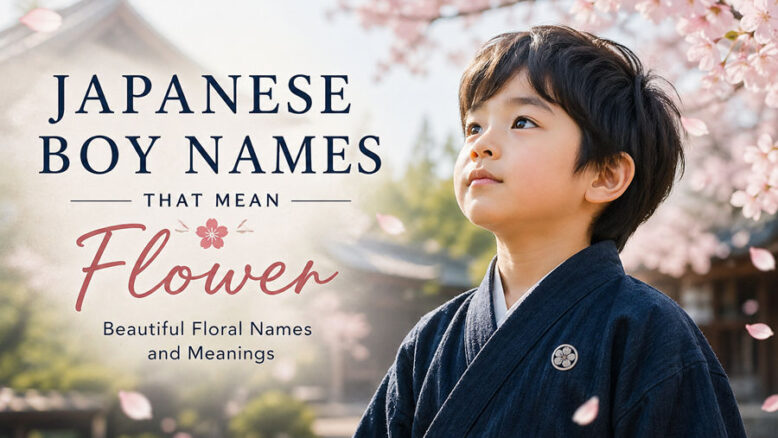
Japanese boy names that mean flower can feel gentle, fresh, elegant, or quietly strong. Some names use the direct flower kanji 花, while others come from specific flowers and plants, such as lotus, hollyhock, camellia, orchid, chrysanthemum, or wisteria.
The most important thing to remember is that Japanese name meanings depend on kanji. The same sound can be written many different ways, and each writing can create a different meaning. This guide focuses on flower-related names that may work for boys, while also noting which options feel more traditional, modern, unisex, rare, or better suited for fictional characters.
What “Flower” Can Mean in Japanese Boy Names
The most direct kanji for “flower” is 花. It can suggest blossoms, freshness, beauty, and natural charm. Another common kanji connected to flower imagery is 華, which can mean flower, splendor, brilliance, or elegance. 華 often feels more refined or decorative than 花.
Flower-themed names can also come from specific plant kanji. For example, 蓮 means lotus, 葵 refers to hollyhock or mallow, 椿 means camellia, 蘭 means orchid, 菊 means chrysanthemum, and 藤 means wisteria.
This distinction matters. A name like Ren written as 蓮 does not mean “flower” in a general way; it specifically means “lotus.” A name written with 花 is more directly flower-based, but it may also feel softer, more unusual, or more creative depending on the full kanji combination.
Are Flower Names Common for Japanese Boys?
Many direct flower names lean feminine or unisex in Japanese because flowers are often associated with beauty, delicacy, and grace. That does not mean boys cannot have flower-related names. It simply means the kanji, sound, and overall balance matter.
Names based on specific plants often work more naturally for boys than names that directly include 花. Ren is a good example because 蓮 means lotus and has a short, clean sound. Aoi, written as 葵, is also a familiar nature name that can be used for boys or girls. Older names such as Kikuo and Fujio pair floral kanji with masculine endings, giving them a more traditional boy-name feeling.
For a real baby name, it is best to have the kanji checked by a fluent Japanese speaker. Some combinations may look meaningful in English but feel unusual, overly decorative, or hard to read in Japanese.
Japanese Boy Names That Directly Mean Flower or Blossom
These names use 花 or 華, so the flower meaning is more direct. Many are rare or creative rather than everyday boy names, but they can be beautiful choices for characters, stories, pets, or symbolic name inspiration.
Hanato
Possible kanji: 花人, 花翔, 花斗
Meaning: flower + person, flight, or a modern name ending
Hanato is a modern-sounding flower name with a bright, gentle style. The kanji 花 gives the name a clear floral meaning, while endings such as 人, 翔, or 斗 can make it feel more active or masculine. Because the reading depends on the chosen kanji, this name should be treated as creative rather than assumed to be a standard everyday name.
Hanao
Possible kanji: 花男
Meaning: flower + man
Hanao is one of the most direct flower-themed boy names. Written as 花男, it can be understood as “flower man” or “man of flowers.” It has an old-fashioned and unusual feeling, so it may not suit every modern baby-name list. For a character, however, it has a charming vintage quality.
Hanaki
Possible kanji: 花樹
Meaning: flower + tree
Hanaki can mean “flower tree” when written as 花樹. It has a calm, nature-rich image and may work well for a gentle or grounded boy character. As a real given name, it is better approached carefully because it is not as familiar as names like Ren or Aoi.
Kaharu
Possible kanji: 花春
Meaning: flower + spring
Kaharu combines flower imagery with spring. The result feels fresh, soft, and poetic. It is more creative than common, but it can be a lovely choice for fiction or for readers who want a name connected to renewal, warmth, and early blossoms.
Hanamasa
Possible kanji: 花正, 華正
Meaning: flower or splendor + correctness, truth, or order
Hanamasa has a more serious rhythm than many flower names because of the traditional-sounding ending masa. With 花 or 華, it can suggest beauty balanced with dignity or integrity. It is uncommon, but it feels stronger than many softer flower-based names.
Japanese Boy Names Inspired by Specific Flowers
For boys, names connected to specific flowers or plants often feel more natural than names that simply use 花. These names still carry floral meaning, but they may sound cleaner, stronger, or more familiar.
Ren
Kanji: 蓮
Meaning: lotus
Ren is one of the strongest choices for a Japanese boy name with a flower meaning. The lotus is admired for its beauty and for growing from muddy water, so the name can suggest purity, resilience, and quiet strength. It is short, simple, and easy to understand.
Rento
Possible kanji: 蓮人, 蓮斗, 蓮翔
Meaning: lotus + person, modern name ending, or flight
Rento builds on the lotus kanji 蓮 and adds a fuller boy-name sound. Depending on the second kanji, it can feel modern, energetic, or grounded. This is a good option for readers who like Ren but want a longer name.
Renya
Possible kanji: 蓮也, 蓮哉
Meaning: lotus + classical name ending
Renya keeps the lotus meaning while adding a softer, more complete rhythm. Endings such as 也 are often seen in masculine names, which helps balance the floral image. The name feels gentle but still suitable for a boy.
Aoi
Kanji: 葵
Meaning: hollyhock or mallow
Aoi is a fresh, nature-based Japanese name that can be used for boys or girls. Written as 葵, it refers to a plant associated with graceful leaves and flowers. It is a good choice for readers who want a botanical name that does not feel overly delicate.
Aoto
Possible kanji: 葵斗, 葵翔
Meaning: hollyhock or mallow + modern boy-name ending
Aoto can be written with 葵 for a flower-related meaning, though this sound can also be written with many other kanji. With endings like 斗 or 翔, it feels more modern and boyish. The exact meaning should always be checked against the chosen kanji.
Tsubaki
Kanji: 椿
Meaning: camellia
Tsubaki means camellia. The name has an elegant, slightly dramatic feeling because camellias are rich, vivid flowers. As a boy name, Tsubaki is distinctive rather than ordinary, making it especially appealing for a memorable character name.
Ran
Kanji: 蘭
Meaning: orchid
Ran means orchid when written as 蘭. It is short, refined, and artistic. The name can feel unisex, though some readers may hear it as softer. For a male character, Ran can suggest elegance, intelligence, or quiet confidence.
Botan
Kanji: 牡丹
Meaning: peony
Botan means peony. Peonies are full, bold flowers, so the name has a richer and stronger image than many delicate flower names. It is uncommon as a given name, but it works beautifully for characters, pets, or symbolic naming.
Kikuo
Possible kanji: 菊夫, 菊雄
Meaning: chrysanthemum + man or hero
Kikuo is an older-style masculine name built from 菊, meaning chrysanthemum. The endings 夫 and 雄 give the name a clearly masculine shape. It may sound vintage today, but it is one of the clearest examples of a flower-related name formed for a boy.
Fujio
Possible kanji: 藤夫, 藤雄
Meaning: wisteria + man or hero
Fujio uses 藤, meaning wisteria, with a masculine ending. Wisteria has a graceful, flowing image in Japanese nature and garden scenery. Fujio feels traditional and somewhat old-fashioned, but its meaning is elegant and easy to understand.
Soft and Gentle Flower Names for Boys
Some flower-related names are best for readers who want a calm, peaceful, or poetic feeling. These names may not all mean “flower” directly, but they carry a clear floral, botanical, seasonal, or fragrance-related image.
- Ren — lotus; simple, pure, and modern.
- Aoi — hollyhock or mallow; fresh, natural, and unisex.
- Kaoru — fragrance; not a flower name by itself, but closely tied to scent and natural beauty.
- Haruki — often associated with spring, sunlight, or trees depending on kanji; not strictly a flower name, but gentle and seasonal.
- Tsubaki — camellia; elegant and distinctive.
- Ran — orchid; short, refined, and artistic.
Stronger Flower-Inspired Boy Names
A flower meaning does not have to feel fragile. In Japanese names, the second kanji can change the tone of the whole name. A floral kanji paired with a stronger ending can create a name that feels bright, active, and masculine.
- Rento — lotus with a modern, energetic ending.
- Renya — lotus with a classic masculine name ending.
- Kikuo — chrysanthemum + man or hero.
- Fujio — wisteria + man or hero.
- Hanato — flower with a more modern, active sound.
- Aoto — hollyhock or mallow with a contemporary boy-name style.
These names show how flower imagery can be balanced with strength. Instead of choosing a name that only means “flower,” many readers may prefer a name that combines floral beauty with ideas like courage, flight, personhood, brightness, or maturity.
Rare and Poetic Japanese Boy Names That Mean Flower
Rare flower names can be beautiful, but they should be used thoughtfully. Some may sound more like invented names, stage names, fantasy names, or character names than everyday Japanese baby names.
Sakuto
Possible kanji: 桜斗, 桜翔
Meaning: cherry blossom + modern name ending
Sakuto can be written with 桜, meaning cherry blossom or cherry tree. It feels bright and modern, especially with endings such as 斗 or 翔. It is better described as cherry-blossom-inspired rather than as a name that simply means “flower.”
Sakurao
Possible kanji: 桜男, 桜雄
Meaning: cherry blossom + man or hero
Sakurao is very uncommon, but it shows how cherry blossom imagery can be paired with a masculine ending. Because Sakura is more often heard as a feminine given name, Sakurao may work best for fiction, fantasy, or symbolic character naming.
Ranka
Possible kanji: 蘭花
Meaning: orchid flower
Ranka has a beautiful floral meaning when written as 蘭花. It may lean feminine or poetic, so it should be used carefully for a boy. For a fictional male character, especially in a fantasy or artistic setting, it can feel elegant and memorable.
Kazahana-Inspired Names
Kazahana, written as 風花, is a poetic word associated with a light flurry of snow in clear weather. It contains 花, but it should not be treated as a simple name meaning “wind flower.” Names inspired by this image can feel delicate, seasonal, and literary, but they are better for creative naming than straightforward baby-name use.
Quick List of Japanese Boy Names That Mean Flower
| Name | Kanji | Meaning or Image | Style |
|---|---|---|---|
| Ren | 蓮 | Lotus | Modern, simple, boy-friendly |
| Rento | 蓮人 / 蓮斗 / 蓮翔 | Lotus + person, modern ending, or flight | Modern, masculine |
| Renya | 蓮也 / 蓮哉 | Lotus + classical name ending | Gentle, balanced |
| Aoi | 葵 | Hollyhock or mallow | Fresh, natural, unisex |
| Aoto | 葵斗 / 葵翔 | Hollyhock or mallow + modern ending | Creative, boyish |
| Tsubaki | 椿 | Camellia | Elegant, distinctive |
| Ran | 蘭 | Orchid | Short, refined, artistic |
| Botan | 牡丹 | Peony | Rare, bold, poetic |
| Kikuo | 菊夫 / 菊雄 | Chrysanthemum + man or hero | Traditional, masculine |
| Fujio | 藤夫 / 藤雄 | Wisteria + man or hero | Traditional, graceful |
| Hanato | 花人 / 花翔 / 花斗 | Flower + person, flight, or modern ending | Creative, modern |
| Hanao | 花男 | Flower + man | Rare, old-fashioned |
| Hanaki | 花樹 | Flower tree | Poetic, uncommon |
| Sakuto | 桜斗 / 桜翔 | Cherry blossom + modern ending | Creative, bright |
Names Best for Babies, Characters, and Pets
Not every flower name has the same practical use. Some feel natural enough for baby-name inspiration, while others are better for stories, games, pets, or creative projects.
Best for Baby-Name Inspiration
- Ren — simple, familiar, and strongly boy-friendly.
- Aoi — fresh and natural, though unisex.
- Rento — modern and masculine with a lotus meaning.
- Renya — gentle, balanced, and easy to connect to lotus imagery.
- Kaoru — fragrance-related and classic, though not directly a flower name.
Best for Fictional Characters
- Hanato — direct flower imagery with a modern sound.
- Sakuto — cherry-blossom-inspired and energetic.
- Botan — bold peony imagery.
- Tsubaki — elegant camellia meaning.
- Ranka — poetic orchid-flower image.
Best for Pets or Creative Names
- Hanao — charming, direct, and unusual.
- Fuji — short, nature-inspired, and easy to say.
- Ran — simple orchid name with a refined sound.
- Botan — warm, bold, and distinctive.
- Sakurao — playful cherry-blossom-inspired name.
How to Choose a Japanese Boy Name That Means Flower
Start with the kanji. Romaji spellings can be misleading because one name sound may have many possible writings. A name that means “flower” with one kanji combination may mean something completely different with another.
Next, decide whether you want a direct flower meaning or a softer botanical association. If you want the clearest floral meaning, look at kanji such as 花, 華, 蓮, 葵, 椿, 蘭, 菊, 藤, or 桜. If you want something more subtle, a name connected to spring, fragrance, trees, leaves, or nature may feel more flexible.
It also helps to think about tone. Ren feels simple and modern. Aoi feels fresh and unisex. Kikuo feels traditional. Hanato feels creative. Tsubaki feels elegant and distinctive. The best choice depends on whether the name is for a baby, a character, a pet, or a story world.
For a real child, ask a fluent Japanese speaker to review the name before making a final decision. They can help confirm whether the kanji reading is natural, whether the name feels masculine, feminine, or unisex, and whether the overall impression matches what you want.
Final Thoughts
Japanese boy names that mean flower can be soft, strong, poetic, or modern depending on the kanji. A direct name with 花 may feel rare or creative, while a flower-specific name like Ren can feel more naturally suited to a boy. Names such as Aoi, Rento, Renya, Tsubaki, Kikuo, and Fujio show how floral meanings can carry both beauty and strength.
The key is to treat each name carefully. In Japanese, kanji shape the name’s true meaning and feeling. When chosen thoughtfully, a flower-inspired boy name can suggest growth, grace, freshness, resilience, and quiet natural beauty.