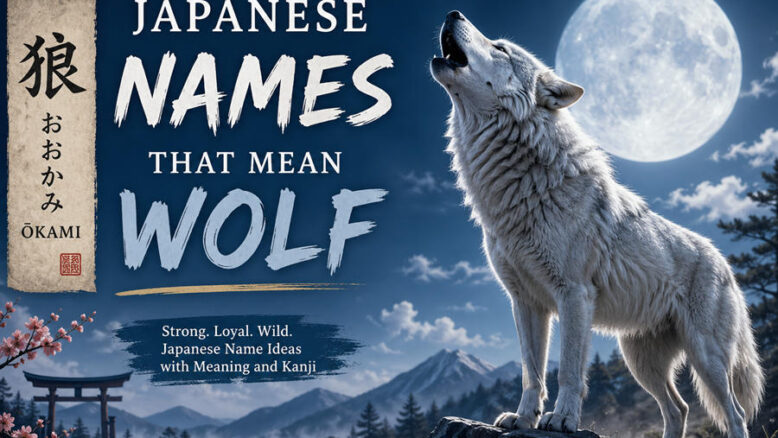
Wolves carry a powerful image — wild, loyal, fierce, and deeply tied to the night. It’s no surprise that so many people look for names that capture that energy. Japanese is a rich language for this kind of search, full of kanji that speak to strength, darkness, the moon, and untamed nature. This guide walks you through the best options, from names that use the wolf kanji directly to names that simply feel wolf-like in the best possible way.
What Makes a Name “Wolf-Like” in Japanese?
Before diving into the list, it helps to understand how Japanese names work. Most names are built from kanji — characters that carry meaning. Japanese given names work differently from Western names in one important way: the written form carries as much weight as the sound, and the same name can be written with different kanji, each shifting the nuance slightly. A name can connect to wolves in a few different ways, and this article separates them clearly so you know exactly what you’re getting.
Direct wolf names use the kanji 狼 (ōkami or rō), which literally means wolf. These are rare in everyday Japanese naming — wolves carry a wild, untamed image that most families avoid for children. They appear more often in fiction, anime, and creative writing.
Trait-based names draw on qualities people associate with wolves: strength, speed, fierceness, loyalty, and instinct. These names are real, usable, and often beautiful — they just reach the wolf connection through association rather than a direct kanji link.
Symbolic names lean into the imagery most tied to wolves in both Japanese and global culture — the moon, the night, the hunt, and the wild. Many of these appear in real Japanese names and work well for fiction too.
Each section below makes clear which category a name falls into, so there’s no guesswork.
Japanese Names That Directly Mean Wolf
The kanji for wolf — 狼 — is rarely used in modern Japanese personal names. It exists in older literature, mythology, and place names, and it does appear in some given names, but it skews strongly toward fiction, games, and anime characters rather than everyday use. Part of the reason is cultural: the Japanese wolf has been extinct since the early 1900s, and while it holds a place in folklore and regional tradition, it carries a wild and untamed image that most families avoid for children. For fictional characters, it works beautifully.
Ōkami (大狼 or 狼) — The most direct option. Ōkami simply means “wolf” and is probably the most recognizable wolf word in Japanese, partly thanks to the beloved video game of the same name. As a name it reads as deliberately dramatic and mythic — fitting for a character, not a typical baby name.
Rōga (狼牙) — Combines 狼 (wolf) and 牙 (fang or tusk). The result is striking — “wolf fang” — and carries a sharp, fierce energy. Used in manga and anime for strong, wild characters.
Rōki (狼輝) — Pairs 狼 (wolf) with 輝 (radiance or brilliance). “Wolf radiance” or “shining wolf” has an interesting contrast built into it — wild nature meeting bright light. Rare, but elegant for a fictional name.
Names That Evoke Wolf Strength and Wildness
These names don’t use the wolf kanji, but they capture exactly the kind of energy wolves are known for — raw power, fierce instinct, and untamed spirit. Many of these are real Japanese names in common or historical use.
Takeru (猛 or 武) — One of the most iconic names for strength and ferocity in Japanese history. The kanji 猛 means fierce or wild, and 武 means warrior or martial. Yamato Takeru is one of Japan’s most famous mythological heroes. A strong, grounded name with serious weight behind it.
Gō (剛) — Means strong, tough, or unyielding. Short, clean, and direct — the kind of name that doesn’t need decoration. It suits a wolf-inspired character well because it speaks to endurance and raw force.
Isamu (勇) — Means courageous or brave. Not dramatically fierce, but quietly strong — the kind of resolve and nerve a wolf carries within its pack.
Names Linked to the Moon
The wolf and the moon are inseparable in global imagination, and Japanese culture is no different. Moon imagery runs deep in Japanese poetry, seasonal festivals, and naming tradition. Moon kanji appear in real given names regularly, making this the most practical section for anyone naming a real child.
Tsukiya (月夜) — Combines 月 (moon) and 夜 (night). “Moonlit night” is exactly the image wolves are tied to. Gentle-sounding but visually vivid.
Tsukito (月人 or 月斗) — A masculine moon name, built from 月 (moon) and 人 (person) or 斗 (a constellation). Grounded and usable as a real name, with a quiet celestial feel.
Saku (朔) — Means new moon. 朔 is the technical term for the first day of the lunar month — the darkest phase. For a wolf name, the new moon carries an interesting edge: the sky is darkest, and the night belongs entirely to instinct. A subtle but meaningful choice.
Mitsuki (満月 or 光月) — Can mean full moon (満月) or moonlight (光月) depending on the kanji. A well-used real name in Japan, works for both boys and girls, and carries warmth alongside its lunar association.
Runa (ルナ) — A modern Japanese given name borrowed from the Latin Luna. It’s widely used in Japan today and carries an obvious moon connection. Popular enough to use comfortably as a real name.
Names That Suggest the Hunt, the Pack, or the Wild
Wolves are social hunters — fast, perceptive, and tied to wild landscapes. The names in this section connect through behavior and environment: speed, instinct, roaming, and the loyalty of a pack. This is where the wolf connection comes from what wolves do rather than what they physically are.
Hayate (疾風) — Means a swift, violent gust of wind. Wolves move fast and read their environment quickly — Hayate captures both. It’s tied to natural force and sudden movement in a way that fits hunting instinct well. A real Japanese name that also appears widely in fiction.
Hayato (隼人) — Combines 隼 (falcon) and 人 (person). Where Hayate is about the force of speed, Hayato is about the precision of a predator — sharp-eyed, focused, and quick to act. A real and widely used name in Japan.
Kiba (牙) — Means fang. It’s a direct wolf feature and fits naturally here as a name tied to the hunt. Rarely used as an everyday given name, but immediately recognizable in Japanese pop culture and a strong choice for fiction.
Kaito (海斗 or 快斗) — Often written with kanji meaning sea and constellation, suggesting open space and free movement. Wolves roam — they aren’t confined — and Kaito captures that sense of wide-ranging freedom naturally.
Kurou (九郎) — Traditionally means “ninth son.” It’s worth being clear here: the wolf connection comes from sound, not kanji. The pronunciation kuro echoes 黒, meaning black, and a black wolf is a striking image in Japanese mythology and storytelling. This is an associative link, not a direct meaning — but for fiction especially, it adds a subtle, layered quality to the name.
Ren (蓮 or 連) — Primarily means lotus, but the kanji 連 means connection or chain — the bond of a pack. Ren is a calm, modern name that hints at loyalty and quiet belonging rather than fierce independence.
Shinji (真二 or 信二) — Common real name with kanji meaning truth and loyalty. Wolves are famously loyal to their pack, and Shinji fits that theme without being dramatic about it.
Wolf-Inspired Names for Girls
Wolf energy isn’t exclusively masculine. Many readers are looking for names that feel strong, wild, and free for girls or female characters. Japanese offers some genuinely lovely options here.
Runa (ルナ) — Already mentioned above, but worth highlighting again for girls specifically. It’s one of the most popular modern feminine names in Japan with a clear moon-and-wolf resonance.
Mitsuki (光月 or 満月) — Works beautifully as a feminine name. The full moon or moonlight meaning gives it a soft but luminous quality that fits a wolf-connected character or a real name equally well.
Akira (明 or 輝) — Means bright, clear, or radiant. A strong, clean name used for both boys and girls. For a wolf character, it suggests the sharp perception and awareness wolves are known for.
Nami (波) — Means wave. Not an obvious wolf connection, but wolves and water share the same fluid, unpredictable energy in a lot of storytelling. A gentle-sounding name that carries quiet wildness underneath.
Yoru (夜) — Means night. Poetic and spare, Yoru is used as a creative given name in Japan, though it skews toward fiction rather than everyday use. The wolf connection is direct — wolves are creatures of the night, and the image of a wolf moving through darkness is one of the most enduring in Japanese storytelling. A striking choice for a female character with a quiet, nocturnal intensity.
Kiba (牙) — Fang. Rare for a girl’s name in real use, but for fiction it makes a sharp, memorable statement. The contrast of a delicate-sounding word carrying such a fierce meaning is part of what makes it striking.
Tips for Choosing a Japanese Wolf Name
A few practical things worth keeping in mind before you decide.
Know your purpose. A name for a real child and a name for a fictional character follow different rules. Direct wolf kanji like 狼 are striking on the page but unusual for an actual Japanese child. Moon names, strength names, and speed names work for both purposes comfortably.
Think about how it sounds out loud. Kanji meaning matters, but the spoken sound of a name is what people will use every day. Hayate, Runa, and Tsukiya all sound as good as they look. Say the name before you settle on it.
Consider the angle that fits your wolf. A lone wolf character might suit Saku (new moon — dark, solitary) or Gō (unyielding strength). A pack-loyal wolf suits Ren or Shinji. The right name depends on what kind of wolf energy you’re after.
If naming a real child, it’s always worth checking with a Japanese speaker or cultural resource. Kanji choice, reading, and naming customs in Japan have nuances that even careful research can miss — and it’s worth taking time to look up the kanji for any name you’re seriously considering before you decide.
Final Thoughts
True wolf kanji names are rare in Japanese personal naming — and that’s actually part of what makes them powerful when used well. But the language doesn’t need a direct translation to capture wolf energy. Through moon imagery, strength kanji, speed, darkness, and loyalty, Japanese offers a wide range of names that feel unmistakably wolf-like without forcing it.
Whether you’re looking for a name for a character, a baby, or simply exploring what the language has to offer, the right choice is the one that resonates most with the image you have in mind. Trust that instinct — it’s very wolf of you.