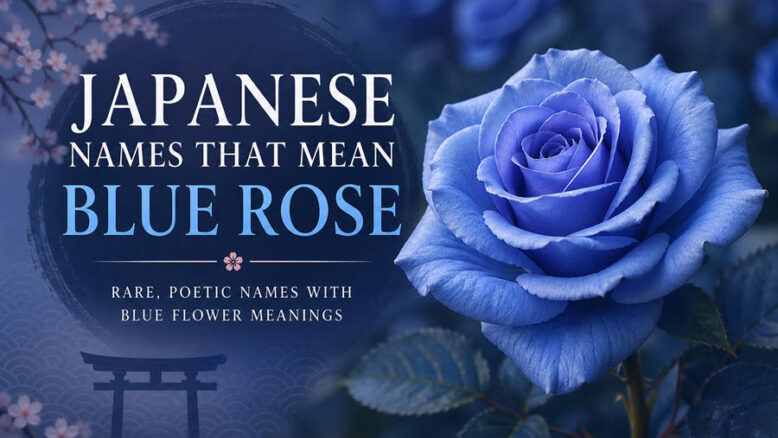
Blue roses feel rare, mysterious, and almost dreamlike. That makes them a beautiful idea for a name, especially for a character, story, username, or symbolic name list. In Japanese, though, “blue rose” is not a common direct meaning in everyday given names.
The literal phrase is 青い薔薇 (aoi bara), meaning “blue rose.” But 薔薇 (bara), the word for rose, is complex and not usually used in Japanese given names. A more natural approach is to choose names that suggest blue, indigo, flowers, blooming, beauty, dreams, or rarity.
This guide separates more natural Japanese names from creative blue rose-inspired names, so you can choose the right style for your purpose.
What Does “Blue Rose” Mean in Japanese Names?
A blue rose often symbolizes mystery, rare beauty, dreams, and something that feels almost impossible. Because of that, it works especially well as a poetic name idea.
In Japanese names, meaning usually comes from the kanji used to write the name. The same sound can have different meanings depending on the characters. For a “blue rose” feeling, these kanji are especially useful:
- 青 — blue, fresh, youthful
- 蒼 — blue, deep blue, pale blue, poetic blue
- 碧 — blue-green, jade-like blue
- 藍 — indigo
- 花 — flower
- 華 — flower, beauty, splendor
- 咲 — bloom
- 美 — beauty
- 希 — hope, rarity
- 夢 — dream
A name may not literally mean “blue rose,” but it can still suggest blue flower, indigo bloom, blue beauty, rare flower, or dreamlike blue. These meanings often feel smoother and more name-like than a direct translation.
Are There Japanese Names That Literally Mean Blue Rose?
There are creative ways to write “blue rose” as a name, but they are usually better for fiction than real-life naming. The word 薔薇 (bara) means rose, but it is not a common kanji choice for Japanese given names.
These names are direct and visually beautiful, but they may feel stylized, dramatic, or character-like:
| Name | Possible Kanji | Meaning | Best Use |
|---|---|---|---|
| Aoi Bara | 青い薔薇 | Blue rose | Phrase, title, symbolic name |
| Aobara | 青薔薇 | Blue rose | Fantasy or character name |
| Sōbara | 蒼薔薇 | Deep blue rose | Poetic character name |
| Aibara | 藍薔薇 | Indigo rose | Stylized fictional name |
For a name that feels more natural, it is usually better to use simpler flower kanji such as 花, 華, or 咲, paired with kanji for blue or indigo.
Japanese Girl Names Inspired by Blue Roses
These girl names do not all literally mean “blue rose.” Instead, they capture the feeling of a blue rose through blue color, flowers, blooming, beauty, or softness.
Aika
Possible kanji: 藍花, 愛花, 碧花
Meaning: Indigo flower, beloved flower, or blue-green flower
Aika is one of the prettiest blue rose-inspired names. With 藍花, it can suggest an indigo flower. With 愛花, it means “beloved flower,” giving the name a gentle romantic feeling.
Aihana
Possible kanji: 藍花, 碧花
Meaning: Indigo flower or blue-green flower
Aihana has a soft floral sound. It feels more natural than using the rose kanji directly, while still keeping the image of a blue or indigo flower.
Aoi
Possible kanji: 葵, 碧, 蒼
Meaning: Hollyhock, blue-green, or poetic blue depending on kanji
Aoi is one of the most natural choices on this list. When written as 葵, it refers to the hollyhock plant. When written as 碧 or 蒼, it can carry a blue or blue-green feeling.
Aoka
Possible kanji: 青花, 蒼花, 碧香
Meaning: Blue flower, deep blue flower, or blue-green fragrance
Aoka is a creative but easy-to-understand option. With 青花, it suggests “blue flower.” With 碧香, it becomes softer and more symbolic, meaning something like “blue-green fragrance.”
Aomi
Possible kanji: 碧美, 蒼美, 青美
Meaning: Blue beauty or deep blue beauty
Aomi does not include a flower kanji, but it captures the cool beauty of a blue rose. It works well when you want the name to feel elegant rather than literal.
Aisaki
Possible kanji: 藍咲, 愛咲
Meaning: Indigo bloom or beloved bloom
Aisaki is a graceful creative name. The kanji 咲 means “bloom,” so 藍咲 can suggest an indigo blossom opening.
Sōka
Possible kanji: 蒼花, 爽花
Meaning: Blue flower or refreshing flower
Sōka has a clean, bright sound. With 蒼花, it can mean “blue flower,” making it a strong symbolic choice for the blue rose image.
Japanese Boy Names Inspired by Blue Roses
For boy names, it often feels more natural to focus on the “blue” side of the image rather than the rose itself. These names can suggest calm strength, sky, stars, clarity, and rare beauty.
Aoto
Possible kanji: 碧斗, 蒼斗, 青翔
Meaning: Blue constellation, blue dipper, or blue flight
Aoto has a modern, clear sound. It does not mean rose, but it gives a strong blue impression and can fit a character with a bright or graceful presence.
Sōma
Possible kanji: 蒼真, 蒼馬, 颯真
Meaning: Blue truth, blue horse, or fresh truth depending on kanji
Sōma is a strong name with poetic options. When written with 蒼, it carries a deep blue feeling that matches the mysterious side of a blue rose.
Aosei
Possible kanji: 青星, 蒼星
Meaning: Blue star
Aosei is more creative, but the meaning is beautiful. “Blue star” feels rare and luminous, making it a good choice for fiction or fantasy naming.
Sōya
Possible kanji: 蒼也, 蒼矢, 蒼夜
Meaning: Blue, blue arrow, or blue night depending on kanji
Sōya can feel calm and elegant. With 蒼夜, it suggests “blue night,” which gives the name a mysterious character-like mood.
Aoki
Possible kanji: 青木
Meaning: Blue tree or green tree
Aoki is more common as a surname than a given name. For a fictional character, it can still work well as a nature-based name with a quiet blue feeling.
Gender-Neutral Japanese Names With Blue or Floral Meanings
Some names can work well across genders, especially for characters, pen names, or modern naming styles. These names are not all flower names, but they connect to blue, indigo, sky, gemstones, or elegant nature imagery.
Aoi
Possible kanji: 葵, 碧, 蒼
Meaning: Hollyhock, blue-green, or poetic blue
Aoi is one of the most flexible choices. It can feel natural while still connecting to both plant imagery and blue color, depending on the kanji.
Ai
Possible kanji: 藍, 愛
Meaning: Indigo or love
Ai is short and meaningful. Written as 藍, it means indigo. Written as 愛, it means love. Both meanings can connect beautifully to the romantic symbolism of a blue rose.
Ruri
Possible kanji: 瑠璃
Meaning: Lapis lazuli
Ruri does not mean flower, but it has a rich blue gemstone meaning. It is a lovely option for the deep blue side of a blue rose name.
Seiran
Possible kanji: 青蘭, 清蘭
Meaning: Blue orchid or pure orchid
Seiran has an elegant floral feeling. An orchid is not a rose, but the name still carries a rare, refined flower image.
Sora
Possible kanji: 空, 蒼空
Meaning: Sky or blue sky
Sora is not a rose name, but it brings in soft blue sky imagery. It works best as a symbolic name when paired with a character or story that already includes flower themes.
Creative Japanese-Style Names That Mean Blue Rose
If you are naming a fantasy character, game avatar, online identity, or fictional place, you can use more direct and dramatic names. These names may not feel like typical real-life Japanese given names, but they clearly carry the blue rose image.
| Name | Possible Kanji | Meaning | Feeling |
|---|---|---|---|
| Aobara | 青薔薇 | Blue rose | Direct, dramatic, fantasy-like |
| Sōbara | 蒼薔薇 | Deep blue rose | Mysterious and poetic |
| Aibara | 藍薔薇 | Indigo rose | Elegant and rare |
| Aihana | 藍花 | Indigo flower | Soft and floral |
| Aosaki | 青咲 | Blue bloom | Gentle and creative |
| Rurika | 瑠璃花 | Lapis lazuli flower | Gemlike and beautiful |
| Aitsubomi | 藍蕾 | Indigo bud | Very poetic and unusual |
For a direct blue rose image, Aobara, Sōbara, and Aibara are the clearest choices. For a softer name, Aihana, Aosaki, or Rurika may feel more graceful.
Japanese Kanji for Creating a Blue Rose Name
You can also create a blue rose-inspired name by choosing kanji that match the mood you want. Start with the image first: romantic, mysterious, elegant, gentle, or fantasy-like. Then choose kanji that support that feeling.
Kanji for Blue
- 青 (ao) — blue, fresh, youthful. It can also suggest green in some contexts.
- 蒼 (ao, sō) — blue, pale blue, or deep blue. This kanji often feels poetic.
- 碧 (ao, midori) — blue-green or jade-like blue. This kanji feels elegant and gemstone-like.
- 藍 (ai) — indigo. This is a strong choice for deep blue names.
Kanji for Flowers and Blooming
- 花 (hana, ka) — flower. Simple and easy to understand.
- 華 (hana, ka) — flower, beauty, splendor. More decorative than 花.
- 咲 (saki, sa) — bloom. A lovely kanji for names connected to blossoms.
- 蘭 (ran) — orchid. Not a rose, but elegant and floral.
- 薔薇 (bara) — rose. Clear in meaning, but complex and uncommon in given names.
Kanji for Beauty, Dreams, and Rarity
- 美 (mi, bi) — beauty
- 希 (ki, mare) — hope, rarity
- 夢 (yume, mu) — dream
- 麗 (rei, urara) — lovely, graceful
- 瑠璃 (ruri) — lapis lazuli, a deep blue gemstone
For a more natural name, simple kanji such as 藍, 碧, 花, 咲, and 美 often work best. For a more dramatic fantasy name, 蒼 and 薔薇 create a stronger blue rose image.
Best Blue Rose Names for Characters
Because “blue rose” is such a poetic idea, it works especially well for fictional characters. The best name depends on the character’s mood and role in the story.
Elegant and Mysterious Names
- Ruri — lapis lazuli; deep blue and refined
- Seiran — blue orchid or pure orchid
- Sōka — blue flower
- Aihana — indigo flower
Soft and Romantic Names
- Aika — indigo flower, beloved flower, or love flower
- Aisaki — indigo bloom or beloved bloom
- Aomi — blue beauty
- Aoi — hollyhock, blue-green, or poetic blue
Fantasy and Dramatic Names
- Aobara — blue rose
- Sōbara — deep blue rose
- Aibara — indigo rose
- Rurika — lapis lazuli flower
Simple and Modern Names
- Aoi — natural, flexible, and easy to recognize
- Ai — indigo or love
- Sora — sky
- Aoto — blue constellation or blue flight
How to Choose a Japanese Name That Means Blue Rose
Before choosing a name, think about how it will be used. A baby name, character name, pen name, and username do not need the same level of naturalness.
For a name that feels closer to real Japanese naming, consider Aoi, Ai, Ruri, Aika, Aoto, or Sōma. These names can sound more natural while still carrying blue, floral, or beautiful associations through kanji.
For a name that clearly means “blue rose,” choose a creative option such as Aobara, Sōbara, or Aibara. These names are stronger visually, but they are also less natural as everyday given names.
It is also important to check the reading carefully. Japanese kanji can have more than one pronunciation, and some name readings are creative. For real-life naming, it is best to ask a fluent Japanese speaker or someone familiar with Japanese names before making a final choice.
Conclusion
Japanese names that mean “blue rose” are usually poetic or symbolic rather than common direct translations. The literal phrase is 青い薔薇 (aoi bara), but names using 薔薇 are usually better for fiction, usernames, or fantasy settings.
For a softer and more natural blue rose feeling, names like Aoi, Aika, Aihana, Ai, Ruri, Sōka, and Seiran can suggest blue flowers, indigo beauty, blooming, elegance, or rare charm. For a direct creative name, Aobara, Sōbara, and Aibara bring the blue rose image to life.
The best choice depends on the feeling you want: natural, romantic, mysterious, or dramatic. A blue rose name does not have to be literal to be meaningful. Sometimes the most beautiful name is the one that captures the feeling of the flower: rare, graceful, dreamlike, and quietly unforgettable.