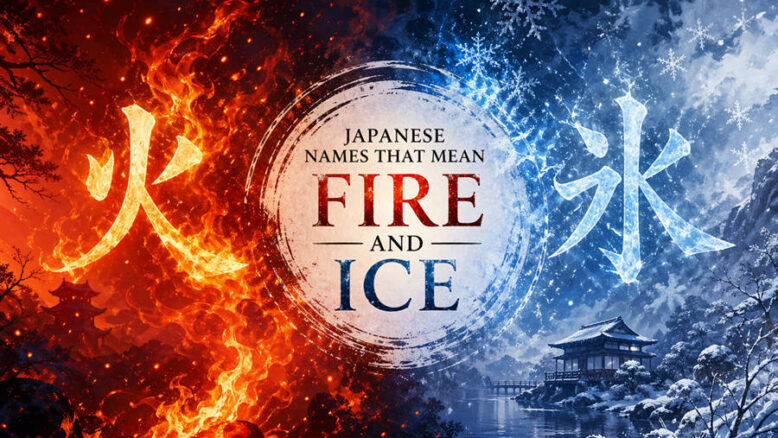
Fire and ice names have a striking beauty. They can suggest passion and calm, warmth and stillness, courage and quiet strength. In Japanese, this theme usually comes from kanji, symbolism, and name pairing rather than one simple translation. Some names connect directly to flame, snow, or winter, while others create the feeling of fire and ice through light, brightness, cold clarity, or seasonal imagery.
What “Fire and Ice” Can Mean in Japanese Names
A Japanese name that literally means “fire and ice” is uncommon. It is much more natural to choose a name from one side of the theme: fire, flame, light, snow, ice, winter, or frost. Another beautiful option is to pair two names together, with one name carrying warmth and the other carrying a cool, wintry image.
Fire in Japanese names can suggest passion, courage, energy, warmth, brightness, and transformation. A name does not have to use the kanji 火, meaning “fire,” to feel fiery. Many softer and more natural names use kanji connected to light, the sun, shining, or warmth.
Ice names often work through snow and winter imagery. The kanji 氷 means “ice,” but names built directly from this character can feel very literal or fictional. Snow names using 雪, winter names using 冬, and clear, crisp names using kanji such as 冴 often feel more graceful.
This is why Japanese fire-and-ice names are best understood by mood and meaning together. A real-life name may need a gentle, natural balance, while a character name can be more dramatic and elemental.
Important Kanji for Fire and Ice Names
Kanji are central to Japanese name meanings. The same sound can have several different meanings depending on how it is written. For example, Yuki can mean “snow” when written 雪, but it can also mean “happiness” or many other things with different kanji.
| Kanji | Common Reading | Basic Meaning | Name Feeling |
|---|---|---|---|
| 火 | hi, ka | Fire | Direct, strong, sometimes too literal |
| 炎 | honō, en, homura | Flame | Bold, dramatic, character-like |
| 灯 | akari, tō | Lamp, light | Warm, gentle, glowing |
| 光 | hikari, kō, mitsu | Light | Bright, hopeful, flexible |
| 輝 | ki, kagayaki | Radiance, shine | Brilliant, energetic, uplifting |
| 氷 | kōri, hyō | Ice | Very direct, cool, often fictional |
| 雪 | yuki, setsu | Snow | Elegant, soft, wintry |
| 冬 | fuyu, tō | Winter | Seasonal, calm, poetic |
| 霜 | shimo, sō | Frost | Cool, delicate, rare |
| 冴 | sae | Clear, bright, crisp | Refined, cool, sharp |
For real-life naming, direct kanji such as 火 and 氷 should be used carefully. They can be visually powerful, but they may feel intense or unnatural depending on the full name. Softer choices such as 光, 灯, 雪, 冬, and 冴 often create a more graceful result.
Japanese Names That Mean Fire, Flame, or Warm Light
These names carry the fire side of the theme. Some are direct flame names, while others are warmer, more natural names connected to light, sunshine, and brightness.
Homura
Possible kanji: 炎, 焔
Meaning: Flame
Homura is one of the clearest Japanese names connected to flame. It has a vivid, powerful sound and works especially well for a bold character. As a real-life given name, it can feel unusual and dramatic, so it is better suited to fiction, fantasy, games, or symbolic name lists.
Akari
Possible kanji: 灯, 明里, 朱莉
Meaning: Light, lamp, brightness, or other meanings depending on kanji
Akari is a gentle fire-adjacent name. It does not usually mean “fire” directly, but it can suggest warm light, a small lamp, or a comforting glow. This makes it one of the most natural choices for readers who want a soft fire feeling without using a harsh or literal fire kanji.
Hikari
Possible kanji: 光
Meaning: Light
Hikari means “light.” It carries a bright, hopeful image and fits the fire side of this theme through radiance rather than flame. It also pairs beautifully with snow and winter names because the contrast feels clean and poetic.
Hikaru
Possible kanji: 光, 輝
Meaning: To shine, light, radiance
Hikaru is a flexible name with a clear, shining feeling. It can be used in different gender contexts depending on kanji and personal style. For a fire-and-ice theme, Hikaru represents brightness and warmth rather than literal fire.
Hotaru
Possible kanji: 蛍
Meaning: Firefly
Hotaru means “firefly.” It is not a fire name in the strict elemental sense, but it carries a glowing nighttime image. It works well for a softer, magical version of the fire theme, especially for characters, pets, or poetic name lists.
Haruhi
Possible kanji: 春日, 晴日, 陽日
Meaning: Spring day, clear day, sunny day, depending on kanji
Haruhi can suggest sunlight, clear weather, spring warmth, or a bright day. It is not a direct fire name, but it fits naturally with warm and sunny imagery. It pairs well with snow names because it creates a gentle seasonal contrast.
Hinata
Possible kanji: 日向
Meaning: Sunny place, facing the sun
Hinata has a warm, cheerful feeling. It suggests sunlight and a place touched by the sun. For readers who want a name with warmth instead of literal fire, Hinata is often a more natural choice.
Haruto
Possible kanji: 陽翔, 晴斗, 春斗, and others
Meaning: Meaning varies; some spellings suggest sunlight, clear weather, spring, or soaring
Haruto is not a fire name by default, but some kanji combinations give it a warm, bright, or sunny feeling. It can work in a fire-inspired section when the chosen kanji supports that meaning. Without the kanji, the meaning should not be assumed.
Kaen
Possible kanji: 火炎
Meaning: Flame, blaze
Kaen is a direct word for flame or blaze. Because it is so literal, it usually feels more like a character name, title, or fantasy-style choice than an everyday given name. It is useful when the goal is a strong and obvious fire meaning.
Japanese Names That Mean Ice, Snow, or Winter
For the ice side of the theme, snow and winter names are often more elegant than names that simply mean “ice.” These names can suggest calmness, clarity, purity, stillness, and quiet beauty.
Yuki
Possible kanji: 雪, 幸, 由紀, and others
Meaning: Snow, happiness, or other meanings depending on kanji
Yuki means “snow” when written 雪. It is one of the clearest and most familiar Japanese names for a winter or snow theme. However, Yuki can be written many ways, so the snow meaning only applies when the kanji is 雪 or includes 雪.
Miyuki
Possible kanji: 美雪, 深雪
Meaning: Beautiful snow, deep snow
Miyuki is graceful and elegant. Written 美雪, it means “beautiful snow.” Written 深雪, it can mean “deep snow.” It is one of the strongest choices for readers who want a Japanese name with a clear snow meaning that still feels name-like.
Yukina
Possible kanji: 雪菜, 雪奈
Meaning: Snow with a soft name ending; exact meaning depends on the second kanji
Yukina has a gentle, feminine sound. When written with 雪, it belongs clearly to the snow-name family. It feels softer and more natural than a direct ice word, making it a good choice for a graceful winter image.
Setsuka
Possible kanji: 雪花
Meaning: Snow flower
Setsuka is poetic and delicate. The kanji 雪花 combines snow and flower, creating an image of winter beauty. It may feel more literary or character-like than everyday, but it has a refined and memorable sound.
Fuyuka
Possible kanji: 冬花, 冬香
Meaning: Winter flower, winter fragrance
Fuyuka is a soft winter-inspired name. It does not mean ice directly, but it carries the calm seasonal feeling many readers want from an ice name. Depending on the second kanji, it may feel floral, fragrant, or gentle.
Fuyuki
Possible kanji: 冬樹, 冬希
Meaning: Winter tree, winter hope
Fuyuki has a cool, steady image. Written 冬樹, it suggests a winter tree, which can symbolize endurance and quiet strength. Written 冬希, it can suggest winter and hope. It works well for boy names, character names, and unisex-style lists depending on the context.
Sayuki
Possible kanji: 紗雪, 小雪, 沙雪
Meaning: Delicate snow, little snow, or other snow-related meanings depending on kanji
Sayuki is gentle and graceful. When written with 雪, it has a clear snow connection. It feels lighter and softer than names based directly on ice, which makes it a lovely choice for a calm winter image.
Sae
Possible kanji: 冴, 紗英, 咲恵, and others
Meaning: Clear, bright, crisp, or other meanings depending on kanji
Sae can carry a cool, clear feeling when written 冴. This kanji suggests crispness, sharp clarity, or bright freshness. It is not an ice name in a direct sense, but it works beautifully as a subtle ice-adjacent name.
Hyoga
Possible kanji: 氷河
Meaning: Glacier
Hyoga means “glacier.” It is strong, cold, and dramatic, making it a powerful choice for a fictional character with an icy personality or ice-related abilities. For everyday naming, it may feel too direct or story-like.
Tsurara
Possible kanji: 氷柱
Meaning: Icicle
Tsurara means “icicle.” The image is beautiful and sharp, but the word is very literal. It works best for fiction, fantasy characters, pets, or creative naming rather than as a common given name.
Koori
Possible kanji: 氷
Meaning: Ice
Koori directly means “ice.” Because it is a regular word, it does not usually feel like a natural personal name. It can still work for a character, nickname, pet, or symbolic project where a clear ice meaning is more important than everyday usability.
Japanese Girl Names That Mean Fire and Ice
For girl names, the most graceful fire-and-ice choices often come from light, glow, snow, winter flowers, and clear brightness. These names are softer than direct elemental words but still carry the theme beautifully.
Fire-Inspired Girl Names
| Name | Possible Kanji | Meaning or Image | Best Use |
|---|---|---|---|
| Akari | 灯, 明里 | Light, lamp, brightness | Natural and warm |
| Hikari | 光 | Light | Bright and hopeful |
| Hotaru | 蛍 | Firefly | Poetic and glowing |
| Haruhi | 春日, 晴日, 陽日 | Spring day, clear day, sunny day | Warm and seasonal |
| Homura | 炎, 焔 | Flame | Bold, best for fiction |
| Hinata | 日向 | Sunny place | Warm and cheerful |
Ice-Inspired Girl Names
| Name | Possible Kanji | Meaning or Image | Best Use |
|---|---|---|---|
| Yuki | 雪 | Snow | Simple and graceful |
| Miyuki | 美雪, 深雪 | Beautiful snow, deep snow | Elegant and classic |
| Yukina | 雪菜, 雪奈 | Snow with a soft name ending | Gentle and feminine |
| Setsuka | 雪花 | Snow flower | Poetic and refined |
| Fuyuka | 冬花, 冬香 | Winter flower, winter fragrance | Soft and seasonal |
| Sayuki | 紗雪, 小雪 | Delicate snow, little snow | Sweet and wintry |
For a girl name pair, Akari and Yuki create a lovely balance of warm light and snow. Hotaru and Setsuka feel more poetic, with the images of a firefly and a snow flower. Homura and Miyuki create a stronger contrast between flame and beautiful snow.
Japanese Boy Names That Mean Fire and Ice
Boy names with a fire-and-ice theme often feel bright, strong, calm, or elemental. The most usable choices usually come from sunlight, radiance, winter, and snow. The more direct fire and ice names are better for characters or fantasy settings.
Fire-Inspired Boy Names
| Name | Possible Kanji | Meaning or Image | Best Use |
|---|---|---|---|
| Hikaru | 光, 輝 | Shining, radiance | Natural and bright |
| Hinata | 日向 | Sunny place | Warm and friendly |
| Haruto | 陽翔, 晴斗, 春斗 | Sun, clear weather, spring, or soaring image depending on kanji | Modern and warm |
| Akio | 明夫, 昭夫 | Bright man, clear man, depending on kanji | Traditional and bright |
| Homura | 炎, 焔 | Flame | Dramatic and character-like |
| Kaen | 火炎 | Blaze, flame | Very direct, best for fiction |
Ice-Inspired Boy Names
| Name | Possible Kanji | Meaning or Image | Best Use |
|---|---|---|---|
| Fuyuki | 冬樹, 冬希 | Winter tree, winter hope | Calm and strong |
| Yukio | 雪男, 幸雄, 行夫 | Snow man, fortunate hero, or other meanings depending on kanji | Meaning depends heavily on kanji |
| Setsu | 雪, 節 | Snow, season, principle, depending on kanji | Short and poetic |
| Sae | 冴 | Clear, crisp, bright | Cool and refined |
| Rei | 怜, 玲, 礼, 冷 | Clever, jewel-like, respectful, or cold depending on kanji | Elegant, but the “cold” meaning is kanji-specific |
| Hyoga | 氷河 | Glacier | Powerful, best for fiction |
For boys, Hikaru and Fuyuki make a strong but natural fire-and-ice pair. Hikaru brings light and radiance, while Fuyuki brings a steady winter image. Kaen and Hyoga are much more direct, making them better for fictional characters than everyday names.
Unisex Japanese Names With Fire and Ice Symbolism
Some Japanese names can feel flexible depending on kanji, sound, and context. These are especially useful for characters, pets, pen names, or modern name lists.
| Name | Possible Meaning | Theme | Notes |
|---|---|---|---|
| Hikaru | Light, shine, radiance | Fire/light | Bright and flexible |
| Yuki | Snow, happiness, or other meanings | Ice/snow | Snow meaning only applies with 雪 |
| Akira | Bright, clear | Both | Can suggest fiery brightness or icy clarity |
| Sae | Clear, crisp, bright | Ice/clarity | Subtle and refined with 冴 |
| Rei | Cool, graceful, clever, beautiful, or respectful depending on kanji | Ice/calm | Meaning changes greatly by kanji |
| Homura | Flame | Fire | Bold and dramatic |
Akira is especially useful for a fire-and-ice theme because it can carry both brightness and clarity. It does not mean “fire and ice” directly, but it can suggest the balance between glowing light and cool sharpness.
Fire and Ice Name Pair Ideas
If you want the full fire-and-ice effect, paired names usually work better than forcing both meanings into one name. These pairings are useful for twins, siblings, characters, pets, or story duos.
| Fire Name | Ice Name | Why the Pair Works |
|---|---|---|
| Homura | Yuki | Flame and snow create a clear elemental contrast. |
| Akari | Setsuka | Warm light and snow flower feel gentle and poetic. |
| Hikaru | Fuyuki | Radiance and winter tree balance brightness with calm strength. |
| Haruhi | Miyuki | Sunny spring imagery and beautiful snow create a seasonal contrast. |
| Hinata | Sayuki | Sunny place and delicate snow feel soft and natural together. |
| Hotaru | Tsurara | Firefly and icicle make a magical, story-like pair. |
| Kaen | Hyoga | Blaze and glacier are bold, direct, and best for fiction. |
| Akira | Rei | Brightness and cool elegance create a subtle contrast. |
For real-life naming inspiration, softer pairs such as Akari and Yuki, Hikaru and Fuyuki, or Haruhi and Miyuki usually feel more natural. For fictional characters, stronger names like Homura and Hyoga or Kaen and Tsurara can create a more dramatic impression.
Names Best for Babies vs. Characters, Pets, and Stories
Not every beautiful name idea works the same way in real life. A name that feels striking in a fantasy story may feel too literal for a baby. When choosing a Japanese name, it helps to separate natural options from highly creative ones.
More Natural or Flexible Choices
- Akari — warm light or brightness
- Hikari — light
- Hikaru — shining or radiance
- Hinata — sunny place
- Haruhi — sunny, clear, or spring-day feeling depending on kanji
- Yuki — snow when written 雪
- Miyuki — beautiful snow or deep snow
- Yukina — a gentle snow-related name when written with 雪
- Fuyuki — winter tree or winter hope
- Sae — clear, crisp, or bright when written 冴
These names tend to feel more balanced because they are not bluntly elemental. They express the fire-and-ice idea through light, warmth, snow, winter, and clarity.
More Creative or Character-Like Choices
- Homura — flame
- Kaen — blaze or flame
- Hyoga — glacier
- Tsurara — icicle
- Koori — ice
- Rei written 冷 — cold, though this kanji can feel stark as a name choice
These names can be beautiful in the right setting, but they are more direct. They may be perfect for a character with fire or ice powers, a fantasy pet, a game avatar, or a symbolic pen name. For a real baby name, it is important to check the kanji, reading, surname, and overall impression with care.
How to Choose a Japanese Fire-and-Ice Name
Start by deciding whether you want the meaning to be direct or symbolic. If you want a name that clearly says “flame,” Homura or Kaen may fit a fictional character. If you want something softer and more natural, Akari, Hikari, Hikaru, Hinata, or Haruhi may work better.
For an ice name, Yuki, Miyuki, Yukina, Setsuka, Fuyuka, and Fuyuki are usually easier to use than names that directly mean “ice.” Snow and winter names often feel graceful, while direct ice names can feel sharper and more fictional.
It also helps to think about purpose. For babies, readability, kanji balance, and cultural fit matter. For characters, stronger symbolism can be a strength. A fire character named Homura or an ice character named Hyoga can feel memorable because the meaning is clear.
For pairs, do not force both fire and ice into the same name. A warm name and a cool name placed side by side usually creates a cleaner effect. Akari and Yuki, for example, feel more natural than a single name trying to combine flame and ice at once.
Common Mistakes to Avoid
The biggest mistake is assuming that one Japanese reading has only one meaning. Many names can be written with different kanji. Without the kanji, names like Yuki, Rei, Kaho, Haruhi, and Haruto can have several possible meanings.
Another mistake is translating too literally. A name built from 火 and 氷 may look exciting, but it may not sound like a natural Japanese personal name. Direct elemental words can be powerful in fiction, but real-life names usually need a smoother balance of sound, meaning, and familiarity.
It is also important not to treat every anime-style name as an everyday name. Many dramatic names are memorable because they are designed for stories. That does not make them wrong, but it does change where they fit best.
Finally, remember that symbolic names can be just as meaningful as direct ones. A name meaning “light,” “snow flower,” “winter tree,” or “sunny place” may carry the fire-and-ice feeling more gracefully than a literal translation.
Final Thoughts on Japanese Names That Mean Fire and Ice
Japanese names that mean fire and ice are most beautiful when they balance meaning, sound, and purpose. Fire names can come from flame, light, sunshine, warmth, or radiance. Ice names can come from snow, winter, frost, clarity, or stillness.
For softer choices, names like Akari, Hikari, Hikaru, Hinata, Yuki, Miyuki, Yukina, Fuyuki, and Setsuka are strong options. For bolder creative names, Homura, Kaen, Hyoga, Tsurara, and Koori give a more direct elemental feeling.
If you want the full contrast, name pairs often work best. Homura and Yuki, Akari and Setsuka, Hikaru and Fuyuki, or Kaen and Hyoga each show a different side of the fire-and-ice theme. The right choice depends on whether you want something gentle, dramatic, realistic, or purely imaginative.