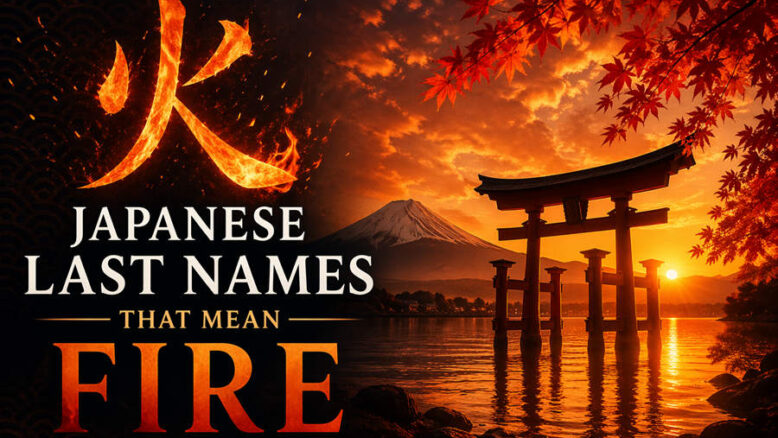
Fire has a strong, memorable feeling in names. It can suggest warmth, courage, energy, danger, passion, or transformation. In Japanese last names, that fire meaning usually comes from the kanji, not just the sound of the name.
Some Japanese surnames include 火, the direct kanji for fire. Others connect to fire through ideas like burning land, red color, charcoal, firewood, volcanoes, blacksmithing, or the hearth. This guide separates direct fire surnames from names with looser, symbolic fire imagery, so you can choose a name with the right meaning and tone.
What “Fire” Means in Japanese Last Names
The most direct Japanese kanji for fire is 火. When this character appears in a surname, the name has a clear fire connection. However, Japanese surnames are rarely simple word-for-word translations. A name may come from a place, landscape, old family line, or local history, even when the kanji itself has a clear meaning.
Fire can also appear through related kanji. Some are direct, while others only create a fiery mood.
- 火 means fire.
- 炎 means flame or blaze.
- 焔 is another kanji for flame, often with a more dramatic or literary feeling.
- 焼 means to burn, roast, or bake.
- 炭 means charcoal.
- 柴 can mean brushwood or firewood.
- 赤 means red, so it can suggest fire color, but it does not literally mean fire.
- 竈 means hearth or cooking stove, giving a softer home-fire image.
Because of this, the best way to understand a Japanese fire surname is to look at its kanji first, then consider how natural or rare the name feels.
How Japanese Last Name Meanings Work
Japanese last names are usually written with one, two, or sometimes more kanji. Each kanji has a meaning, but the full surname often works more like a compact image than a full sentence.
For example, 火野 combines 火, meaning fire, with 野, meaning field or plain. It can be explained as “fire field,” but that does not mean the name should always be read as a dramatic phrase. Like many surnames, it may also feel place-based.
Readings can also vary. A name that looks the same in roman letters may have different kanji and a completely different meaning. For example, a surname pronounced Hino only has a fire meaning if it is written with 火. Other Hino spellings may use different characters.
That is why this article gives the kanji beside each name. The kanji is what carries the meaning.
Japanese Last Names That Directly Include the Fire Kanji
These surnames include 火, the direct kanji for fire. Many are rare, but they are useful for readers who want the clearest fire meaning.
Hino — 火野
Kanji meaning: fire + field/plain
Hino written as 火野 can be understood as “fire field” or “field of fire.” The second kanji, 野, means field, plain, or open land. This gives the name a clean, natural image rather than an overly complicated one.
Hino is one of the easiest fire surnames for English readers to remember because it is short and simple. Just remember that not every Hino surname uses the fire kanji. The spelling 火野 is the form that gives it the direct fire meaning.
Himura — 火村
Kanji meaning: fire + village
Himura written as 火村 means “fire village.” The kanji 村 means village and appears in many Japanese surnames. Paired with 火, it creates a vivid image of a village connected to fire, heat, or burning land.
This name has a strong story-like feeling, which makes it a good choice for fictional characters. It can suit a character with a fiery family history, a bold personality, or a connection to old rural landscapes.
Hiyama — 火山
Kanji meaning: fire + mountain
Hiyama written as 火山 combines fire with mountain. The kanji together are also associated with the word for volcano, so this surname has a powerful natural image.
It can suggest volcanic land, heat under the earth, smoke, or a mountain shaped by fire. For a character name, Hiyama feels strong without sounding too long or difficult.
Higuchi or Hikuchi — 火口
Kanji meaning: fire + mouth/opening
火口 can be read as Higuchi or Hikuchi. The first kanji means fire, while 口 means mouth, opening, or entrance. Together, the kanji can also suggest the opening of a volcano, such as a crater.
This is a striking surname because the image is sharper than “fire field” or “fire village.” It may suit a character with a dangerous, intense, or volcanic presence.
One important note: Higuchi is more commonly seen with other kanji, such as 樋口. If you want the fire meaning, the written form needs to be 火口.
Hida — 火田
Kanji meaning: fire + rice field/field
Hida written as 火田 combines fire with 田, a common surname kanji meaning rice field or cultivated field. The image may suggest a burned field, fire-cleared land, or a field connected to heat.
This name feels more grounded than dramatic. It works well when you want a fire-related surname that still has a rural, place-based feeling.
Japanese Last Names Connected to Burning Land
Some surnames do not use 火, but they still have a clear connection to fire because they use 焼, a kanji related to burning, roasting, or baking. These names often feel earthy and landscape-based.
Yakiyama or Yakeyama — 焼山
Kanji meaning: burned/burning + mountain
焼山 can be read as Yakiyama or Yakeyama. The first kanji, 焼, means to burn or roast, while 山 means mountain. The name can be understood as “burned mountain” or “burning mountain.”
This surname has a rugged, natural feeling. It may bring to mind scorched hillsides, volcanic landscapes, or mountains marked by fire.
Yakita, Yakeda, Yakida, or Yaida — 焼田
Kanji meaning: burned/burning + rice field
焼田 has several possible readings, including Yakita, Yakeda, Yakida, and Yaida. The kanji combine burning with a rice field or cultivated field.
This name feels connected to old land, farming, and the way fire can change a landscape. It is less dramatic than flame-based names, but it still has a clear fire-related meaning through the kanji.
Japanese Last Names With Red, Fiery Symbolism
Names with 赤 do not literally mean fire. The kanji means red. Still, red names often appeal to readers looking for fire-related surnames because they can suggest flame color, sunset, heat, autumn leaves, or passion.
These names are best described as fiery in mood, not as direct fire names.
Akamatsu — 赤松
Kanji meaning: red + pine
Akamatsu means “red pine.” It has a strong nature image and feels more realistic than many direct fire names. The fire connection is symbolic, coming from the color red rather than from flame itself.
Akagi — 赤木
Kanji meaning: red + tree
Akagi means “red tree.” It is simple, natural, and easy to understand. The name may bring to mind autumn leaves, red bark, or trees glowing in sunset light.
Akasaka — 赤坂
Kanji meaning: red + slope
Akasaka means “red slope.” It has a place-name feeling and can suggest a hillside colored by red soil, sunset, or seasonal leaves. It does not mean fire, but it can carry warm, fiery color imagery.
Akai — 赤井
Kanji meaning: red + well
Akai means “red well.” It has an interesting balance because 赤 gives a warm red image, while 井 suggests a well or water source. For fiction, that contrast can make the name feel more layered.
Akamine — 赤嶺
Kanji meaning: red + peak/ridge
Akamine means “red peak” or “red ridge.” It can suggest a mountain ridge lit by sunrise or sunset. It is a good option for readers who want a fiery feeling without using the fire kanji directly.
Akabane — 赤羽
Kanji meaning: red + feather/wing
Akabane means “red feather” or “red wing.” It has a striking visual quality and can feel graceful, bold, or even phoenix-like. The fire connection is symbolic, based on red color and imagery rather than a literal flame meaning.
Japanese Last Names Related to Firewood and Charcoal
Fire is not only flame. It is also connected to the materials that feed it or remain after it burns. Names with brushwood or charcoal imagery often feel quieter and more traditional than direct fire names.
Shibata — 柴田
Kanji meaning: brushwood + rice field
Shibata is a familiar Japanese surname. The kanji 柴 can mean brushwood, while 田 means rice field. Brushwood can be associated with kindling or firewood, so the fire connection is indirect.
This is a good example of a name that feels natural as a real surname while still carrying a soft fire-adjacent meaning.
Shibayama — 柴山
Kanji meaning: brushwood + mountain
Shibayama means “brushwood mountain.” It suggests wooded hills, rural land, and natural fuel gathered from the landscape. Its fire meaning is subtle, not direct.
Shibasaki — 柴崎
Kanji meaning: brushwood + cape/promontory
Shibasaki combines brushwood with a kanji often used for a cape, point, or promontory. Like Shibata and Shibayama, it connects to fire through brushwood rather than flame.
Sumitani — 炭谷
Kanji meaning: charcoal + valley
Sumitani means “charcoal valley.” It has a smoky, mountain-like feeling and may suggest charcoal-making, old rural work, or a valley connected to burned wood.
This name is especially useful if you want a fire-related surname that feels darker, quieter, and more grounded than a direct flame name.
Sumiyama — 炭山
Kanji meaning: charcoal + mountain
Sumiyama means “charcoal mountain.” The image is earthy and traditional. It suggests forests, mountain villages, charcoal kilns, and the steady heat left after wood has burned.
Japanese Last Names With Forge or Hearth Imagery
Some fire-related names connect to how fire is used: in a forge, a cooking stove, or a household hearth. These names do not always mean “fire,” but they carry the feeling of heat, craft, home, or traditional work.
Kaji — 鍛冶
Kanji meaning: forging/blacksmithing
Kaji is connected to blacksmithing and metalwork. It does not literally mean fire, but fire is central to the image of the forge. This name can feel strong, practical, and skilled.
For a character, Kaji works well for someone connected to tools, weapons, metal, craft, or old family trades.
Kajiya — 鍛冶屋
Kanji meaning: blacksmith or blacksmith’s shop
Kajiya means blacksmith or blacksmith’s shop. It has a clear craft-based connection to heat and fire. Compared with direct fire names, it feels more occupational and grounded.
Kamado — 竈 or 竈門
Kanji meaning: hearth, cooking stove, or hearth gate
Kamado is connected to the traditional cooking stove or hearth. This gives the name a warmer and more domestic fire image. Instead of battle or flame, it suggests home, food, family, and steady heat.
The spelling 竈門 may feel especially recognizable because of modern popular fiction, so it should be used thoughtfully if you want a realistic character name.
What About Japanese Last Names That Mean Flame?
Readers often look for Japanese last names that mean flame, especially names using 炎 or 焔. These kanji do mean flame or blaze, but they are not as easy to use as everyday surnames.
Names built directly from flame kanji can feel very dramatic, literary, or fictional. That may be perfect for fantasy, manga-inspired characters, games, or symbolic names. But for a realistic modern Japanese surname, fire-related names such as 火野, 火村, 火山, 焼山, 焼田, 炭谷, or red-symbolic surnames may feel more natural.
A good rule is this: if you want a realistic surname, choose a name that is actually used and has a natural surname structure. If you want a dramatic character name, flame kanji can work, but it should be clearly treated as creative or stylized.
Best Japanese Fire Last Names for Characters
If you are choosing a Japanese fire surname for a story, game, comic, or roleplay character, think about the kind of fire imagery you want. Not every fire name has the same mood.
For a bold fire-powered character
- Hino — 火野, meaning fire field.
- Himura — 火村, meaning fire village.
- Hiyama — 火山, meaning fire mountain.
For a volcanic or mountain-based character
- Hiyama — 火山, meaning fire mountain.
- Yakiyama — 焼山, meaning burned mountain.
- Akamine — 赤嶺, meaning red peak.
For a realistic surname with fiery color
- Akamatsu — 赤松, meaning red pine.
- Akagi — 赤木, meaning red tree.
- Akasaka — 赤坂, meaning red slope.
For a darker or smoky character
- Sumitani — 炭谷, meaning charcoal valley.
- Sumiyama — 炭山, meaning charcoal mountain.
- Yakita — 焼田, meaning burned field.
For a forge, craft, or warrior-family feeling
- Kaji — 鍛冶, connected to blacksmithing.
- Kajiya — 鍛冶屋, meaning blacksmith or blacksmith’s shop.
- Kamado — 竈, meaning hearth or cooking stove.
How to Choose a Japanese Last Name That Means Fire
Start with the kanji. A name may sound fiery in English letters, but the meaning depends on the characters used to write it. If you want a direct fire meaning, look for 火. If you want a burning-land meaning, look for 焼. If you want a softer fire connection, names with 炭, 柴, 赤, or 竈 may work better.
Next, decide how realistic the name should feel. A name like Shibata or Akamatsu feels much more natural in everyday Japanese surname style, but the fire connection is indirect. A name like Himura or Hiyama has a stronger fire meaning, but it may feel rarer or more dramatic.
For baby-name research, family-history writing, or formal use, it is best to be careful and check the exact kanji. For fiction, you have more room to choose a name based on mood, symbolism, and character design.
Common Mistakes to Avoid
The biggest mistake is assuming that every hi sound means fire. In Japanese, the sound hi can be written with many different kanji. It may mean fire, sun, day, light, or something else entirely, depending on the spelling.
Another mistake is calling every red name a fire name. Surnames with 赤, such as Akagi or Akamatsu, mean red. They can feel fiery, but they do not literally mean fire.
It is also important not to over-translate. A name like 火村 can be explained as “fire village,” but Japanese surname meanings are usually compact images, not long poetic phrases.
Finally, avoid mixing random kanji just because they look beautiful. Japanese surnames have reading patterns and cultural context. A made-up kanji combination may look meaningful in English but feel unnatural in Japanese.
Final Thoughts on Japanese Last Names That Mean Fire
Japanese last names that mean fire can be bold, warm, smoky, earthy, or symbolic. The clearest fire surnames use 火, as in Hino written 火野, Himura written 火村, and Hiyama written 火山. Names with 焼, such as Yakiyama and Yakita, connect to burning land. Names with 炭 suggest charcoal, while names with 赤 offer fiery red color symbolism.
The best choice depends on the feeling you want. For a direct fire meaning, choose a name with 火. For a realistic but warm image, choose a red, brushwood, charcoal, forge, or hearth-related surname. When the kanji, sound, and purpose all fit together, a Japanese fire surname can feel vivid, meaningful, and memorable.