Light is one of the most beautiful meanings a name can hold. It can suggest brightness, hope, warmth, clarity, and the feeling of something new beginning. In Japanese names, light can appear in a direct way through kanji that mean light, bright, or shine. It can also appear more softly through ideas like dawn, sunlight, radiance, moonlight, or a gentle glow.
That is what makes this theme so appealing. Some names feel clear and simple. Others feel poetic, delicate, or full of atmosphere. This guide brings together Japanese names connected to light and explains the meaning behind them in a way that is easier to follow. Along the way, it also shows an important point: with Japanese names, the exact meaning usually depends on the kanji chosen to write the name.
What “Light” Can Mean in Japanese Names
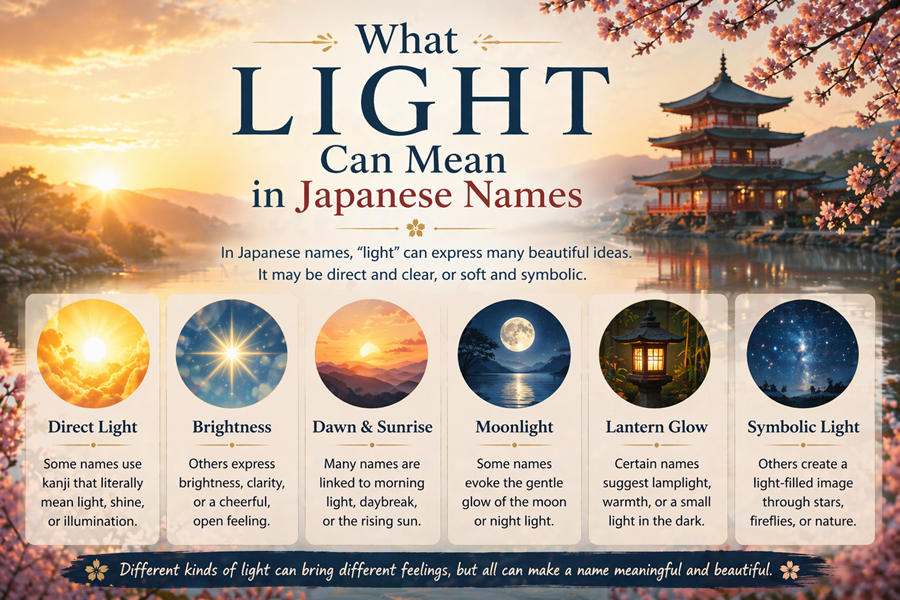
When people search for Japanese names that mean light, they are often looking for more than one kind of meaning. Sometimes they want a name that directly means light. Sometimes they want a name that feels connected to brightness, shining, radiance, or glow. In other cases, they are really looking for names linked to sunrise, morning light, moonlight, or a warm lantern-like feeling.
Because of that, “light” in Japanese naming is a broad theme rather than one single definition. A name may point to light itself. It may suggest brightness and clarity. It may evoke the first light of morning, the sun rising, a star shining, or a small glow in the dark. All of those fit under the larger idea of light, but they do not all work in exactly the same way.
This is why it helps to separate names into a few groups. Some names have a very direct light meaning. Some are better described as bright, radiant, or shining. Others are more symbolic and create a light-filled image without literally translating to light. That distinction makes the whole subject much clearer and helps readers choose names with more confidence.
How Japanese Name Meanings Work
Japanese names are usually understood through the kanji used to write them. The sound of a name matters, but the meaning often comes from the characters behind that sound. This is especially important in an article like this one, because a name can sound the same while having very different meanings depending on the kanji chosen.
For example, one reading might be written with kanji related to light, brightness, or radiance. The same reading could also be written with a completely different set of characters that do not relate to light at all. That is why it is more accurate to talk about a light-related name when it is written with specific kanji, not to assume the spoken form always carries that meaning.
That also means some names in this guide are direct matches, while others are better understood as light-related or symbolic. A direct name may use kanji such as 光 for light or 明 for bright. A symbolic one may connect to dawn, sun, moon, stars, or a gentle glow. Both can be beautiful choices. The main difference is how closely they match the meaning of light itself.
Common Japanese Kanji Associated With Light
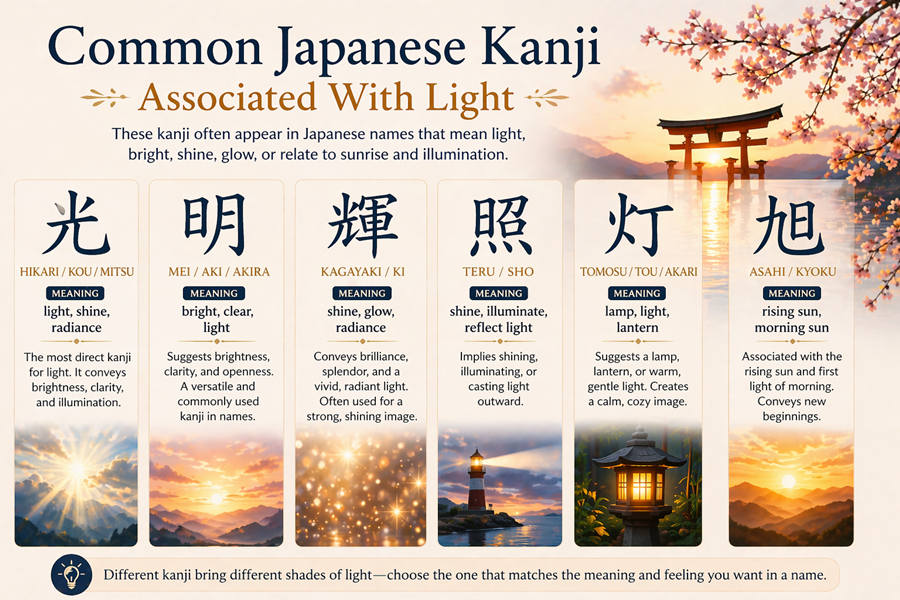
Many Japanese names linked to light are built around a small group of kanji. Learning these characters helps the whole theme make more sense, because you begin to see how different shades of meaning appear in different names.
光
光 is one of the clearest light kanji. It means light, shine, or radiance. When this character appears in a name, the connection to light is usually very direct. It often gives a name a bright, clean, hopeful feeling.
明
明 usually means bright or clear. It can overlap with the idea of light, but it often feels slightly broader than 光. In names, it may suggest cheerful brightness, openness, or clarity as much as physical light itself.
輝
輝 means shine, glow, or radiance. This kanji feels vivid and energetic. Names with 輝 often sound more brilliant or sparkling than calm or gentle.
照
照 carries the sense of shine, illuminate, or reflect light. It often feels active, as if light is being cast outward. In names, it can suggest a bright, noticeable presence.
灯
灯 means lamp, light, or lantern. Compared with 光 or 輝, it creates a softer image. It feels warmer, quieter, and more intimate, like a small steady light rather than open daylight.
旭
旭 is closely linked to the rising sun or morning sun. It does not mean light in the simplest literal way, but it strongly suggests first light, daybreak, and fresh brightness.
Together, these kanji show that light in Japanese names is not limited to one mood. It can be direct and bright, warm and gentle, radiant and brilliant, or connected to the beginning of a new day.
Japanese Girl Names That Mean Light
Japanese girl names connected to light often feel graceful, warm, and luminous. Some use a direct light kanji, while others lean more toward glow, radiance, or morning brightness.
Hikari
Hikari is one of the clearest names in this theme. When written with 光, it directly means light or radiance. It feels simple, elegant, and easy to understand, which is part of its lasting appeal.
Akari
Akari is a well-known feminine-leaning name often linked to brightness and light. In light-related spellings, it may use kanji such as 明 or 灯, giving it a warm, gentle, glowing feeling.
Terumi
Terumi often feels more radiant than literal. In spellings that use 照 or 輝, it suggests shining beauty or a bright presence. It has a graceful, slightly more classic tone.
Asahi
Asahi is strongly connected to the rising sun, especially in forms using 旭. It works beautifully in a light-themed article because it brings in the image of first light and a hopeful beginning.
Tomori
Tomori is a softer, more poetic option. In spellings that use 灯 or 燈, it suggests lamplight or lantern glow. The feeling is calm and warm rather than bold or dazzling.
Mitsuki
Mitsuki can be written in many ways, so its meaning depends strongly on the kanji. In forms that use 光, it can carry a clear light-related meaning. It is a good example of why the written form matters so much in Japanese names.
Hotaru
Hotaru means firefly. It is not a direct translation of light, but it has one of the loveliest symbolic connections to it. The image is soft, natural, and quietly luminous.
These names show the range of feminine light names in Japanese. Some feel bright and direct, while others feel softer, warmer, or more poetic.
Japanese Boy Names That Mean Light
Japanese boy names linked to light often sound clear, strong, and energetic. Many lean toward brightness, radiance, or the rising sun rather than a delicate glow.
Hikaru
Hikaru is one of the best-known Japanese names associated with light. It is often written with 光 or with other shine-related kanji. The feeling is bright, timeless, and confident.
Akira
Akira is often associated with meanings such as bright, clear, or light, especially in forms written with 明. It feels calm and intelligent, with a clean and classic sound.
Kouki
Kouki has many possible spellings, but forms such as 光輝 connect it strongly to light and radiance. It has a polished, lively sound that fits the theme very well.
Teru
Teru often uses shine-related kanji such as 照 or 輝. It is short, direct, and bright in feel, making it a strong choice for readers who want something simple and bold.
Asahi
Asahi appears naturally in this section too. Its connection to the morning sun gives it a fresh, forward-looking brightness that feels especially strong in boy-name lists.
Mitsuru
Mitsuru can take several forms, and some use 光 to create a light-related meaning. In those spellings, it feels steady, traditional, and bright without sounding flashy.
Teruaki
Teruaki combines the bright feeling of teru with kanji that can add clarity or radiance. It sounds more formal than some shorter names and has a distinctly luminous feel in light-related spellings.
Together, these names show how light-themed Japanese boy names can range from direct and simple to radiant and sunrise-linked.
Japanese Unisex Names Connected to Light
Some light-related Japanese names work well as unisex choices. Their everyday use may lean one way or the other, but they are flexible enough to fit this category.
Hikari
Hikari is one of the clearest unisex options. With 光, it directly expresses light and radiance, and the name has a bright, gentle sound that crosses styles easily.
Akira
Akira is another strong unisex choice. In light-related spellings, it suggests brightness and clarity. It feels classic and steady rather than delicate.
Hikaru
Hikaru also works well here. It is closely tied to light and shine, and it has a clean sound that suits many different naming styles.
Asahi
Asahi is often seen more for boys, but it can also work as a broader light-related name because of its strong sunrise image. It feels fresh, uplifting, and open.
Unisex names in this theme are especially appealing for readers who want something modern, flexible, and full of brightness without feeling too narrow in style.
Japanese Names That Mean Dawn, Sunrise, or Morning Light
Dawn and sunrise names are some of the most beautiful in the larger light family. They do not always translate to light itself, but they carry the image of first light, new beginnings, and the opening of the day.
Asahi
Asahi is one of the strongest names in this group. It brings together the ideas of sunrise, brightness, and a hopeful start.
Akatsuki
Akatsuki is linked to dawn or daybreak. It has a dramatic, striking quality and feels more poetic than plain bright names.
Asa
Asa means morning. It points to the early part of the day more than to light itself, but it naturally suggests freshness and the start of daylight.
Asaka
Asaka can use 朝, the kanji for morning. In those forms, it carries a gentle morning-light feeling that is soft and elegant.
Hinode
Hinode is directly tied to sunrise. It is rarer than names like Hikari or Akira, but its image is clear and memorable right away.
These names are appealing because they link light with hope, renewal, and the sense of something just beginning.
Japanese Names That Mean Bright, Radiant, or Shining
Some names fit this topic best through brightness and radiance rather than direct light. They still belong in the larger theme, but their feeling is often more vivid and expressive.
Akira
Akira stands out again here because 明 carries the sense of brightness and clarity. It is one of the cleanest examples of a bright name that also belongs in a light-themed list.
Hikaru
Hikaru belongs naturally in this section because it suggests active shining as much as light itself. It feels lively and radiant.
Kouki
Kouki, especially in forms like 光輝, blends light with brilliance. It is one of the strongest names for readers who want a name that feels polished and energetic.
Terumi
Terumi leans toward radiance and shining beauty. It feels elegant and expressive rather than plain or literal.
Teruaki
Teruaki has the same bright outward feel. It sounds more formal and striking, which gives it a different flavor from softer names in this theme.
This group adds depth to the article because it shows that light can be soft, but it can also be brilliant, clear, and vivid.
Japanese Names Connected to Lantern Light, Firelight, or Warm Glow
Not all light feels like sunlight or radiance. Some names suggest a smaller, warmer, more personal kind of light. This is where lantern, lamp, and glow imagery becomes especially beautiful.
Akari
Akari works well here too, especially in spellings that lean toward 灯. The feeling is softer and warmer than names built around strong shine.
Tomori
Tomori is one of the loveliest names in this part of the theme. It brings to mind lamplight or lantern glow, calm and steady rather than bright and blazing.
Tomoka
Tomoka can connect to this mood in forms that use 灯. In those spellings, it feels warm, feminine, and gently luminous.
Hotaru
Hotaru belongs here as well because the image of a firefly feels close to a tiny moving light in the dark. It is atmospheric and delicate.
For readers who want a name that feels tender and peaceful rather than bold, this is one of the most appealing directions to explore.
Rare and Unique Japanese Names Related to Light
If you want something less familiar, there are many beautiful options beyond the best-known names. These choices often stand out because of their imagery, sound, or smaller number of common spellings.
Akatsuki
Akatsuki feels dramatic and poetic, with its strong daybreak image. It is one of the most memorable rare choices in this whole theme.
Hinode
Hinode is vivid and hopeful. Because the sunrise image is so clear, it feels distinctive without being hard to understand.
Tomoru
Tomoru is linked to lamp or lantern light in forms using 燈. It feels unusual, warm, and thoughtful.
Hoshimi
Hoshimi has a star-like brightness that gives it a softer, more celestial light connection. It feels dreamy and uncommon.
Unique names in this theme do not all sound modern or flashy. Some are rare because they are poetic, while others stand out because their image is so vivid.
Beautiful Japanese Names With Light Symbolism
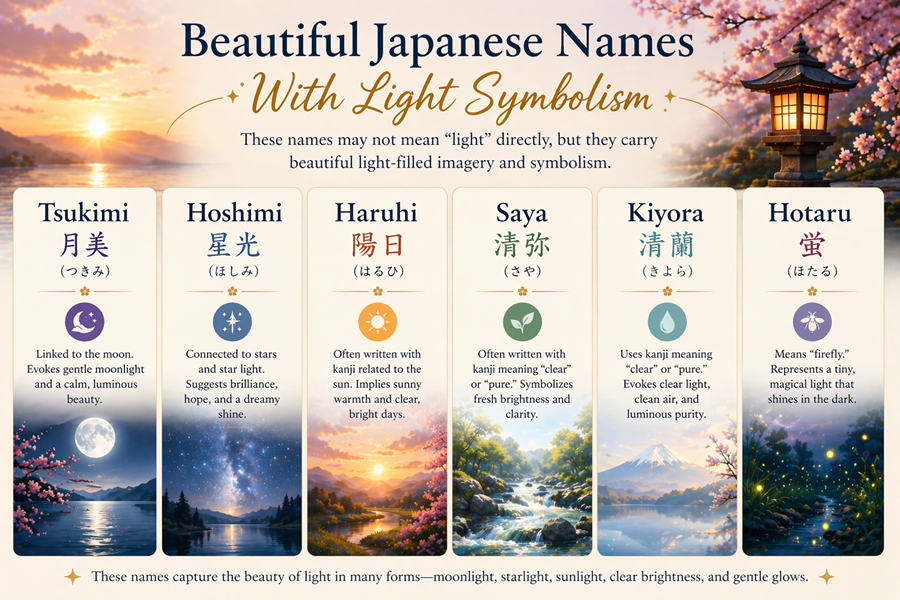
Some names do not mean light directly, but they still create a beautiful light-filled image. These are wonderful for readers who want atmosphere and symbolism rather than a literal match.
Tsukimi
Tsukimi is tied to the moon in forms such as 月美. It feels calm, luminous, and quietly elegant.
Hoshimi
Hoshimi can suggest starlight, especially in forms that combine star imagery with light-related kanji. It feels delicate and celestial.
Haruhi
Haruhi can take forms linked to sun and sunny brightness. In those spellings, the feeling is warm, open, and clear rather than literal light alone.
Kiyora
Kiyora is a lovely symbolic choice. In forms using kanji associated with clarity or purity, it creates a bright, clean feeling that is not exactly light, but still feels luminous.
Hotaru
Hotaru is one of the best symbolic choices in Japanese naming. The firefly image gives it a natural glow that feels gentle and memorable.
Symbolic light names often feel more personal because they do not stop at one simple translation. They give readers a mood as much as a meaning.
How to Choose a Japanese Name Meaning Light
The easiest way to choose from this theme is to start with the kind of light you want. Do you want direct light, like Hikari? Brightness and clarity, like Akira? Sunrise and new beginnings, like Asahi or Hinode? Or something softer and more poetic, like Tomori or Hotaru?
It also helps to think about style. Some names feel modern and clean. Some feel traditional. Some sound bold and energetic, while others feel gentle and graceful. That mood matters just as much as the dictionary meaning.
Most of all, check the kanji carefully. A name may look perfect in roman letters, but the exact meaning only becomes clear when you see how it is written. That step matters with every Japanese name, and it matters even more in a topic like this one, where similar-sounding names can mean very different things.
The best choice is usually the one that feels right in both meaning and tone. A good light-themed name should not just translate well. It should also carry the mood you want it to hold.
Final Thoughts on Japanese Names That Mean Light
Japanese names connected to light offer much more variety than many readers expect. Some are direct and bright. Some are radiant and shining. Some feel warm like lantern light, while others feel fresh like sunrise or soft like moonlight and fireflies.
That wide range is what makes this theme so special. Light can suggest hope, beauty, clarity, renewal, and warmth all at once. Whether you prefer a name that is simple and direct or one that feels poetic and symbolic, there are many beautiful choices to explore.
In the end, the best Japanese name meaning light is the one whose kanji, sound, and feeling all come together in the right way. When that happens, the name does more than describe light. It carries it.