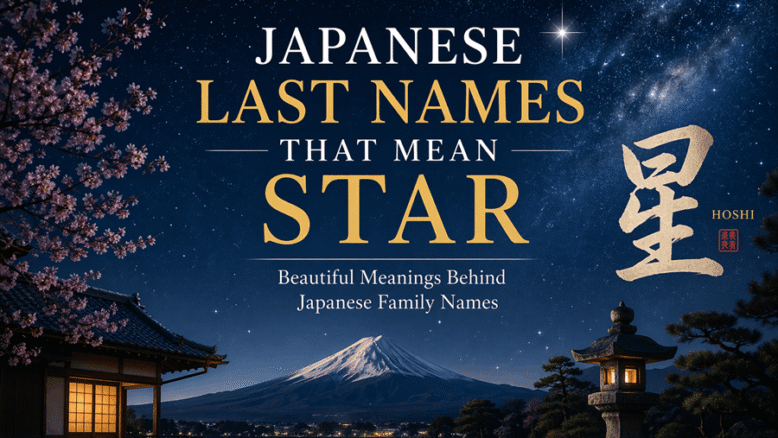
Japanese last names that mean star have a quiet beauty that is hard to miss. Some feel simple and timeless. Others sound more scenic and poetic because they blend the idea of a star with a field, river, mountain, or island. That balance is what makes this group so appealing. These surnames feel dreamy, but they still fit real Japanese naming patterns.
In this article, we will look at the clearest Japanese surnames connected to the meaning “star,” explain how they are formed, and highlight the names that feel the most classic, vivid, or rare.
Best Picks at a Glance
If you want the strongest options right away, these are the best picks from this group:
- Hoshi (星) — the most direct and literal star surname
- Hoshino (星野) — one of the most elegant and recognizable choices
- Hoshikawa (星川) — a scenic surname with a flowing, natural feel
- Akahoshi (赤星) — bold and vivid, with the meaning “red star”
- Morohoshi (諸星) — a broader, more poetic name often understood as “many stars”
- Hoshiyama (星山) — a strong, elevated surname meaning “star mountain”
What Makes a Japanese Last Name Star-Related?
The clearest star-related Japanese surnames use the kanji 星, which means “star.” That is the key point to keep in mind. In Japanese names, meaning comes from the kanji, not only from the pronunciation. A name may sound beautiful in romaji, but the true meaning depends on how it is written.
That is why the strongest surnames for this topic are the ones that actually include 星. They are more accurate and more useful than names that only feel celestial in a vague way. This also helps keep the article grounded. Instead of stretching the category too far, it focuses on surnames with a clear and visible link to the idea of a star.
Another reason these names work so well is that they follow familiar Japanese surname patterns. Many Japanese last names combine one main image with a place word or landscape word. That is why star surnames often pair 星 with kanji tied to land, water, or location. The result feels natural, not forced.
Common Japanese Last Names That Mean Star
Hoshi (星) is the most direct surname in this group. It is simple, clear, and literal because it uses only the kanji for “star.” If someone wants the purest Japanese last name meaning star, this is the first name to know. It has a clean look, a short sound, and a timeless feel.
Hoshino (星野) is one of the best-known star surnames. It combines 星 meaning “star” with 野 meaning “field” or “plain.” The usual reading is “star field.” This surname feels graceful and classic. It is also one of the easiest names in this group for readers to remember, because both the sound and the image are soft and appealing.
Hoshikawa (星川) pairs “star” with 川, meaning “river.” That gives it the image of a “star river.” It feels calm, flowing, and scenic. Among star surnames, this one stands out for its balance. It has a poetic image, but still sounds grounded and natural as a real Japanese family name.
Akahoshi (赤星) means “red star.” The first kanji, 赤, means red, while 星 means star. This surname has a stronger and more vivid feel than names like Hoshino or Hoshikawa. It is sharper, brighter, and more dramatic, which gives it a different kind of appeal.
Morohoshi (諸星) is another striking surname in this group. The kanji 諸 carries the sense of “various” or “many,” so the surname is commonly understood as something like “many stars.” It feels richer and more expansive than the simpler Hoshi. There is a wider, more layered image behind it.
Hoshida (星田) combines “star” with 田, the common kanji for “rice field.” This gives the surname a more traditional countryside feel. It is a strong example of how Japanese star surnames often blend a celestial image with something tied to daily life and land.
Mitsuboshi (三星) means “three stars.” The first kanji, 三, means three, and the second is the usual kanji for star. This surname is especially memorable because the meaning is so easy to picture. It feels crisp, neat, and visually strong.
The Most Established Star Surnames
If you want the most dependable and recognizable surnames in this category, Hoshi and Hoshino should come first. Both are clear in meaning and easy to understand. They also feel very natural in Japanese. Neither one sounds invented or overly decorative.
Hoshikawa also belongs near the top of the list. It may not be as instantly familiar to every reader as Hoshino, but it follows a classic surname structure and carries a beautiful image. It is one of the best examples of a star surname that feels scenic without becoming too unusual.
These names are often the best choices for readers who want something meaningful but still grounded. They are the surnames most likely to feel balanced in both sound and meaning. That matters because some star surnames sound softer, some sound bolder, and some feel rare enough to seem almost literary. Hoshi, Hoshino, and Hoshikawa sit in the sweet spot.
Rare, Poetic, and Uncommon Star Surnames
Once you move beyond the best-known examples, star surnames become even more interesting. The meanings stay clear, but the mood of the name changes depending on the second kanji.
Hoshiyama (星山) means “star mountain.” This surname feels strong and elevated. Compared with softer names like Hoshino, it carries more weight and a little more drama. It is a great fit for readers who like surnames with a powerful natural image.
Hoshiya (星谷) means “star valley.” Because 谷 means valley, the name feels gentler and more secluded than Hoshiyama. It has a calm, quiet image, which gives it a softer emotional tone.
Hoshijima (星島) means “star island.” This surname stands out right away because island imagery creates a feeling of distance and uniqueness. It feels rare, memorable, and a little more lyrical than the better-known names in this group.
Hoshisaki (星崎) combines “star” with a kanji used for a cape or promontory. That gives it a sharper and more dramatic edge. It feels less gentle than Hoshiya and less flowing than Hoshikawa. Instead, it has a more pointed and striking image.
These rarer surnames are useful because they show how flexible this name group can be. The shared star kanji keeps them connected, but the second kanji changes the mood of the name each time. That is what gives this topic so much range.
How Japanese Star Surnames Are Formed
The main pattern is simple: star + place word or star + landscape word. Once you see that pattern, most of these surnames become easier to understand.
For example, Hoshino means star field, Hoshikawa means star river, Hoshida means star rice field, Hoshiyama means star mountain, Hoshiya means star valley, and Hoshijima means star island.
This structure is one reason these names sound so natural. The first kanji points to the sky. The second pulls the name back to the land. That blend makes the surnames feel balanced and visual at the same time.
It also shows something important about Japanese surnames in general. Many of them come from place-based imagery. So even when a surname starts with something as poetic as “star,” it still often ends in something earthy and familiar. That combination is part of the charm.
Are These Real Japanese Family Names?
Yes, these are real Japanese family names. That matters because topics like this can easily drift into made-up or overly romanticized examples. The strongest star surnames are not fantasy-style creations. They are actual surnames built with real kanji patterns found in Japanese naming.
At the same time, not every star surname feels equally common. Some are more established and easy to recognize, while others feel rarer and more unusual. That difference is worth mentioning because readers often want more than just a meaning. They also want to know whether a surname feels classic, uncommon, soft, bold, or distinctive.
So the most useful way to present these names is not as one flat list. It is better to show which surnames feel more direct, which ones feel more scenic, and which ones feel more rare or poetic.
How to Pick the Best Japanese Last Name Meaning Star
The best choice depends on the kind of image you want.
If you want the most literal meaning, choose Hoshi. It is the clearest and simplest option.
If you want something classic and elegant, Hoshino is probably the best fit. It sounds smooth, looks beautiful in kanji, and has one of the most appealing meanings in this group.
If you want something scenic and flowing, Hoshikawa is one of the strongest choices. It carries movement and natural beauty without sounding too unusual.
If you want something bold and vivid, Akahoshi has more force and color. It stands out right away.
If you want something rarer and more poetic, Hoshiyama, Hoshiya, and Hoshijima all bring a more distinctive tone. Each one has a clear image, but each one creates a different feeling.
That is what makes this topic so enjoyable. Even though all of these surnames connect to the same star kanji, they do not all say the same thing. One feels timeless. One feels gentle. One feels dramatic. One feels rare. The second kanji changes everything.
Final Thoughts
Japanese last names that mean star are beautiful because they combine celestial meaning with the grounded style of traditional Japanese surnames. Some are direct, like Hoshi. Some are soft and classic, like Hoshino. Others feel rarer and more poetic, like Hoshiyama or Hoshijima.
Together, they show how one simple kanji can create a whole family of surnames with very different moods. That variety is the real strength of this topic. These names are not just pretty. They are meaningful, visual, and deeply tied to the way Japanese surnames are built.