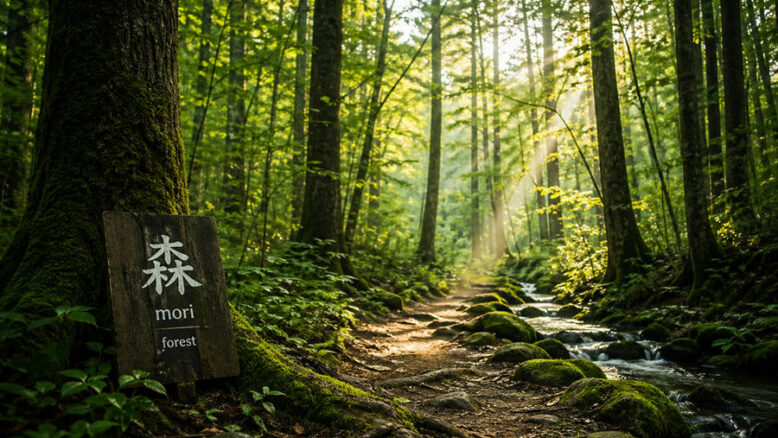
Japanese names that mean forest can feel peaceful, green, strong, and deeply connected to nature. Some names use the kanji 森, which directly means “forest.” Others use related kanji for woods, trees, leaves, greenery, groves, and natural scenery.
Because Japanese names depend on kanji, the written form matters. The same name sound can have several different meanings depending on the characters used. This guide includes each name’s Japanese writing in kanji and hiragana, along with a simple explanation of its forest or nature connection.
What “Forest” Means in Japanese Names
The most direct Japanese word for forest is mori, written as 森. This kanji shows a group of trees and clearly means “forest.” It is common in Japanese surnames and can also appear in creative given names.
Another useful kanji is 林, which means “woods,” “grove,” or “small forest.” As a surname, it is usually read as Hayashi. In some name combinations, it may also be read as rin, though this depends on the full name and chosen reading.
Forest-inspired names may also use kanji for trees, leaves, flowers, and greenery. These names may not mean “forest” directly, but they still carry a woodland feeling.
- 森 / もり / mori — forest
- 林 / はやし, りん / hayashi, rin — woods, grove
- 木 / き, こ, もく / ki, ko, moku — tree, wood
- 樹 / いつき, じゅ, き / itsuki, ju, ki — tree, standing tree
- 葉 / は, よう / ha, yō — leaf
- 緑 / みどり, りょく / midori, ryoku — green
- 苑 / その, えん / sono, en — garden, cultivated natural space
Some names below are familiar Japanese given names, while others are more poetic or creative. For a real baby name, it is wise to check the kanji, reading, and natural impression with a fluent Japanese speaker.
Japanese Girl Names That Mean Forest or Forest Imagery
Girl names connected to forests often feel soft, floral, fresh, or peaceful. Some include 森 directly, while others suggest a forest through leaves, flowers, trees, or green color imagery.
Moriha(森葉 / もりは)
Moriha combines 森, meaning “forest,” with 葉, meaning “leaf.” Together, 森葉 can be understood as “forest leaf.” This is a gentle and poetic name idea with a quiet woodland feeling. It is more creative than common, so it may work best for fictional or artistic naming.
Morika(森花 / もりか)
Morika can be written as 森花, using 森 for “forest” and 花 for “flower.” The meaning can be read as “forest flower.” It has a bright, feminine feeling and brings to mind a small flower blooming among trees. This is a creative forest name rather than a widely used traditional one.
Morina(森奈 / もりな)
Morina uses 森 for “forest” and 奈, a kanji often used in names for its sound and graceful appearance. The meaning is not as literal as “forest flower” or “forest leaf,” but the kanji 森 gives it a clear forest connection. It has a soft, modern sound.
Rinka(林花 / りんか)
Rinka may be written as 林花, combining 林, meaning “woods” or “grove,” with 花, meaning “flower.” This gives the image of a “grove flower” or “flower of the woods.” Rinka is a name-like sound in Japanese, but this exact kanji combination is more creative and should be checked carefully for real-life use.
Rinami(林美 / りなみ)
Rinami can be written creatively as 林美. The kanji 林 means “grove,” while 美 means “beauty.” Together, the name can suggest “beautiful grove” or “woodland beauty.” It has a graceful image, though it is not one of the most standard Japanese given names.
Koharu(木春 / こはる)
Koharu is a familiar Japanese name sound, though it is often written with different kanji. Written as 木春, it combines 木, meaning “tree,” with 春, meaning “spring.” This spelling gives the name a fresh nature image, like trees coming back to life in spring.
Itsuha(樹葉 / いつは)
Itsuha can be written as 樹葉, combining 樹, meaning “tree,” with 葉, meaning “leaf.” Together, it can mean “tree leaf” or “leaves of a tree.” It has a delicate green feeling and fits beautifully with forest-inspired names.
Midori(緑 / みどり)
Midori means “green.” It does not literally mean forest, but it strongly suggests leaves, plants, and natural scenery. It is a clear and simple choice for someone who wants a Japanese name with a fresh green feeling.
Aoba(青葉 / あおば)
Aoba means “green leaves” or “fresh leaves.” The kanji 青 can refer to blue or green in Japanese color language, while 葉 means “leaf.” Aoba feels bright, youthful, and full of spring or early summer energy.
Konoka(木乃花 / このか)
Konoka can be written as 木乃花. The kanji 木 means “tree,” 乃 is an elegant connecting kanji used in names, and 花 means “flower.” This writing can suggest “flower of the trees.” It feels soft, floral, and woodland-like.
Japanese Boy Names That Mean Forest or Tree
Boy names connected to forests often use kanji for trees, roots, growth, strength, and endurance. Some are familiar Japanese given names, while others are direct forest-themed combinations that feel more creative.
Mori(森 / もり)
Mori means “forest.” It is simple and direct, but it is much more common as a Japanese surname than as a given name. For a character, 森 can feel quiet, grounded, and mysterious. For real-life naming, its surname-like impression should be considered.
Morito(森人 / もりと)
Morito combines 森, meaning “forest,” with 人, meaning “person.” The name 森人 can be interpreted as “forest person” or “person of the forest.” It has a strong, symbolic feeling and may suit fiction, games, or creative naming.
Moriki(森樹 / もりき)
Moriki uses 森 for “forest” and 樹 for “tree.” The writing 森樹 can be understood as “forest tree.” It has a sturdy and deeply natural image, though the combination is more creative than everyday.
Rinto(林人 / りんと)
Rinto can be written as 林人, combining 林, meaning “woods” or “grove,” with 人, meaning “person.” This gives the name a “person of the woods” feeling. It is a creative forest-related spelling rather than a highly common traditional name.
Rinji(林司 / りんじ)
Rinji can be written as 林司. The kanji 林 means “grove,” while 司 can mean “to manage,” “to govern,” or “to oversee.” The forest connection comes from 林. This name feels formal and unusual, so it is better suited to creative naming than a simple everyday choice.
Itsuki(樹 / いつき)
Itsuki is a strong and elegant Japanese name meaning “tree” when written as 樹. It does not mean forest directly, but one tall tree can still suggest growth, patience, and natural strength. This is one of the more realistic and familiar names on the list.
Taiki(大樹 / たいき)
Taiki can be written as 大樹, meaning “great tree” or “large tree.” It has a strong and steady feeling. This name suggests deep roots, protection, and quiet confidence, making it a natural choice for a forest-inspired boy name.
Naoki(直樹 / なおき)
Naoki can be written as 直樹, combining 直, meaning “straight” or “honest,” with 樹, meaning “tree.” It can suggest an honest, upright tree. Naoki is a familiar masculine Japanese name with a grounded feeling.
Haruki(春樹 / はるき)
Haruki can be written as 春樹, meaning “spring tree.” It brings together the freshness of spring and the strength of a tree. Haruki is a well-known Japanese name and has a gentle, literary nature feeling.
Yuki(優樹 / ゆうき)
Yuki can have many different meanings depending on the kanji. Written as 優樹, it combines 優, meaning “gentle” or “excellent,” with 樹, meaning “tree.” This gives the name a calm and kind image, like a gentle tree.
Gender-Neutral Japanese Names Inspired by Forests
Some Japanese nature names feel flexible, especially for characters, stories, games, or modern naming inspiration. These names do not all mean forest directly, but they carry images of trees, leaves, green spaces, and quiet outdoor scenery.
Mori(森 / もり)
Mori means “forest” and can feel simple, earthy, and unisex in a creative context. Since it is widely recognized as a surname, it may work especially well as a character surname or symbolic nature name.
Itsuki(樹 / いつき)
Itsuki, meaning “tree,” is a nature-inspired name with a clean and balanced sound. The kanji 樹 gives it a strong connection to forests, growth, and rooted strength.
Aoba(青葉 / あおば)
Aoba means “green leaves” or “fresh leaves.” It feels bright, youthful, and natural. Since leaves are closely tied to forest imagery, Aoba is a lovely choice for a gentle nature name.
Midori(緑 / みどり)
Midori means “green.” It is strongly associated with plants and natural scenery. While it often has a feminine impression, it can also work as a symbolic or creative name for any gender.
Rin(林 / りん)
Rin can be connected to 林, meaning “woods” or “grove,” when this kanji is chosen. The sound is short and elegant, but its meaning changes completely with different kanji. Many Rin names use characters unrelated to forests, so 林 is the important detail here.
Sora(空 / そら)
Sora means “sky.” It is not a forest name by meaning, but it pairs naturally with woodland imagery. For a forest-inspired character, Sora can suggest the open sky above the trees.
Kaede(楓 / かえで)
Kaede means “maple.” It is one of the most beautiful tree-related Japanese names and has a strong seasonal feeling, especially autumn. It does not mean forest directly, but it fits naturally in a forest-themed name list.
Nagi(梛 / なぎ)
Nagi can be written with 梛, referring to the nagi tree. It has a calm, sacred, and slightly mysterious feeling. Nagi is a subtle choice for readers who want a tree-based name without using the direct word for forest.
Hibiki(響樹 / ひびき)
Hibiki often means “echo” or “resonance” when written with kanji such as 響. Written creatively as 響樹, it can suggest an “echoing tree.” This is a poetic kanji combination rather than a standard forest meaning, but it has a beautiful woodland atmosphere.
Shion(紫苑 / しおん)
Shion is often written as 紫苑, referring to the aster flower. It does not mean forest, but it has a botanical feeling that fits well with nature-inspired names. It is a softer option for readers who like plant and flower imagery.
Japanese Last Names Connected to Forests
Many Japanese surnames include kanji for forests, woods, trees, mountains, fields, and villages. These names are especially useful for fictional characters because they sound natural as surnames while still carrying clear nature imagery.
Moriyama(森山 / もりやま)
Moriyama combines 森, meaning “forest,” with 山, meaning “mountain.” The surname 森山 can be understood as “forest mountain.” It has a strong, scenic feeling.
Morita(森田 / もりた)
Morita combines 森, meaning “forest,” with 田, meaning “rice field.” The surname 森田 can suggest a field near a forest or land connected to a wooded area.
Morimoto(森本 / もりもと)
Morimoto combines 森, meaning “forest,” with 本, meaning “base,” “origin,” or “root.” The surname 森本 can be interpreted as “base of the forest” or “origin of the forest.”
Kobayashi(小林 / こばやし)
Kobayashi means “small grove” or “small woods.” 小 means “small,” and 林 means “grove” or “woods.” It is a very recognizable Japanese surname with a gentle woodland meaning.
Hayashi(林 / はやし)
Hayashi is written with the single kanji 林, meaning “woods” or “grove.” It is simple, natural, and directly connected to forest imagery.
Aoki(青木 / あおき)
Aoki combines 青, meaning “blue” or “green,” with 木, meaning “tree.” The surname 青木 can be understood as “green tree” or “blue-green tree.” It has a fresh, leafy feeling.
Kimura(木村 / きむら)
Kimura combines 木, meaning “tree,” with 村, meaning “village.” The surname 木村 can be interpreted as “tree village.” It feels rooted, rural, and nature-connected.
Matsumoto(松本 / まつもと)
Matsumoto combines 松, meaning “pine,” with 本, meaning “base” or “origin.” The surname 松本 can suggest “base of the pine tree.” Pines are strongly connected with natural beauty and long life in Japanese culture.
Sakaki(榊 / さかき)
Sakaki refers to a sacred evergreen tree used in Shinto contexts. As a surname or character name, 榊 has a spiritual, traditional, and nature-based feeling.
Nakamori(中森 / なかもり)
Nakamori combines 中, meaning “middle,” with 森, meaning “forest.” The surname 中森 can be interpreted as “middle forest” or “within the forest.” It is a beautiful surname choice for a character with a deep woodland connection.
Forest Names With Beautiful Meanings
Forest-inspired Japanese names can feel peaceful, strong, mysterious, or poetic depending on the kanji. Looking at the mood of each name can make it easier to choose the right one.
Peaceful Forest Names
Peaceful forest names often use kanji for leaves, greenery, flowers, and soft natural scenery. These names feel calm, fresh, and gentle.
- Midori(緑 / みどり) — green
- Aoba(青葉 / あおば) — fresh green leaves
- Itsuha(樹葉 / いつは) — tree leaf
- Morina(森奈 / もりな) — forest with a graceful name ending
- Kaede(楓 / かえで) — maple
These names suggest quiet paths, soft leaves, spring growth, and the calm feeling of being surrounded by trees.
Strong Forest Names
Strong forest names often use kanji for trees, large trees, mountains, and upright growth. They can suggest endurance, honesty, protection, and deep roots.
- Taiki(大樹 / たいき) — great tree
- Itsuki(樹 / いつき) — tree
- Moriki(森樹 / もりき) — forest tree
- Moriyama(森山 / もりやま) — forest mountain
- Naoki(直樹 / なおき) — honest, upright tree
These names feel steady and grounded. They bring to mind tall trunks, deep roots, and trees that stand through every season.
Magical or Mysterious Forest Names
Some forest names have a more poetic or fantasy-like feeling. They may be especially useful for characters, stories, games, or symbolic names.
- Moriha(森葉 / もりは) — forest leaf
- Rinka(林花 / りんか) — grove flower
- Nagi(梛 / なぎ) — nagi tree
- Shion(紫苑 / しおん) — aster flower
- Hibiki(響樹 / ひびき) — echoing tree, poetic kanji combination
These names feel soft, hidden, or slightly enchanted. They are not always the most standard choices for real-life naming, but they can be beautiful in creative projects.
Conclusion
Japanese names that mean forest can be direct, subtle, strong, or poetic. Names with 森 clearly connect to the meaning “forest,” while names with 林, 樹, 木, 葉, and 緑 create related images of woods, trees, leaves, and greenery.
For a more familiar Japanese given name, options such as Itsuki(樹 / いつき), Taiki(大樹 / たいき), Naoki(直樹 / なおき), Haruki(春樹 / はるき), Aoba(青葉 / あおば), Midori(緑 / みどり), and Kaede(楓 / かえで) may feel more natural. For a character or creative name, direct forest combinations such as Moriha(森葉 / もりは), Morika(森花 / もりか), Morito(森人 / もりと), and Moriki(森樹 / もりき) can give a clearer woodland meaning.
The best choice depends on the feeling you want: familiar, symbolic, gentle, strong, or deeply tied to the image of a quiet green forest.