Japanese names connected to the sun can feel bright, warm, and full of life. Some names point directly to the sun through their kanji, while others are better understood through related ideas like sunlight, dawn, brightness, or clear skies. That difference matters. If you are choosing a name for its meaning, it helps to know whether the connection is literal, symbolic, or somewhere in between.
This guide brings those meanings together in one place. You will find Japanese sun names for girls, boys, and unisex use, along with sunrise names, sunlight-inspired choices, and the key kanji that shape their meaning. The goal is not just to list names, but to make the category easier to read with confidence.
What “Sun” Can Mean in Japanese Names

In Japanese names, “sun” is not always one simple category. Some names use kanji that directly mean sun or rising sun. Others connect to the same image through sunlight, brightness, warmth, clear weather, or the first light of morning. That is why two names may sit on the same sun-themed list even when one is a literal match and the other is more atmospheric.
This distinction matters when you are choosing a name. A direct sun name can feel bold and easy to explain. A related name may feel softer and more poetic, especially if you are drawn to sunshine, radiance, or dawn rather than the exact word “sun.” Neither approach is better. The important part is knowing which kind of meaning you are actually looking at.
Kanji also add another layer. The same spoken name can be written in different ways, and those spellings can shift the meaning quite a bit. One version may point to sunlight, while another leans toward brightness, spring, or clear skies. Because of that, the written form matters just as much as the sound.
Common Kanji Found in Japanese Names Connected to the Sun
Japanese names in this theme often draw from a small group of kanji that carry different shades of solar meaning. Some point straight to the sun itself. Others create a sunlit feeling through light, warmth, or brightness.
Kanji that directly mean sun
日 is the most direct and recognizable kanji in this category. It means sun or day, and in names it can create a clear connection to sunlight, daytime, or the sun itself. Another important character is 旭, which is associated with the rising sun and morning brightness. Names that use these kanji often feel vivid and energetic.
Kanji that suggest sunlight, brightness, or sunny warmth
陽 is one of the most useful kanji in sun-themed names because it often suggests sunshine, sunlight, warmth, or a bright positive feeling. It is not always identical to the physical sun, but it gives many names their warm solar tone. Kanji such as 光 and 明 also appear often in this space because they carry ideas like light, radiance, brightness, and clarity.
Kanji that are sun-adjacent rather than exact
Some names enter this category through mood rather than literal meaning. 晴, for example, points to clear weather and brightness, which makes it feel naturally close to sunshine. Kanji tied to dawn, open skies, or daylight can work in a similar way. These names still belong in a sun-themed guide, but they are better described as related rather than exact.
That is why Japanese sun names need a little more care than a simple translation list. The kanji may point directly to the sun, or they may build a broader feeling of light, warmth, and morning brightness. Reading that nuance is what makes the category meaningful.
Best Japanese Names That Mean Sun
If you want a strong place to start, these are some of the clearest and most appealing Japanese names connected to the sun. Together, they show the full range of the topic, from literal sun meanings to names shaped by sunlight and radiance.
Taiyō (太陽)
Meaning: sun
Why it stands out: Taiyō is one of the most direct choices in the whole category because the kanji literally mean sun. It is a straightforward pick for readers who want a clear solar meaning without much interpretation.
Match type: Exact sun meaning
Asahi (朝日 / 旭)
Meaning: morning sun or rising sun
Why it stands out: Asahi is bright, fresh, and full of forward energy. Depending on the kanji, it can point to the morning sun directly or to the image of the rising sun, which gives it a strong sunrise feel.
Match type: Exact sun-related meaning
Hinata (日向 / 陽向)
Meaning: sunny place, toward the sun, sun-facing
Why it stands out: Hinata is one of the most loved modern names in this theme because it feels natural and warm. It does not always mean “sun” as a single word, but it creates a strong image of sunlight and open brightness.
Match type: Directly sun-connected
Yōko (陽子)
Meaning: sunlight child or sunny child
Why it stands out: Yōko is a classic choice built on 陽, a kanji that often carries the feeling of sunshine and warmth. It is a good example of how a name can belong in this category through sunlight rather than the literal sun alone.
Match type: Sunlight-related meaning
Hikaru (光 / 輝)
Meaning: light, radiance, brightness
Why it stands out: Hikaru is not a literal sun name, but it fits naturally into the best-of list because many readers are really looking for glow, shine, and radiant energy. It is one of the clearest light-based choices in the broader sun family.
Match type: Related through light and radiance
Akira (明 / 昭 / 亮 and other forms)
Meaning: bright, clear, luminous
Why it stands out: Akira belongs here because it brings in brightness and clarity without forcing a literal sun meaning. It is a flexible choice that works well for readers who like the solar mood more than the exact word.
Match type: Related through brightness
What makes these names work so well together is balance. Some are direct. Some are softer. Together, they show how Japanese names can express the sun through exact meaning, sunlight, or radiant feeling.
Japanese Girl Names That Mean Sun
Japanese girl names in this category often feel warm, graceful, and light-filled. Some connect clearly to the morning sun or sunshine, while others lean toward brightness and soft radiance.
Asahi (朝日)
Meaning: morning sun
Why it works: Asahi feels fresh and uplifting, with a clear sunrise image that gives it brightness without heaviness.
Match type: Exact sun-related meaning
Hinata (日向 / 陽向)
Meaning: sunny place, sun-facing, toward the sun
Why it works: Hinata has a soft, natural feel and one of the clearest sunlight connections in modern Japanese naming.
Match type: Directly sun-connected
Yōko (陽子)
Meaning: sunlight child, sunny child
Why it works: Yōko carries a classic brightness through 陽, making it a strong fit for readers who want sunshine rather than a literal sun word.
Match type: Sunlight-related meaning
Haruhi (春陽 / 晴陽 / 日陽 and other forms)
Meaning: varies by kanji, but can connect to spring sunshine, sunny brightness, or sunlight
Why it works: Haruhi shows how much nuance kanji can add. Some forms feel seasonal, others bright and sky-lit, but the overall impression is airy and warm.
Match type: Related through sunlight, brightness, or sunny atmosphere
Himari (陽葵 and other forms)
Meaning: often linked to sunshine and warmth depending on the kanji
Why it works: Himari has a gentle, modern sound. In sun-related spellings, it leans more toward a warm, radiant image than a strict sun definition.
Match type: Related through sunlight and warmth
Akari (明 / 光 and other forms)
Meaning: light, brightness, illumination
Why it works: Akari is a good fit for readers who want glow rather than direct solar wording. It feels soft, clear, and welcoming.
Match type: Related through light and brightness
Japanese Boy Names That Mean Sun
Japanese boy names tied to the sun often feel strong, open, and energetic. The most compelling choices in this group move between literal sun meanings and brighter, more symbolic ones.
Taiyō (太陽)
Meaning: sun
Why it works: Taiyō is the clearest direct option in the category and carries a bold, unmistakable solar meaning.
Match type: Exact sun meaning
Asahi (朝日 / 旭)
Meaning: morning sun or rising sun
Why it works: Asahi combines brightness with movement, making it one of the strongest sunrise-inspired choices.
Match type: Exact sun-related meaning
Akira (明 and other forms)
Meaning: bright, clear
Why it works: Akira does not say “sun” directly, but it carries the clear, luminous quality many readers want from the theme.
Match type: Related through brightness
Hikaru (光 / 輝)
Meaning: light, radiance
Why it works: Hikaru captures shine and radiance in a simple, memorable way, making it a natural sun-adjacent choice.
Match type: Related through light and radiance
Haru (陽 and other forms)
Meaning: can suggest sunshine, brightness, or a light seasonal feel depending on the kanji
Why it works: Haru is short and versatile. In sun-related spellings, it gives a lighter and more modern take on the category.
Match type: Related through sunlight or sunny brightness
Teru (照 / 輝 and other forms)
Meaning: shine, illuminate
Why it works: Teru fits well when the goal is radiance rather than a literal sun meaning. It is crisp, bright, and expressive.
Match type: Related through shining and illumination
Unisex Japanese Names Connected to the Sun
Some of the best names in this theme also work as unisex choices. In practice, a name may lean more masculine or feminine depending on usage and kanji, but these options are commonly discussed across both sides of the category.
Hinata (陽向 / 日向)
Meaning: sunny place, toward the sun
Why it works: Hinata is one of the most natural unisex names in this theme because it feels bright without being too literal.
Match type: Directly sun-connected
Asahi (朝日 / 旭)
Meaning: morning sun, rising sun
Why it works: Asahi carries a strong sunrise image and stays clean and wearable across styles.
Match type: Exact sun-related meaning
Haru (陽 and other forms)
Meaning: sunshine, brightness, or a light seasonal meaning depending on kanji
Why it works: Haru is simple and flexible, which makes it especially appealing as a modern unisex option.
Match type: Related through sunlight and brightness
Hikaru (光 / 輝)
Meaning: light, radiance
Why it works: Hikaru sits comfortably in the middle of the category, offering brightness and shine without a heavy literal meaning.
Match type: Related through light and radiance
Akira (明 and other forms)
Meaning: bright, clear
Why it works: Akira works well here because it feels strong but not rigid, and its meaning stays close to the luminous side of the theme.
Match type: Related through brightness
Japanese Names That Mean Rising Sun, Sunrise, or Morning Light
If you love the emotional side of this theme, sunrise names are some of the most beautiful options to explore. They often suggest beginnings, movement, and the quiet optimism of first light.
Asahi (朝日 / 旭)
Meaning: morning sun or rising sun
Why it works: Asahi remains one of the strongest names in the entire article because it captures both brightness and a sense of new beginnings.
Match type: Exact morning sun meaning
Hinode (日の出)
Meaning: sunrise
Why it works: Hinode is one of the clearest choices for anyone who wants the exact image of the sun rising.
Match type: Exact sunrise meaning
Akatsuki (暁)
Meaning: dawn, daybreak
Why it works: Akatsuki does not literally mean sun, but it belongs here naturally because it captures the moment when darkness gives way to light.
Match type: Related through dawn and daybreak
Akebono (曙)
Meaning: dawn, daybreak, beginning
Why it works: Akebono has a softer, more literary feel than Asahi or Hinode, making it a good option for readers who want something more poetic.
Match type: Related through dawn and first light
Japanese Names That Mean Sunlight, Bright, or Sunny
Many readers searching for sun names are really looking for something lighter and more flexible than a literal sun meaning. That is where names shaped by sunlight, brightness, and sunny warmth come in.
Hinata (陽向 / 日向)
Meaning: sunny place, sun-facing, toward the sun
Why it works: Hinata is one of the strongest names in this entire branch of the category because it feels clearly sunlit and easy to understand.
Match type: Directly connected to sunlight and sunny warmth
Haruhi (春陽 / 晴陽 / 日陽 and other forms)
Meaning: depends on the kanji, but can connect to spring sunshine, sunny brightness, or sunlight
Why it works: Haruhi has a softer and more poetic sound than many direct sun names, which makes it especially attractive in this section.
Match type: Related through sunny light and brightness
Hikaru (光 / 輝)
Meaning: light, radiance, brightness
Why it works: Hikaru is one of the clearest light-based names in Japanese, so it fits naturally in a sunlight-focused section.
Match type: Related through light and radiance
Akira (明 / 昭 / 亮 and other forms)
Meaning: bright, clear, luminous
Why it works: Akira gives the category clarity and brightness without locking the meaning to one exact image.
Match type: Related through brightness and clear light
Akari (明 / 光 and other forms)
Meaning: light, brightness, illumination
Why it works: Akari is soft and glowing, which makes it a natural fit for readers who like sunshine as a feeling rather than a direct label.
Match type: Related through light, brightness, and illumination
Rare and Unique Japanese Names Connected to the Sun
In a topic like this, “rare” needs to be used carefully. Some names below are better thought of as less familiar or more poetic picks rather than formally rare across Japan. Even so, they stand out from the more common list favorites and give the category a more distinctive edge.
Akatsuki (暁)
Meaning: dawn, daybreak
Why it stands out: Akatsuki has a dramatic sound and a vivid early-morning image, which makes it feel memorable and a little more literary than many everyday choices.
Match type: Related through dawn and the coming of sunrise
Akebono (曙)
Meaning: dawn, daybreak, beginning
Why it stands out: Akebono feels poetic and atmospheric, with a softer sunrise connection than more direct names like Asahi.
Match type: Related through dawn and first light
Nikkō (日光)
Meaning: sunlight, sun light
Why it stands out: Nikkō has a clear solar image while feeling more distinctive than many better-known sun names.
Match type: Directly connected to sunlight
Akeno (曙乃 / 明乃 and other forms)
Meaning: varies by kanji, but some forms connect to dawn or brightness
Why it stands out: Akeno shows how the rare side of this theme often works through nuance. Depending on the kanji, it can lean toward daybreak, brightness, or a softly lit feeling.
Match type: Related through dawn or brightness depending on kanji
Taiyō (太陽)
Meaning: sun
Why it stands out: Taiyō is the most direct name in the entire topic, and that directness gives it a distinctive feel even among other bright and nature-based names.
Match type: Exact sun meaning
Mythology and Cultural Symbolism Behind Sun Names in Japan
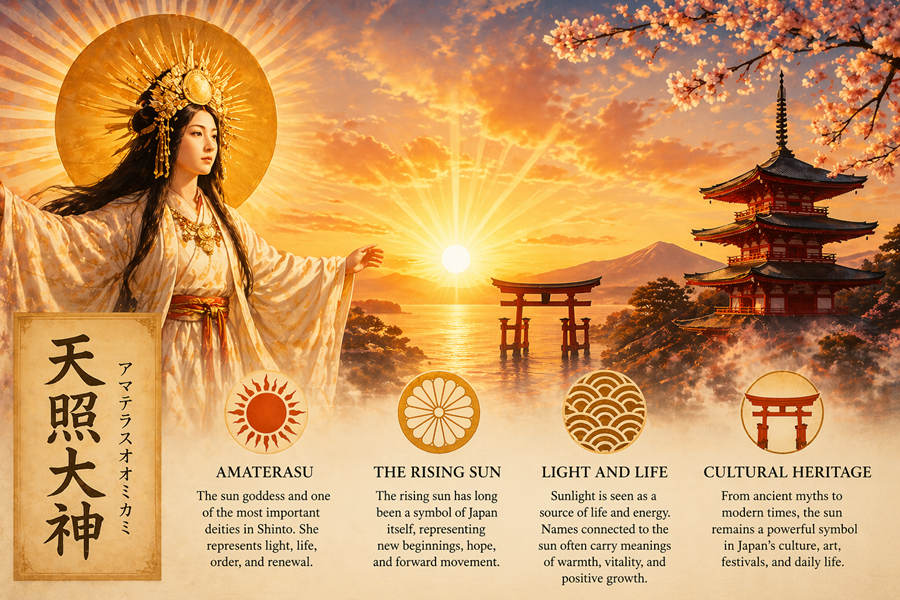
Sun-related names carry extra depth in Japan because the sun has a strong place in myth and national symbolism. That does not mean every sun name has a religious meaning, but it does help explain why names tied to sunlight, dawn, and the rising sun can feel especially resonant.
One reason is the importance of Amaterasu, the sun goddess in Japanese mythology. Her place in Shinto tradition gives solar imagery a deeper cultural layer, especially in names that suggest radiance, vitality, protection, or the return of light after darkness.
The national symbolism is also hard to miss. Japan’s flag centers on a red sun disc, and the country is widely associated with the image of the rising sun. Because of that, names linked to morning light and sunrise often feel especially hopeful. They suggest beginnings, momentum, and renewal in a way that goes beyond simple nature imagery.
At the same time, many people choose sun-related names for a simpler reason: they are beautiful. A name may feel warm, bright, and life-giving without carrying a heavy symbolic message. That balance is part of what makes this category so enduring.
How to Choose the Right Japanese Sun Name
The best place to start is with the meaning itself. Do you want a name that literally means sun, or do you want one that suggests sunlight, radiance, or morning brightness? That single decision will narrow the category quickly.
Next, think about tone. Some names in this group feel bold and vivid. Others feel soft, poetic, or airy. Sunrise names often feel hopeful and forward-looking, while light-based names may feel calmer and more elegant. The emotional tone matters just as much as the translation.
Then look closely at the kanji. A spoken name may have several written forms, and those spellings can shift the meaning in important ways. If the point of the name is its meaning, you cannot separate the sound from the kanji choice.
Finally, decide how exact you want to be. Some readers want a name that clearly says “sun.” Others are happier with a name that simply feels sunny, bright, or full of light. Both approaches can lead to beautiful choices as long as the meaning is read honestly.
How to Read Japanese Name Meanings Carefully
Japanese names are easy to oversimplify. A romanized spelling may look straightforward, but the real meaning depends on the kanji. Two people can share the same spoken name and still have different written meanings.
That is especially important in a topic like this one. A name may be listed under “sun” because one spelling uses a sun-related kanji, while another spelling of the same name may lean toward brightness, spring, or clear weather instead. Without the kanji, the meaning can look more exact than it really is.
It also helps to remember that many Japanese names work through combination rather than one direct dictionary definition. One character may bring in the idea of sun, while another adds direction, season, beauty, or light. The full meaning comes from the way those parts work together.
That is why this topic needs a careful reading style. Ask what kanji is being used, whether the meaning is literal or symbolic, and whether the name belongs in the exact-sun group or the broader sunlight-and-brightness group. Once you do that, the category becomes much clearer.
Conclusion
Japanese names that mean sun can be direct, soft, radiant, or poetic. Some point clearly to the sun itself. Others express the same feeling through sunlight, dawn, warmth, brightness, or the image of the rising sun. That range is part of what makes the category so appealing.
If you are choosing a name from this theme, the most important step is to read it carefully. Look at the kanji, the nuance, and the feeling the name creates. A beautiful sun name is not just one that sounds bright. It is one whose meaning truly matches what you want to say.