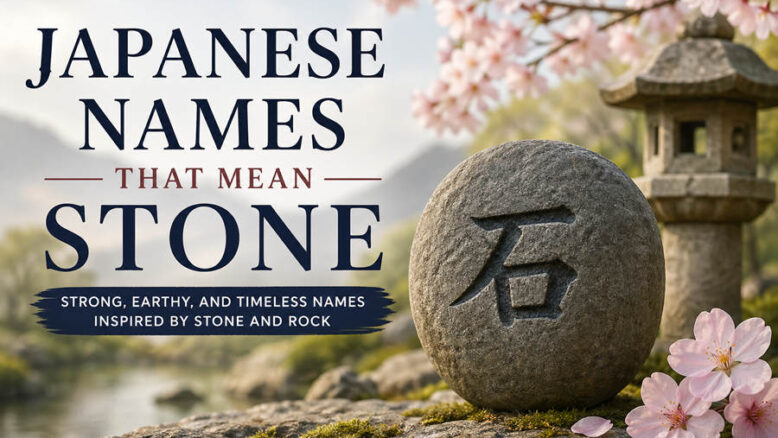
Japanese names connected to stone can feel strong, calm, steady, and close to nature. Some use kanji that directly mean stone or rock, while others suggest gems, jewels, minerals, or crystal-like beauty. The most important thing to know is that Japanese names do not get their meanings from sound alone. They get their meanings from the kanji used to write them.
That means a name like Akari, Eri, or Tamaki may have many possible meanings depending on its kanji. In this guide, you’ll find direct stone names, softer gemstone names, and practical notes on which choices feel best for babies, characters, pets, or creative projects.
What “Stone” Can Mean in Japanese Names
The clearest kanji for stone is 石, which means “stone” or “rock.” It is common in Japanese surnames and place names, but it can feel very literal as a modern given name.
岩 means “rock,” “boulder,” or “cliff.” It has a stronger and heavier feeling than 石. Names with 岩 often sound rugged, traditional, or connected to mountains and natural strength.
磐 also means rock or crag and can suggest firmness, stability, and a solid foundation. It has an old, poetic feeling, so it often works better for fictional names or rare, symbolic combinations than for everyday baby names.
There are also softer ways to express a stone theme. 玉 and 珠 can mean jewel, gem, pearl, or precious bead. 瑠璃 means lapis lazuli, a deep blue gemstone. 瑛 can suggest crystal-like brightness, while 璃 gives a glassy or jewel-like impression in names. 碧 means blue-green and can create a clear, precious-stone image.
These meanings are not identical. Some kanji point to rough natural stone, while others suggest polished gems or precious beauty. That difference matters when choosing a name.
Japanese Names That Directly Mean Stone or Rock
The names below have the clearest connection to stone, rock, or boulder meanings. Some are real given names, some are rare or old-fashioned, and some are best for fictional characters, pets, or symbolic naming.
| Name | Kanji | Meaning | Best Use |
|---|---|---|---|
| Ishi | 石 | Stone | Pet, nickname, character |
| Iwa | 岩 | Rock, boulder | Pet, character, symbolic name |
| Iwao | 巌 / 岩男 / 岩夫 | Rock, crag, rock-like man | Traditional boy name, character |
| Iwako | 岩子 | Rock child | Vintage-style character name |
| Iwane | 岩根 | Rock root | Poetic character name |
| Bansei | 磐生 | Firm rock and life | Creative or fictional name |
| Banjirō | 磐次郎 | Firm rock with a traditional male name ending | Historical or fictional male name |
| Sekito | 石斗 | Stone and dipper/measure | Creative character name |
Iwao is one of the strongest choices if you want a real name with a direct rock meaning. It has a traditional masculine feel. Ishi and Iwa are easy to understand, but they are also common words, so they usually work better for pets, nicknames, or characters than for real baby names.
Japanese Boy Names That Mean Stone or Rock
Stone-themed boy names often suggest endurance, strength, and quiet confidence. Some use rock kanji directly, while others use mountain or mineral imagery for a similar grounded feeling.
Iwao
Iwao may be written as 巌, 岩男, or 岩夫. The name can suggest a rock, crag, or a man with rock-like strength. It is direct, strong, and more traditional than trendy.
Gaku
Gaku can be written as 岳, meaning a high mountain or mountain peak. It does not literally mean stone, but it carries a rocky, elevated nature image. This can be a more natural option for readers who like the strength of stone but want something less literal.
Iwane
Iwane, written as 岩根, means “rock root.” It has a grounded and poetic feeling. It could suit a character who is steady, loyal, quiet, or deeply connected to the earth.
Bansei
Bansei, written as 磐生, combines the idea of a firm rock with life or birth. It is not a common everyday name, but it has a strong symbolic sound for fiction, fantasy, or creative naming.
Sekito
Sekito can be written with 石, the kanji for stone, and another kanji such as 斗. It has a sharper modern sound, but this kind of combination should be treated as creative unless checked by a Japanese naming expert.
Kōseki
Kōseki, written as 鉱石, means “ore” or “mineral.” This is more of a word than a normal personal name, so it is best for characters, pets, game names, or symbolic projects. It works especially well for earth magic, mining, crystal, or metal-inspired themes.
Japanese Girl Names That Mean Stone, Gem, or Jewel
Direct rock names can sound heavy, especially for girls. For a softer stone meaning, gem and jewel kanji are often a better fit. These names keep the beauty of stone while feeling smoother and more natural.
Ruri
Ruri, written as 瑠璃, means lapis lazuli. It is one of the clearest gemstone-related Japanese names. The image is deep blue, elegant, and calm.
Tamaki
Tamaki can be written in different ways. When written with 玉, it can carry a jewel or precious-stone meaning. Other spellings may have different meanings, so the kanji must be checked carefully.
Tamako
Tamako may use jewel-related kanji such as 珠子, meaning “jewel child” or “pearl child.” Some spellings, such as 玉子, can also be read as “egg” in ordinary Japanese, so this name needs extra care. It has a classic or vintage feeling rather than a modern one.
Tamae
Tamae can use 玉 or 珠 for a jewel meaning. Depending on the second kanji, it may suggest a jewel blessing, jewel branch, or precious beauty. It feels graceful and old-fashioned.
Akari
Akari is usually associated with light, brightness, or clarity. With a kanji combination such as 明璃, it can take on a bright, glassy, jewel-like image. This is a good example of a familiar sound that changes meaning depending on the kanji.
Eri
Eri can be written with kanji such as 瑛里 or 絵璃. When it includes 瑛 or 璃, the name can suggest crystal brightness, jewel-like beauty, or a clear polished feeling. Eri is simple, elegant, and easier to use than most direct rock names.
Aoi
Aoi can be written as 碧, giving it a blue-green color image. This spelling can feel clear, cool, and jewel-like. Aoi may also be written with other kanji, such as 葵, which has a different meaning.
Japanese Names That Mean Gem, Jewel, or Precious Stone
If you like the idea of stone but want a name that feels softer, jewel names are often the best choice. They can suggest value, beauty, clarity, and quiet strength without sounding too literal.
| Name | Possible Kanji | Meaning or Image | Style |
|---|---|---|---|
| Ruri | 瑠璃 | Lapis lazuli | Elegant, blue, gemstone-like |
| Tama | 玉 / 珠 | Jewel, gem, pearl | Simple, classic, pet-friendly |
| Tamami | 珠美 / 玉美 | Beautiful jewel | Graceful, feminine |
| Tamayo | 珠代 / 玉代 | Jewel generation or jewel era | Classic, refined |
| Eito | 瑛斗 / 瑛人 | Crystal brightness with a masculine name ending | Modern, bright |
| Aki | 瑛希 / 瑛輝 | Crystal brightness with hope or radiance | Clear, hopeful |
| Rika | 璃花 | Jewel-like glass and flower | Soft, pretty |
| Rina | 璃奈 | A name using the jewel-like kanji 璃 | Gentle, modern |
Ruri is the most direct gemstone name in this group because it means lapis lazuli. Tamami, Tamayo, and Tamae have a more classic jewel feeling. Names using 瑛 or 璃 do not simply mean “stone,” but they can fit a crystal, gem, or polished-stone theme.
Japanese Last Names That Mean Stone or Rock
Stone and rock kanji are very common in Japanese surnames. These names are especially useful for fictional characters, story families, or anyone studying Japanese surname meanings.
| Surname | Kanji | Meaning |
|---|---|---|
| Ishida | 石田 | Stone rice field |
| Ishikawa | 石川 | Stone river |
| Ishii | 石井 | Stone well |
| Ishihara | 石原 | Stone plain |
| Ishizuka | 石塚 | Stone mound |
| Ishibashi | 石橋 | Stone bridge |
| Iwasaki | 岩崎 | Rocky cape or promontory |
| Iwamoto | 岩本 | Base of the rock |
| Iwakura | 岩倉 | Rock storehouse or rock seat |
| Iwanaga | 岩永 | Eternal rock |
These are surnames, not regular first-name choices. In Japanese, family names and given names work differently, so a surname can sound awkward if used as a given name without context. For characters, though, names like Ishikawa, Iwamoto, and Iwanaga can create a strong earth-based image.
Strong and Earthy Stone-Inspired Japanese Names
Some names fit the stone theme because of their mood rather than a direct meaning. These choices can feel strong, calm, polished, or quietly powerful.
Names That Feel Strong
- Iwao — a traditional rock-related boy name with a firm sound.
- Iwane — grounded and poetic, with the image of roots in stone.
- Banjirō — old-fashioned and strong, useful for historical or fantasy characters.
- Gaku — mountain-like, high, and steady.
- Iwanaga — a surname meaning eternal rock, good for character naming.
Names That Feel Calm and Grounded
- Tamaki — balanced and precious when written with jewel-related kanji.
- Tamayo — classic, gentle, and jewel-like.
- Aoi — cool and clear when written as 碧.
- Ishida — a grounded surname with stone and field imagery.
Names That Feel Elegant or Jewel-Like
- Ruri — lapis lazuli, graceful and vivid.
- Eri — simple and elegant with crystal or jewel kanji options.
- Akari — bright and clear when paired with jewel-like kanji.
- Rika — soft, floral, and gem-like with 璃花.
- Tamami — beautiful jewel, classic and feminine.
Names Best for Babies, Characters, and Pets
The best name depends on how you plan to use it. A bold rock name may be perfect for a fantasy character but too literal for a baby. A short stone word may be charming for a pet but unusual as a person’s name.
Best Stone-Inspired Names for Babies
For real children, softer names are usually easier to use. Ruri, Aoi, Eri, Akari, Tamaki, Tamami, Eito, and Gaku can carry gemstone, crystal, color, or mountain imagery without sounding too literal. The exact kanji should always be checked before choosing one.
Best Stone Names for Characters
For characters, you can use stronger and more unusual names. Iwao, Iwane, Bansei, Banjirō, Sekito, and Kōseki can work well for warriors, mountain spirits, earth magic users, miners, historical figures, or characters with quiet inner strength.
Best Stone Names for Pets or Creative Projects
For pets, game names, usernames, or creative projects, short names are often best. Ishi, Iwa, Tama, Ruri, Aoi, and Gaku are simple and easy to say. Ishi is especially clear because it directly means “stone.”
How to Choose a Japanese Name That Means Stone
Start by deciding what kind of stone meaning you want. If you want something direct and rugged, look for kanji such as 石, 岩, or 磐. These feel strong, earthy, and firm.
If you want something softer, choose a jewel or gemstone direction. Kanji such as 玉, 珠, 瑛, 璃, and 碧 can suggest beauty, brightness, value, and clarity.
Next, think about natural use. Some names may have beautiful meanings but sound old-fashioned, word-like, or unusual in modern Japanese. That may be fine for a character or pet, but it matters more for a real child.
Finally, check the kanji before trusting the meaning. A romanized name alone does not tell the full story. The same sound can be written in many ways, and each spelling can change the meaning completely.
Conclusion
Japanese names that mean stone can be strong, steady, elegant, or precious depending on the kanji. Direct choices like Ishi, Iwa, and Iwao clearly connect to stone or rock. Softer names like Ruri, Tamaki, Tamami, Eri, and Aoi bring in gemstone, jewel, crystal, or color imagery.
For babies, the most natural choices are often the softer gem-inspired names. For characters, pets, and creative projects, stronger names with 石, 岩, or 磐 can be memorable and full of symbolism. The best name is one that fits both the meaning you love and the feeling you want the name to carry.