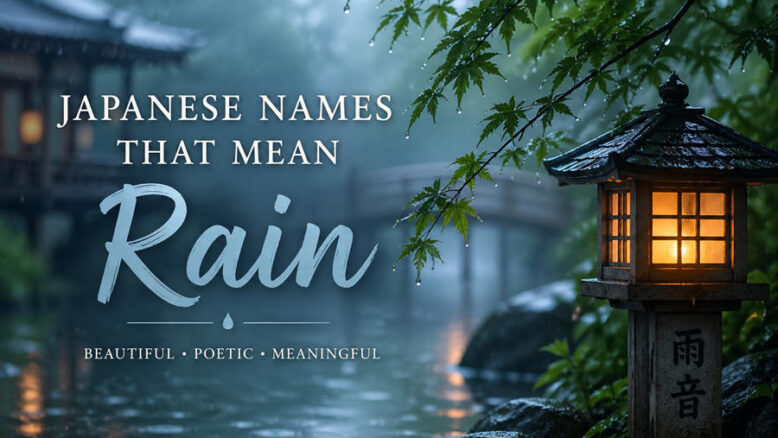
Rain can give a Japanese name a calm, gentle, and poetic feeling. Some names use the kanji 雨, meaning “rain,” while others suggest rainy weather through water, droplets, mist, dew, clouds, or soft seasonal imagery. Because Japanese names depend on kanji, the same sound can have many different meanings. A name only has a rain meaning when the kanji supports it.
This guide explains Japanese names connected to rain, including direct rain names, softer water-inspired names, and poetic choices that work especially well for characters, stories, pets, or creative projects.
What “Rain” Can Mean in Japanese Names
The most direct Japanese word for rain is 雨, usually read as ame when it stands alone. In names, 雨 can appear in creative kanji combinations, but not every rain word is commonly used as a real given name. Some are beautiful as words, yet unusual as personal names.
Rain-inspired names may also come from related natural images. A name can feel rainy without literally meaning “rain” if it uses kanji for water, mist, dew, droplets, clouds, or blue-green color. These names are better described as rain-inspired rather than direct rain names.
| Japanese | Reading | Meaning | Use in Names |
|---|---|---|---|
| 雨 | Ame | Rain | Direct, but uncommon as a given name |
| 雨音 | Amane | Sound of rain | Poetic and name-like |
| 小雨 | Kosame | Light rain | Beautiful, but more word-like than name-like |
| 春雨 | Harusame | Spring rain | Poetic; better for fiction or titles |
| 時雨 | Shigure | Passing seasonal rain | Literary and atmospheric |
| 雫 | Shizuku | Droplet | Soft, nature-based, and more name-like |
| 水 | Mizu / Sui | Water | Water-related rather than rain-specific |
| 霞 | Kasumi | Mist or haze | Graceful and established as a name sound |
| 露 | Tsuyu | Dew | Delicate and poetic |
| 雲 | Kumo | Cloud | Weather-related, but uncommon as a given name |
Japanese Names That Directly Use the Kanji for Rain
Names with 雨 give the clearest rain meaning. These names can be lovely, but many of them feel poetic, modern, or creative rather than traditional. That makes them especially useful for character names, pen names, pets, and stories.
Ame
Kanji: 雨
Meaning: Rain
Ame is the most direct Japanese name idea for rain. It is short, soft, and easy to understand. However, because ame is also the ordinary word for rain, it can feel very literal as a real given name. It works best as a simple nature name for a character, pet, or creative project.
Amane
Kanji: 雨音
Meaning: Sound of rain
Amane is one of the most graceful rain-related choices. With the kanji 雨音, it suggests the quiet sound of rainfall. It feels poetic without being too heavy, and its soft rhythm makes it suitable for a gentle character or a nature-inspired name list.
Miu
Possible kanji: 美雨
Meaning: Beautiful rain
Miu can be written with many different kanji, so it does not always mean rain. When written as 美雨, it combines 美, meaning “beauty,” with 雨, meaning “rain.” This gives the name a clear but soft rain meaning. It feels more natural than many longer invented rain names.
Ameka
Possible kanji: 雨花
Meaning: Rain flower
Ameka has a pretty image: flowers touched by rain. The kanji 雨花 can suggest “rain” and “flower,” but this should be treated as a creative name idea rather than a common traditional name. It works well for a fictional character with a gentle, springlike, or romantic mood.
Amemi
Possible kanji: 雨美
Meaning: Rain beauty
Amemi combines rain with beauty. It has a soft sound and a clear nature meaning, but it is also more creative than standard. It may be useful for stories, games, or symbolic names where the rain image matters more than everyday name usage.
Girl Names That Mean Rain or Rain-Inspired Beauty
Many beautiful girl names connected to rain use softer imagery instead of the kanji 雨. Droplets, mist, dew, and flowing water can create a gentle rainy feeling while still sounding more like names.
Shizuku
Kanji: 雫
Meaning: Droplet
Shizuku means “droplet.” It does not mean rain by itself, but it strongly suggests water, raindrops, and delicate natural beauty. The name feels quiet, clear, and emotional, making it one of the strongest rain-inspired choices.
Kasumi
Kanji: 霞
Meaning: Mist or haze
Kasumi is a soft nature name associated with mist and haze. It does not directly mean rain, but it fits beautifully with rainy mornings, mountains, rivers, and pale skies. Compared with many literal rain words, Kasumi feels more established and natural as a name.
Mio
Possible kanji: 澪
Meaning: Waterway or water channel
Mio can have different meanings depending on kanji. With 澪, it connects to water through the idea of a waterway or channel. It is not a rain name in the strict sense, but it has a smooth, flowing feeling that fits well in a rain-inspired list.
Miu
Possible kanji: 美雨
Meaning: Beautiful rain
Miu is a good option for readers who want a name that can directly include rain while still sounding gentle and modern. The rain meaning depends on the kanji 美雨, so it is important not to assume that every Miu has this meaning.
Tsuyu
Kanji: 露
Meaning: Dew
Tsuyu means “dew” when written as 露. It can also remind readers of Japan’s rainy season because tsuyu is the reading of 梅雨, meaning “plum rain” or rainy season. As a given name, Tsuyu feels delicate and poetic, but it may be better for a character than for everyday use.
Boy Names That Mean Rain or Water
Boy names connected to rain often feel more natural when they use water, sky, flow, or seasonal imagery. Direct rain kanji can work, but many combinations with 雨 feel creative rather than common.
Mizuki
Possible kanji: 水希, 瑞希, 瑞樹
Possible meanings: Water hope; auspicious hope; auspicious tree
Mizuki is a flexible name that can be used for different genders depending on kanji and context. When written with 水, it has a water meaning. Other kanji such as 瑞 can suggest freshness, good fortune, or auspiciousness rather than literal water. For readers who want a practical rain-adjacent name, Mizuki is one of the strongest choices.
Sui
Kanji: 水
Meaning: Water
Sui comes from the on-reading of 水, meaning “water.” It does not mean rain, but it has a clean, minimal water image. As a name idea, it feels simple and modern, though it should be checked carefully for real-life naming because single-kanji word names can vary in naturalness.
Kai
Kanji: 海
Meaning: Sea or ocean
Kai means “sea” or “ocean” when written as 海. It is not a rain name, but it belongs to the wider world of water names. It has a strong, simple sound and may appeal to readers who like rain imagery but want a name that feels broader and more grounded.
Shigure
Kanji: 時雨
Meaning: Passing rain; seasonal shower
Shigure is one of the most poetic Japanese rain names. It often suggests a passing shower with a seasonal, literary feeling. Because it has a dramatic atmosphere, it is especially strong for characters, stories, games, or symbolic names.
Amato
Possible kanji: 雨人
Creative meaning: Rain person
Amato can be built creatively from 雨, meaning “rain,” and 人, meaning “person.” This is not a name to present as common or traditional. It is better as a symbolic character name, especially for someone associated with storms, rainy days, or emotional change.
Gender-Neutral Japanese Rain Names
Some Japanese names can feel gender-neutral depending on kanji, family preference, and usage. Rain-inspired names are especially flexible when they come from nature images rather than strongly gendered name endings.
| Name | Kanji | Meaning | Style |
|---|---|---|---|
| Amane | 雨音 | Sound of rain | Soft, musical, poetic |
| Shizuku | 雫 | Droplet | Gentle and emotional |
| Mizuki | 水希 / 瑞希 | Water hope / auspicious hope | Flexible and name-like |
| Sora | 空 | Sky | Open and airy |
| Aoi | 碧 / 蒼 | Blue-green or deep blue | Fresh, cool, and nature-based |
| Rei | 澪 | Waterway, depending on reading | Elegant and understated |
| Kiri | 霧 | Mist | Mysterious and poetic |
Sora and Aoi do not mean rain. Sora means “sky,” while Aoi can suggest blue or blue-green tones. They belong in this list because they pair naturally with rainy imagery: gray skies, wet leaves, blue water, and rain-washed landscapes.
Poetic Japanese Names Connected to Rainy Weather
Some Japanese rain words are beautiful but more literary than practical. These choices can be excellent for fiction, fantasy, poetry, pets, usernames, or symbolic names.
Kosame
Kanji: 小雨
Meaning: Light rain
Kosame means “light rain.” It has a tender, quiet feeling and works well for a gentle character or a soft nature-themed name. As a real given name, it may feel more like a poetic weather word than an everyday personal name.
Harusame
Kanji: 春雨
Meaning: Spring rain
Harusame means “spring rain.” The image is beautiful, fresh, and seasonal. However, it is also a regular word, so it usually works better as a fictional name, title, or symbolic phrase than as a practical baby name.
Samidare
Kanji: 五月雨
Meaning: Early summer rain
Samidare is a poetic word connected to early summer rain. It has a literary, old-fashioned mood and can feel dramatic in the right setting. It is best for stories, fantasy names, poems, or creative projects rather than everyday naming.
Kiri
Kanji: 霧
Meaning: Mist
Kiri means “mist.” Mist is not rain, but the feeling is close: damp air, quiet mornings, mountains, forests, and soft gray skies. Kiri can work well for a mysterious or calm character.
Kumo
Kanji: 雲
Meaning: Cloud
Kumo means “cloud.” It is weather-related rather than rain-specific. As a given name, it can feel unusual, but it may work for fiction or symbolic naming when you want a sky-and-rain atmosphere.
Japanese Last Names Related to Rain, Water, or Weather
Japanese last names are inherited family names, so they are different from given names. A surname can have a beautiful meaning, but it is not usually chosen in the same way a baby name or character name is chosen. Still, rain and water surnames can be useful when creating fictional characters.
| Last Name | Kanji | Meaning | Notes |
|---|---|---|---|
| Amemiya | 雨宮 | Rain shrine or rain palace | A recognizable rain-related surname |
| Amemori | 雨森 | Rain forest | Nature-based and atmospheric |
| Mizuno | 水野 | Water field | A water-related surname |
| Kawamura | 川村 | River village | River-related rather than rain-related |
| Kumoi | 雲井 | Cloud well or cloud place | Weather-related and poetic |
| Usui | 雨水 | Rainwater | Possible with these kanji, though Usui can be written in other ways |
For character naming, a rain-related surname can create a strong image without making the given name too literal. For example, Amemiya Shizuku has a clear rain-and-droplet feeling, while Amemiya Sora feels more open, airy, and sky-related.
Best Rain Names for Babies vs. Characters
Some rain-inspired names feel natural enough for real-life naming, while others are better for fiction or creative use. This difference matters because a name can be meaningful and beautiful even if it is not practical as an everyday Japanese given name.
More Usable Rain-Inspired Names
- Amane — poetic and gentle, especially with the kanji 雨音
- Shizuku — a soft water name meaning “droplet”
- Mizuki — flexible and familiar, with possible water-related kanji
- Mio — short and graceful, with a possible waterway meaning
- Miu — can mean “beautiful rain” when written as 美雨
- Kasumi — misty, elegant, and more natural than many literal rain words
- Aoi — blue-green imagery that can suggest water or rainy scenery
- Sora — sky imagery that pairs well with rain themes
Better for Fiction, Games, Pets, or Creative Projects
- Ame — direct and simple, meaning “rain”
- Kosame — light rain
- Harusame — spring rain
- Shigure — passing seasonal shower
- Samidare — early summer rain
- Kiri — mist
- Kumo — cloud
- Ameka — a creative “rain flower” combination
- Amato — a symbolic “rain person” combination
For a baby name, it is best to check the kanji, reading, and naturalness with a fluent Japanese speaker or a reliable Japanese naming resource. For a character name, you have more freedom to choose a word that creates the right mood.
How to Choose a Japanese Name That Means Rain
Start by deciding whether you want a direct rain meaning or a softer rain-inspired feeling. If you want the name to mean rain clearly, look for the kanji 雨. If you prefer something more subtle, consider names connected to droplets, water, mist, dew, clouds, sky, or blue-green color.
Here are a few simple guidelines:
- Check the kanji, not only the sound. A name’s meaning comes from how it is written.
- Separate direct meanings from symbolic ones. Ame means rain, while Kasumi suggests mist and atmosphere.
- Be careful with invented combinations. Creative kanji names can be beautiful, but they may not sound natural in Japanese.
- Think about the name’s purpose. Baby names need more practical care. Character names can be more dramatic or symbolic.
- Consider the feeling of the name. Rain can suggest calmness, sadness, renewal, softness, romance, or mystery.
For a gentle, name-like option, Amane, Shizuku, Mizuki, Mio, and Kasumi are especially appealing. For a stronger rain image, Ame, Shigure, Kosame, and Samidare give a clearer weather meaning.
Final Thoughts
Japanese names that mean rain can be soft, poetic, and full of natural beauty. Some names, such as Ame, Amane, and Miu written as 美雨, connect directly to rain through the kanji 雨. Others, such as Shizuku, Kasumi, Mizuki, and Mio, create a gentler rain-inspired feeling through droplets, mist, water, and flowing scenery.
The best choice depends on how the name will be used. A real baby name should sound natural and have carefully chosen kanji. A character, pet, or creative name can be more symbolic. Either way, rain-inspired Japanese names offer a beautiful mix of calmness, freshness, emotion, and quiet strength.