Japanese names that mean moon have a calm, timeless beauty. Some feel soft and elegant. Others sound dreamy, mysterious, or a little magical. That is part of what makes this topic so interesting. In Japanese, though, a moon name is not always just one sound with one fixed meaning. The meaning often depends on the kanji, which is why two names that sound similar can carry very different ideas.
That is also why this topic deserves a full guide instead of a quick list. Some names directly use the kanji for moon. Some only become moon names in certain spellings. Others are inspired by moonlight, night, the sky, or old stories tied to the moon. So below, you will find the names grouped in a way that is easier to understand and easier to use.
What Makes a Japanese Name Mean Moon?
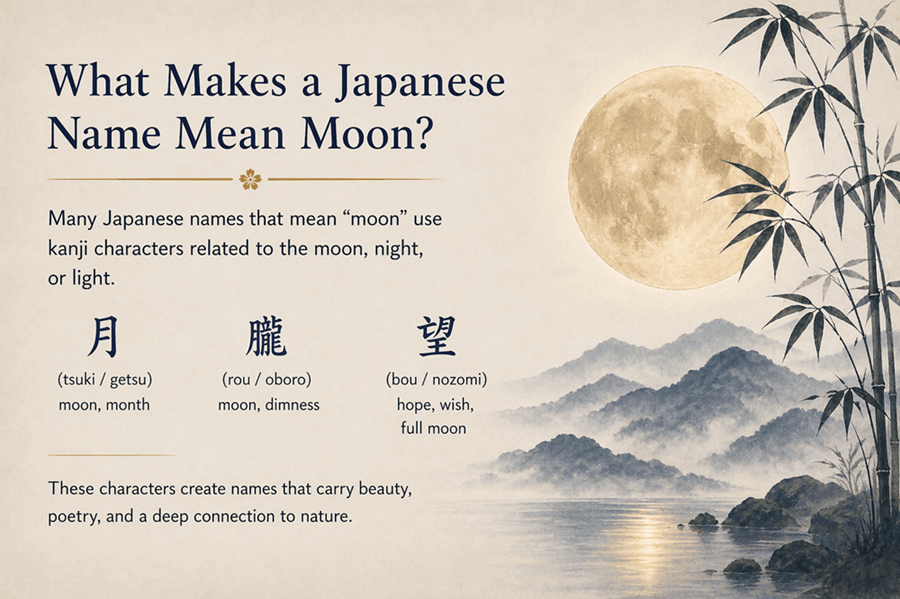
Before looking at the names themselves, it helps to understand how Japanese names work. A lot of English-language lists make this topic sound simpler than it really is. In reality, Japanese names are shaped by sound, kanji choice, and nuance. That means a name may directly mean moon, include the moon kanji, or simply create a moon-like feeling through imagery such as light, night, sky, beauty, or stillness.
The kanji for moon in Japanese names
The main kanji people think of here is 月. In Japanese, this character can mean moon, but it can also mean month depending on the word and reading. That is one reason moon-related Japanese names are so interesting. The same character can feel clearly lunar in one name and more calendar-related in another.
This is also why broad lists online can be misleading. A name that contains 月 is not automatically a perfect literal match for “moon” in the way many English readers expect. Sometimes the moon meaning is direct. Sometimes it is softened by the second kanji. Sometimes the overall meaning shifts depending on the exact spelling. A good guide needs to make those differences clear.
Why one Japanese name can have different meanings
Japanese names are not defined by pronunciation alone. The sound matters, but the kanji matters just as much. The same name can be written in several ways, and each version can carry a different meaning. So two people with the same spoken name may not have the same name meaning at all.
A good example is a name like Mizuki. To an English-speaking reader, it may look like one fixed name. In Japanese, though, Mizuki can be written with different kanji and take on different meanings. The same is true for names like Yuzuki and Mitsuki. So when people search for Japanese names that mean moon, they are usually looking for both a sound they like and a kanji form that creates the meaning they want.
Kanji, hiragana, and why meaning comes from the characters
Another helpful point is the difference between kanji and kana. Hiragana and katakana mainly represent sound. Kanji carry meaning in a fuller way. So a name written only in hiragana may still sound beautiful, but its deeper meaning becomes much clearer when a kanji form is attached to it. If you want a beginner-friendly place to learn more about Japanese writing and study tools, the Japan Foundation’s Japanese learning materials are a helpful starting point.
Direct moon names vs moon-inspired names
Not every moon-related Japanese name works the same way, so it helps to separate them into groups. The first group includes names that directly use the moon kanji 月 in a clear way. These are the names most readers expect. The second group includes names that still connect to the moon but do it more poetically. They may use imagery linked to moonlight, evening, night, brightness, the sky, or a calm moonlit scene.
That distinction makes this whole topic easier to follow. It also helps you choose a name that really matches the style you want, whether that is literal, symbolic, romantic, modern, or quietly celestial.
Best Japanese Girl Names That Mean Moon
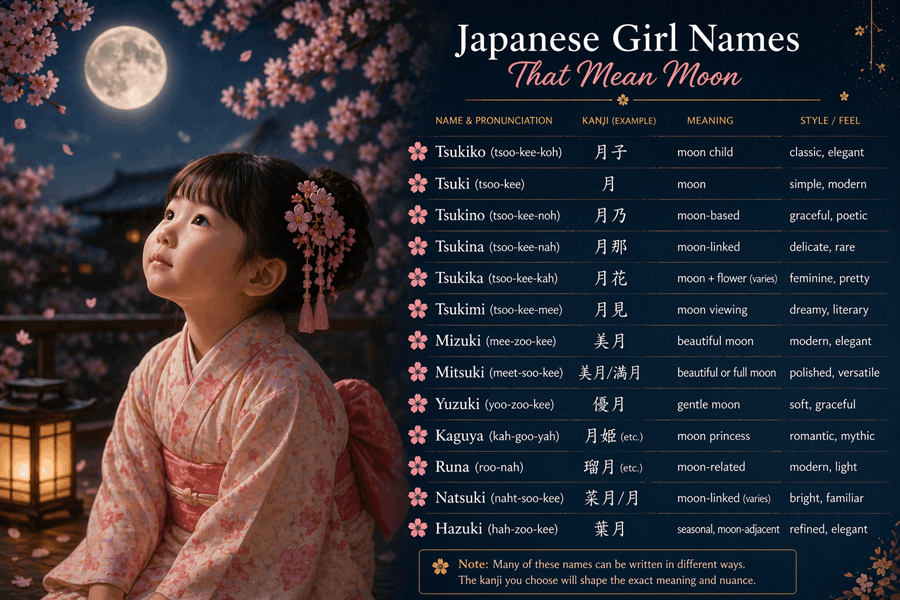
This is the biggest part of the article because moon-themed girl names are often the most searched and the most varied. Some are very direct and traditional. Others are soft, modern, or romantic. To make this section more useful, each entry below includes pronunciation, kanji examples, meaning, overall feel, and what makes the name stand out.
Tsukiko
Pronunciation: tsoo-kee-koh
Kanji: 月子
Meaning: moon child
Style/Feel: classic, feminine, elegant, traditional
Why it stands out: Tsukiko is one of the clearest Japanese girl names that mean moon. It feels refined and timeless, and the meaning is easy to understand. If you want a true moon name with a graceful old-Japanese feel, this is one of the best choices.
Tsuki
Pronunciation: tsoo-kee
Kanji: often written in moon-linked forms using 月
Meaning: moon
Style/Feel: simple, modern, clean, striking
Why it stands out: Tsuki is short, beautiful, and direct. It feels more straightforward than almost any other name in this guide, which makes it perfect for readers who want something minimal and unmistakably lunar.
Tsukino
Pronunciation: tsoo-kee-noh
Kanji: forms such as 月乃
Meaning: moon-based name with a soft, graceful flow
Style/Feel: airy, elegant, feminine, poetic
Why it stands out: Tsukino keeps the moon connection clear but sounds softer and more flowing than Tsuki. It has a gentle beauty that makes it very appealing.
Tsukina
Pronunciation: tsoo-kee-nah
Kanji: moon-linked forms such as 月那
Meaning: moon-based name
Style/Feel: delicate, rare, polished
Why it stands out: Tsukina feels a little less common than Tsukiko or Tsukino, which gives it a distinctive edge. It still has a direct lunar feel, but it sounds fresher and slightly more modern.
Tsukika
Pronunciation: tsoo-kee-kah
Kanji: forms such as 月花 and other 月-based spellings
Meaning: moon with floral or radiant imagery, depending on the kanji
Style/Feel: pretty, decorative, feminine, romantic
Why it stands out: Tsukika is one of the prettiest names in this category if you like a softer, more decorative feel. The moon stays central, but the second character can make the name feel even more graceful.
Tsukimi
Pronunciation: tsoo-kee-mee
Kanji: moon-linked spellings such as 月見 or similar forms
Meaning: moon viewing, or a poetic moon image depending on the spelling
Style/Feel: dreamy, gentle, literary, atmospheric
Why it stands out: Tsukimi has one of the most poetic sounds in the whole group. It feels less like a plain label and more like a moonlit scene.
Mizuki
Pronunciation: mee-zoo-kee
Kanji: commonly moon-linked forms such as 美月
Meaning: beautiful moon in one well-known spelling
Style/Feel: modern, stylish, elegant, widely appealing
Why it stands out: Mizuki is popular for good reason. It sounds smooth and contemporary, but in the right kanji form it also gives you a direct moon meaning. It is one of the strongest modern picks on this list.
Mitsuki
Pronunciation: meet-soo-kee
Kanji: several forms, including moon-linked spellings such as 美月 and others
Meaning: often beautiful moon, full moon, or another luminous moon image depending on the kanji
Style/Feel: polished, versatile, balanced
Why it stands out: Mitsuki is flexible and attractive. It can feel soft and elegant, but it can also sound stronger and more balanced than some of the more obviously feminine names.
Yuzuki
Pronunciation: yoo-zoo-kee
Kanji: moon-linked forms such as 優月 and others
Meaning: gentle or graceful moon in one common spelling
Style/Feel: soft, warm, modern, graceful
Why it stands out: Yuzuki shows exactly why kanji matters. Some spellings make it a moon name, while others take it in a different direction. That gives the name both beauty and flexibility.
Kaguya
Pronunciation: kah-goo-yah
Kanji: several spellings are associated with the name; its strongest moon connection comes from Japanese folklore
Meaning: closely tied to the image of a moon princess
Style/Feel: romantic, mythic, literary, elegant
Why it stands out: Kaguya is memorable because of its connection to the famous moon-princess story. It feels more dramatic and story-like than many other names in this guide.
Runa
Pronunciation: roo-nah
Kanji: some spellings are written with 月
Meaning: moon-related in certain forms
Style/Feel: modern, soft, internationally friendly
Why it stands out: Runa feels light and stylish. It is a good option if you want a name that sounds easy and modern but still fits the moon theme.
Natsuki
Pronunciation: ناht-soo-kee
Kanji: some forms use 月 as the second character
Meaning: varies by spelling, with moon-linked versions in certain forms
Style/Feel: familiar, bright, flexible
Why it stands out: Natsuki sounds natural and wearable, but it can still fit the moon category in the right spelling. It works well if you want something less obviously themed.
Hazuki
Pronunciation: hah-zoo-kee
Kanji: often 葉月 and related forms
Meaning: layered, seasonal, and sometimes moon-adjacent rather than purely literal
Style/Feel: soft, seasonal, refined, slightly traditional
Why it stands out: Hazuki belongs in the moon family even though it does not feel as direct as Tsukiko or Tsuki. It has a distinctly Japanese elegance that many readers will love.
Taken together, these names show two clear patterns. Some, like Tsukiko, Tsuki, and Tsukino, are very direct moon names. Others, like Mizuki, Mitsuki, Yuzuki, and Natsuki, become moon names in specific kanji forms. That is exactly why a careful guide is more helpful than a plain list.
Japanese Boy Names That Mean Moon
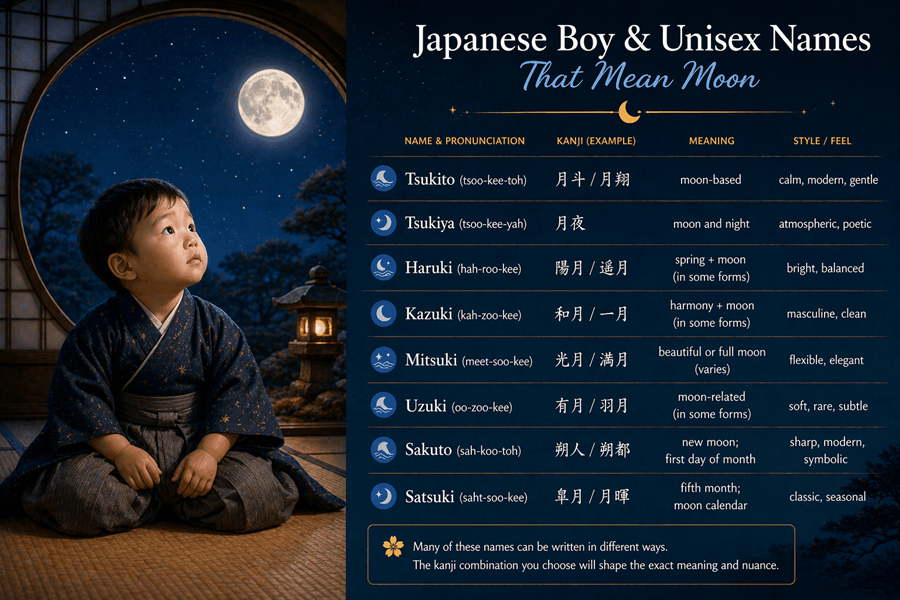
Japanese boy names with moon meanings are often a little more layered. Some are direct. Others lean more on lunar symbolism, special kanji, or specific spellings. That makes the boy-name side of the topic smaller, but still very interesting.
Tsukito
Pronunciation: tsoo-kee-toh
Kanji: moon-linked forms such as 月斗, 月翔, and other variants
Meaning: moon-based name
Style/Feel: calm, modern, gentle but masculine
Why it stands out: Tsukito is one of the strongest moon-themed boy names because the lunar feel is clear, but the sound still feels smooth and strong.
Tsukiya
Pronunciation: tsoo-kee-yah
Kanji: forms such as 月夜 and other moon-based spellings
Meaning: moon and night image in some forms
Style/Feel: atmospheric, cool, poetic, distinctive
Why it stands out: Tsukiya has a calm, memorable sound. It works especially well if you want a moon name with more mood and depth.
Haruki
Pronunciation: hah-roo-kee
Kanji: varies; some spellings can create a moon-related meaning
Meaning: broader name overall, but moon-linked in certain forms
Style/Feel: familiar, polished, balanced
Why it stands out: Haruki proves that not every moon name has to sound obviously lunar. In the right kanji form, it can fit the theme while still sounding like an everyday Japanese name.
Kazuki
Pronunciation: kah-zoo-kee
Kanji: some spellings include 月 as part of the meaning
Meaning: varies by spelling, with certain moon-related forms
Style/Feel: masculine, clean, modern
Why it stands out: Kazuki feels strong and readable. It is a good choice if you want a masculine name that connects to the moon without using “tsuki” directly in the sound.
Mitsuki
Pronunciation: meet-soo-kee
Kanji: many forms, some clearly moon-linked
Meaning: can shift between beautiful moon, full moon, or another luminous image depending on the kanji
Style/Feel: flexible, elegant, balanced
Why it stands out: Mitsuki works well on the boy side because it feels versatile. It can sound gentle or strong depending on how it is written and framed.
Uzuki
Pronunciation: oo-zoo-kee
Kanji: some forms use 月 as the second character
Meaning: moon-linked in certain spellings
Style/Feel: soft, rare, understated
Why it stands out: Uzuki feels quieter than many of the better-known names in this article. That makes it a good fit if you want something uncommon but still connected to the moon.
Sakuto
Pronunciation: sah-koo-toh
Kanji: often tied to 朔 in moon-related name discussions
Meaning: linked to the new moon or first day of the lunar month
Style/Feel: sharp, modern, symbolic
Why it stands out: Sakuto is interesting because it does not rely only on 月. Instead, it connects to lunar symbolism through a more specific moon-related kanji, which gives it a more layered feel.
Satsuki
Pronunciation: saht-soo-kee
Kanji: varies; some forms connect to moon or the traditional lunar calendar
Meaning: often seasonal and calendar-linked rather than a plain literal moon name
Style/Feel: classic, seasonal, slightly traditional
Why it stands out: Satsuki adds cultural depth. It feels tied not just to the moon, but also to older Japanese seasonal language.
Compared with the girl section, the boy section leans more on kanji variation and lunar symbolism than on direct moon sounds. That is what gives it its character.
Japanese Unisex Names Related to the Moon
Unisex moon names are one of the most appealing parts of this topic because they show how flexible Japanese naming can be. Some names are used across genders and become moon names through specific spellings. Others carry a broader celestial or lunar feeling.
Yuzuki
Why it works: Yuzuki is one of the strongest unisex moon names because it has multiple moon-based spellings. It feels soft and modern, but it can also feel elegant and grounded depending on the kanji.
Mizuki
Why it works: Mizuki is stylish and highly usable across contexts. In moon-linked forms, it becomes one of the most attractive unisex names in the whole category.
Mitsuki
Why it works: Mitsuki is one of the most flexible names in this guide. It can lean feminine, masculine, or balanced depending on the kanji and the mood you want.
Natsuki
Why it works: Natsuki feels familiar and wearable while still fitting the moon category in some spellings. That makes it a strong practical choice.
Satsuki
Why it works: Satsuki sits between direct moon naming and older seasonal naming. That gives it a layered and distinctly Japanese feel.
Atsuki
Why it works: Atsuki is a quieter option. It does not sound obviously lunar, which is exactly why some readers will like it.
Hazuki
Why it works: Hazuki fits well for readers who want something moon-adjacent, seasonal, and soft rather than plainly literal.
Mutsuki
Why it works: Mutsuki has a calm and balanced tone. It feels peaceful, which makes it a natural fit for the moon theme.
Nozomi
Why it works: Nozomi is one of the best symbolic additions to this section. It feels more poetic than direct, which gives it a gentler lunar connection.
Together, these names show why moon-themed Japanese naming is more than a translation exercise. Some names use 月 directly. Others connect to the moon through symbolism, seasonality, or atmosphere. That gives readers more than one way into the same beautiful theme.
Japanese Names Inspired by Moonlight, Night, and the Evening Sky
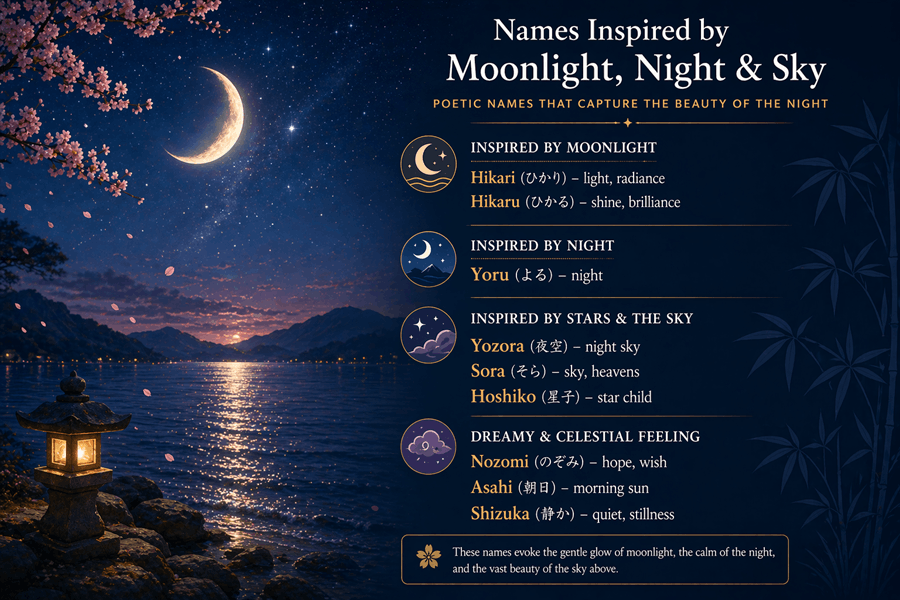
Not every beautiful Japanese moon-style name uses the kanji 月 directly. Some names belong to the same world of meaning because they draw on light, night, sky, or stars instead. This section is useful for readers who want the mood of the moon without the most literal reading.
Names inspired by moonlight
Hikari is one of the best moon-adjacent choices because it is built around light rather than the moon itself. It feels bright, pure, graceful, and elegant. If you love the glow of the moon more than the literal word moon, Hikari is a beautiful fit.
Hikaru belongs in the same group. It carries the idea of brightness and shine. Compared with Hikari, it feels a little more lively and energetic, but it still fits naturally in a moon-inspired naming style.
Names inspired by night
Yoru is one of the clearest choices for readers who love the mystery of the night. It is not a literal moon name, but it lives in the same emotional space of stillness, darkness, beauty, and reflection. The sound is short, unusual, and memorable.
Names tied to night often feel deeper and moodier than names built directly around the moon. That makes them perfect if you want lunar atmosphere without using the moon kanji itself.
Names inspired by stars and the sky
Yozora is one of the strongest celestial names in the wider moon category because it means night sky. It creates a full visual scene instead of pointing to only one object. For readers who want a name that feels spacious, poetic, and atmospheric, Yozora is a standout choice.
Sora connects to the moon theme through the larger image of the sky. It feels open, fresh, and modern, and it shows the difference between a literal moon name and a name that supports the same celestial mood.
Hoshiko moves from the moon itself to the stars that share the night sky with it. It feels delicate, classic, and slightly storybook-like. While it is not a moon name in the strict sense, it clearly belongs to the same luminous nighttime world.
Dreamy or celestial-feeling names
This is what makes moon-inspired naming so rich. A name can point to glow, night, the sky, or stars and still feel deeply connected to lunar beauty. For many readers, these names are just as appealing as direct moon names because they keep the same mood while opening up more sounds and styles.
The Moon in Japanese Culture and Symbolism
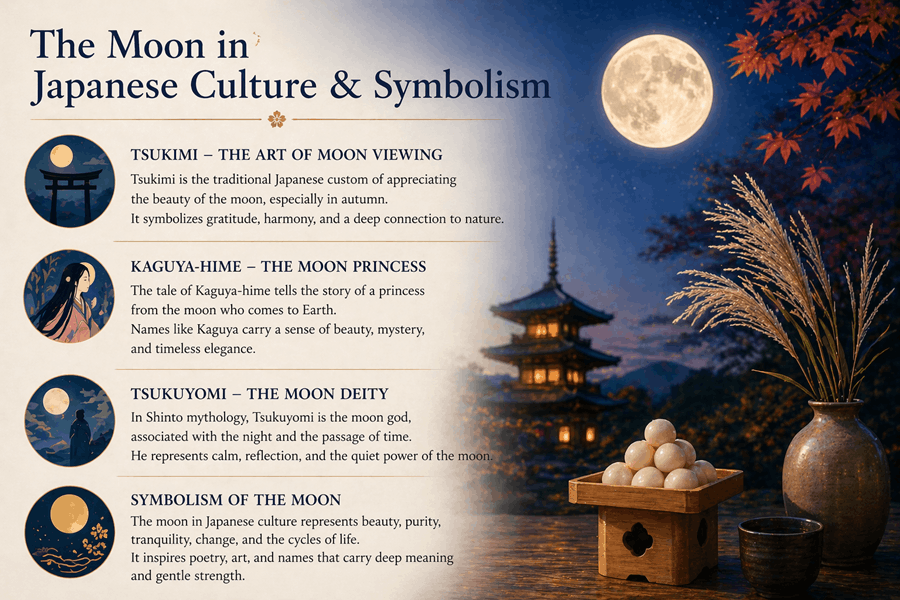
The moon holds a special place in Japanese culture because it is linked not only to beauty, but also to season, mood, reflection, and quiet emotional depth. In older Japanese life and literature, the moon was not just something pretty in the sky. It was a major seasonal and emotional image, especially in autumn.
One of the clearest examples is tsukimi, the custom of moon viewing. This tradition goes back many centuries and helps explain why moon-themed names often feel refined, seasonal, and deeply rooted in Japanese culture. The moon is tied to appreciation, stillness, and beauty rather than only brightness or power. If you want to read more about the tradition itself, this guide to Japan’s autumn moon-viewing custom is a useful place to start.
The moon also appears in one of Japan’s best-known old stories, the tale of Kaguya-hime, the moon princess. That is why names such as Kaguya feel so literary and memorable. They do not just sound beautiful. They also carry the emotional weight of a famous story. For background on the story, you can read more about The Tale of the Bamboo Cutter.
There is also a mythological side to the moon through Tsukuyomi, the Shinto moon deity. That does not mean every moon name has a religious meaning, but it does show that the moon has long existed in Japan as more than a simple natural image. It appears in myth, story, ritual imagination, and poetry. For a quick overview, Britannica’s page on Tsukuyomi is helpful.
All of this gives moon names extra depth. A Japanese name connected to the moon can suggest elegance, calm, mystery, seasonality, reflection, and old cultural memory all at once. That is part of what makes names like Tsukiko, Mizuki, Yuzuki, and Kaguya so appealing.
Popular Kanji Used in Japanese Moon Names
One of the most important parts of choosing a Japanese moon name is understanding the kanji behind it. The sound of a name matters, but the characters are what give it depth. In moon-themed names, one kanji may carry the direct lunar meaning, while the second shapes the mood by adding ideas like beauty, light, sky, gentleness, or elegance.
月 — Moon
月 is the heart of this topic. It is the most important kanji in Japanese names that mean moon. It gives a name an immediate feeling of calm, beauty, elegance, and quiet mystery. If you want a true moon name, this is the character to look for first.
美 — Beauty
美 means beauty. In a name like 美月, it creates the lovely meaning “beautiful moon.” This pairing feels soft, elegant, and refined, which is why it is so popular.
優 — Gentle, kind, excellent
優 adds warmth and softness. When paired with 月, it can make a moon name feel gentler, calmer, and more graceful.
光 — Light
光 means light or radiance. It does not mean moon by itself, but it belongs naturally in the world of moon-inspired names because moonlight is one of the most beautiful parts of lunar imagery.
夜 — Night
夜 means night. It adds a darker, quieter, more mysterious tone. Names using this kanji often feel atmospheric and deep rather than plain and direct.
空 — Sky
空 means sky. It gives names a spacious, open, and airy feeling. It works well for readers who want something broader than a direct moon name while staying inside the same celestial style.
星 — Star
星 means star. Like 夜 and 空, it is not the moon itself, but it belongs to the same emotional and visual space. It helps widen lunar beauty into a fuller nighttime naming style.
姫 — Princess
姫 means princess or lady. In names like Kaguya, it adds a romantic and story-like image that feels refined and memorable.
咲 — Blossom
咲 is tied to blooming. When paired with moon-related kanji, it softens the lunar image with a sense of beauty, life, and delicacy.
海 — Sea
海 means sea or ocean. When it appears with moon imagery, the result feels vivid and poetic because it builds a whole peaceful scene instead of a single plain idea.
Once you look at these characters together, the structure of Japanese moon names becomes much easier to understand. 月 gives the lunar meaning. Then other kanji shape the tone. 美 makes it beautiful. 優 makes it gentle. 光 makes it luminous. 夜 makes it mysterious. 空 makes it expansive. 姫 makes it romantic. 海 makes it poetic.
How to Choose the Right Japanese Moon Name
Choosing the right Japanese moon name is not only about finding the prettiest sound. It is also about finding the right meaning, the right feeling, and the right kanji combination. Some names make the moon meaning very clear, while others create a softer moon-like mood through ideas such as light, sky, night, or beauty.
Choose between a direct moon name and a moon-inspired name
The first question to ask is whether you want a name that literally means moon or a name that simply feels connected to the moon. Direct moon names usually use the kanji 月 in a clear way. Names like Tsukiko, Tsuki, and Tsukino fall into this group.
Moon-inspired names work a little differently. They may draw on moonlight, night, the sky, stars, calmness, or poetic imagery instead of using the moon kanji directly. Names like Hikari, Yoru, Yozora, and Sora fit that style well.
Look at the kanji, not just the pronunciation
A name may sound perfect, but the meaning can change a lot depending on the kanji. Two people can have the same spoken name and completely different written meanings. That is why it is always smart to check the exact kanji form instead of relying on pronunciation alone.
A name like Yuzuki is a great example. Some spellings clearly include the moon meaning, while others do not. The same is true for names like Mizuki and Mitsuki. If you want a true moon name, always make sure the kanji supports that meaning.
Think about the feeling you want the name to have
Moon names can feel very different from one another. Some feel soft and feminine. Some feel modern and clean. Some feel dreamy and poetic. Others feel traditional, elegant, or slightly mythic. The second kanji often shapes that emotional tone.
If you want something graceful and beautiful, a form with 美 may be ideal. If you want something gentle, look for names using kanji like 優. If you like atmosphere and mystery, names tied to 夜 or 空 may fit better. If you want something romantic and story-like, a name such as Kaguya may be the best fit.
Decide whether you want a traditional or modern style
Some Japanese moon names feel timeless and classic, while others sound fresh and modern. Tsukiko and Kaguya lean more traditional and literary. Runa, Mizuki, and Yuzuki often feel more modern and widely appealing.
If you are choosing a name for a baby, a character, a creative project, or just for inspiration, it helps to imagine how the name will sound in everyday use. A highly poetic name can be beautiful, but a simpler modern name may feel easier to carry.
Consider whether you want a feminine, masculine, or unisex name
Some names in this guide are clearly more common for girls, such as Tsukiko or Kaguya. Others feel more masculine, such as Tsukito or Sakuto. Then there are flexible choices like Mizuki, Mitsuki, and Yuzuki, which work especially well for readers looking for unisex options.
This flexibility is one of the best things about moon-themed Japanese naming. The same theme can feel delicate, strong, balanced, or quietly elegant.
Quick List of Japanese Names That Mean Moon
Here is a fast skimmable list of some of the best moon-themed Japanese names from this guide.
- Tsukiko — classic and directly means moon child
- Tsuki — simple, modern, and directly tied to the moon
- Tsukino — elegant and soft with a graceful moon image
- Tsukina — delicate and distinctive with a direct lunar feel
- Tsukika — moon blended with floral or radiant beauty
- Tsukimi — dreamy and poetic with strong moon-viewing imagery
- Mizuki — often written in forms that mean beautiful moon
- Mitsuki — flexible and luminous with several moon-related forms
- Yuzuki — soft, graceful, and one of the best unisex choices
- Kaguya — romantic moon-princess name with literary depth
- Runa — modern and soft with moon-linked spellings
- Tsukito — a strong boy name with a clear moon connection
- Tsukiya — atmospheric and poetic with moon-and-night imagery
- Haruki — subtle in some forms, but can carry a moon meaning
- Kazuki — polished and masculine with moon-related options
- Uzuki — gentle and rarer, with moon-linked forms
- Sakuto — tied to the new moon through lunar symbolism
- Satsuki — linked to moon and the traditional lunar calendar
- Hazuki — seasonal and softly moon-related in tone
- Mutsuki — peaceful and balanced with a quiet lunar feel
Final Thoughts on Japanese Names That Mean Moon
Japanese names that mean moon are beautiful for many reasons. Some are elegant and direct. Some are soft and poetic. Some feel rooted in tradition, while others sound fresh and modern. What makes them especially interesting is that the moon meaning often depends on the kanji, not just the sound. That gives each name more depth and personality.
If you want a true moon name, look first for names built clearly around 月. If you want something broader, moon-inspired names connected to light, night, sky, or stars can be just as meaningful. Either way, the moon theme offers a rare mix of calm beauty, symbolism, and timeless appeal.
Names like Tsukiko, Mizuki, Yuzuki, Kaguya, and Tsukito show just how wide this category can be. Some feel delicate. Some feel luminous. Some feel quiet and mysterious. That variety is exactly what makes Japanese moon names so memorable.