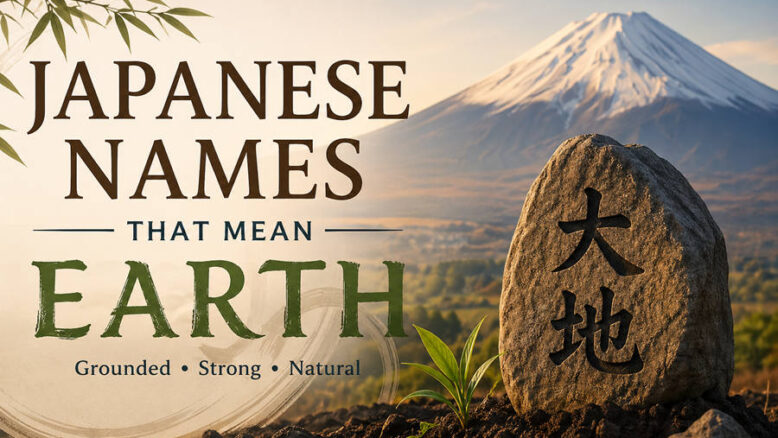
Japanese names that mean earth can feel steady, natural, strong, and peaceful. Some names directly use kanji for earth, soil, ground, or land. Others suggest the earth through mountains, fields, forests, stones, villages, and wide landscapes. Because Japanese name meanings depend on kanji, the same sound can have different meanings depending on how it is written.
What “Earth” Can Mean in Japanese Names
In English, “earth” can mean soil, land, the ground beneath us, nature, or the planet itself. In Japanese names, the meaning is usually more specific. A name may refer to land, mountains, fields, rocks, forests, or a hometown rather than “Earth” as a planet.
The most direct earth-related kanji include 地, meaning earth, ground, or land, and 土, meaning soil, earth, or ground. A clear name example is Daichi, written 大地, which can mean “great earth,” “vast land,” or “solid ground.”
Other names are earth-inspired rather than literal. A name with 山 may suggest mountains. A name with 野 may suggest fields or open plains. A name with 石 or 岩 may suggest stone, rock, strength, and endurance. These names do not always mean “earth” directly, but they still carry a grounded natural feeling.
Important Kanji for Earth-Themed Japanese Names
Japanese names are built from kanji, so it is important to look at the writing, not only the sound. Two names may sound the same but have completely different meanings if they use different kanji.
| Kanji | Meaning | Earth-Themed Feeling |
|---|---|---|
| 地 | Earth, ground, land | Direct, steady, grounded |
| 土 | Soil, earth, ground | Rustic, natural, earthy |
| 大地 | Great earth, vast land | Strong, open, dependable |
| 陸 | Land | Simple, clear, modern |
| 山 | Mountain | Strong, natural, stable |
| 岳 | Mountain peak | Bold, elevated, firm |
| 野 | Field, plain | Open, gentle, natural |
| 森 | Forest | Green, quiet, protective |
| 石 | Stone | Firm, lasting, grounded |
| 岩 | Rock | Strong, rugged, solid |
| 里 | Village, hometown, countryside | Warm, rooted, familiar |
| 田 | Rice field | Traditional, rural, land-based |
Japanese Boy Names That Mean Earth or Land
Some of the strongest earth-related Japanese given names have a calm, sturdy, or masculine feeling. These names are useful for baby-name inspiration, fictional characters, and nature-themed naming.
Daichi — 大地
Daichi is one of the clearest Japanese names connected to earth. Written 大地, it combines 大, meaning “big” or “great,” with 地, meaning “earth,” “ground,” or “land.” The name can be understood as “great earth,” “vast land,” or “solid ground.”
Daichi feels strong, warm, and dependable. It is one of the best choices if you want a name with a direct earth meaning rather than a loose nature association.
Riku — 陸
Riku, written 陸, means “land.” It is not the same as soil or the planet Earth, but it clearly connects to land as a natural element. It also has a short, modern sound.
Riku works well for readers who want an earth-related name that feels simple and easy to use.
Gaku — 岳
Gaku, written 岳, means “mountain peak.” It is not a direct earth name, but it belongs naturally in an earth-themed list because it points to mountains and high land.
This name can suggest strength, discipline, height, and quiet confidence. It is especially fitting for a character with a steady or determined personality.
Iwao — 巌
Iwao can be written with 巌, a kanji connected to a large rock or crag. The name has an older, serious feeling and strongly suggests endurance and firmness.
Iwao may feel more traditional than modern, but it is a strong choice for characters, especially someone who is meant to seem solid, loyal, or hard to shake.
Takane — 高嶺
Takane, written 高嶺, means “high peak.” This name is more poetic than direct. It does not mean earth or soil, but it has a clear mountain image.
Takane can work well in fiction or symbolic naming when you want a name that feels elevated, graceful, and connected to the landscape.
Japanese Girl Names With Earth and Nature Meanings
Direct earth kanji are less common in feminine given names, so many girl names in this theme are better described as earth-inspired. They may suggest fields, villages, forests, flowers, or the quiet beauty of the countryside.
Satomi — 里美
Satomi, written 里美, combines 里, meaning “village,” “hometown,” or “countryside,” with 美, meaning “beauty.” The name can be read as “village beauty” or “beautiful hometown.”
Satomi does not literally mean earth, but it has a warm, grounded feeling. It suggests roots, home, rural beauty, and a close connection to place.
Rina — 里奈 / 里菜
Rina can be written in many ways. When the first kanji is 里, as in 里奈 or 里菜, the name carries a countryside or hometown feeling. The second kanji changes the full meaning, so the exact spelling matters.
Rina is a softer earth-inspired option. It is not a direct “earth” name, but it can feel gentle, natural, and rooted when written with 里.
Nobara — 野ばら / 野薔薇
Nobara means “wild rose.” The first part, 野, means “field” or “plain,” while bara refers to a rose. The image is not soil itself, but a flower growing freely in open land.
Nobara has a literary, nature-rich feeling. It may be especially useful for fictional characters, story names, or creative naming.
Mori — 森
Mori, written 森, means “forest.” It is more common as a surname, but it can work beautifully as a simple nature-inspired name for characters or pets.
The meaning is easy to understand and strongly tied to the living earth. Mori can feel calm, green, protective, or mysterious depending on the context.
Gender-Neutral Japanese Names Connected to Earth
Some earth-themed Japanese names can work across gender lines, especially for characters, pets, and creative naming. For real-life baby names, it is best to choose names that sound natural as given names, not just words with nice meanings.
| Name | Kanji | Meaning | Best For |
|---|---|---|---|
| Daichi | 大地 | Great earth, vast land | Baby names, characters |
| Riku | 陸 | Land | Baby names, characters, pets |
| Mori | 森 | Forest | Characters, pets, nature names |
| Ishi | 石 | Stone | Pets, characters |
| Yama | 山 | Mountain | Pets, fictional names |
| Tsuchi | 土 | Soil, earth | Pets, fantasy names |
Daichi and Riku are the most natural choices in this group for real given-name use. Word-like choices such as Tsuchi, Ishi, and Yama are better for pets, fictional characters, or fantasy names.
Japanese Last Names That Mean Earth, Land, Field, or Stone
Earth-related meanings are very common in Japanese surnames. Many family names come from geography, farming, villages, mountains, stones, forests, and other landscape features.
Tsuchiya — 土屋
Tsuchiya combines 土, meaning “earth” or “soil,” with 屋, meaning “house,” “shop,” or “dwelling.” It is one of the clearest surname examples connected to earth.
Tsuchida — 土田
Tsuchida combines 土, meaning “earth” or “soil,” with 田, meaning “rice field.” The name has a strong land-based and agricultural feeling.
Yamada — 山田
Yamada combines 山, meaning “mountain,” with 田, meaning “rice field.” It is a familiar Japanese surname and a clear example of a name built from landscape kanji.
Okada — 岡田
Okada combines 岡, meaning “hill,” with 田, meaning “rice field.” The name suggests raised land and cultivated fields.
Ishida — 石田
Ishida combines 石, meaning “stone,” with 田, meaning “rice field.” It has a firm, rural, earth-connected meaning.
Iwata — 岩田
Iwata combines 岩, meaning “rock,” with 田, meaning “rice field.” It feels strong, grounded, and useful for surname inspiration or fictional character names.
Nomura — 野村
Nomura combines 野, meaning “field” or “plain,” with 村, meaning “village.” It has an open countryside feeling.
Mori — 森
Mori means “forest.” While forest is not the same as earth, it belongs naturally in an earth-themed name list because it suggests land, trees, growth, and nature.
Strong Earth Names for Fictional Characters
If you are choosing a Japanese earth name for a fictional character, you can be more flexible than you would be with a real baby name. Character names can be more symbolic, dramatic, or elemental.
For a strong and grounded character, Daichi is one of the best choices because it directly means “great earth” or “vast land.” Riku is shorter and more modern, with the meaning “land.” Iwao works well for an older, powerful, or serious character because of its rock-like meaning. Gaku suggests mountain peaks and quiet strength.
For a softer nature-based character, Satomi gives a feeling of home, countryside, and beauty. Nobara suggests wild roses growing in open fields. Mori creates a forest image that can feel calm, mysterious, or protective.
For fantasy names, kanji such as 地, 土, 岩, 石, 山, and 森 can create strong earth imagery. Still, not every poetic kanji combination will feel natural as a real Japanese name. Creative spellings are better for games, stories, pets, and symbolic names.
Cute Earth-Inspired Japanese Names for Pets
Earth-themed Japanese words can make sweet and memorable pet names, especially for calm, sturdy, brown, gray, green, or nature-loving animals.
| Pet Name | Meaning | Why It Works |
|---|---|---|
| Tsuchi | Soil, earth | Directly earthy and simple |
| Ishi | Stone | Cute for a calm or sturdy pet |
| Yama | Mountain | Good for a large or strong pet |
| Mori | Forest | Gentle and nature-inspired |
| Riku | Land | Short, friendly, and easy to call |
| Daichi | Great earth, vast land | Warm, meaningful, and strong |
For pets, word-like names can feel charming rather than unusual. A name such as Ishi, Tsuchi, or Yama may not be the most natural human name, but it can be perfect for an animal with a calm, earthy personality.
Best Japanese Names That Mean Earth
If you want the strongest choices from this theme, these are some of the most useful names to remember.
| Name | Kanji | Meaning | Best Use |
|---|---|---|---|
| Daichi | 大地 | Great earth, vast land | One of the clearest direct choices |
| Riku | 陸 | Land | Short, modern, and natural |
| Gaku | 岳 | Mountain peak | Strong landscape-inspired name |
| Iwao | 巌 | Large rock, crag | Traditional, strong character name |
| Satomi | 里美 | Village beauty, beautiful hometown | Soft countryside meaning |
| Mori | 森 | Forest | Nature-inspired surname, pet name, or character name |
| Tsuchiya | 土屋 | Earth/soil + house | Earth-related surname |
| Tsuchida | 土田 | Earth/soil + rice field | Land-based surname |
| Ishida | 石田 | Stone + rice field | Grounded surname choice |
| Iwata | 岩田 | Rock + rice field | Strong earth-themed surname |
Names and Words to Use Carefully
Some Japanese words have beautiful earth-related meanings, but they may not feel natural as real given names. For example, Tsuchi means “soil” or “earth,” but it is more like a word than a common personal name. Ishi means “stone,” and Yama means “mountain,” but they are usually better for pets, nicknames, fictional characters, or symbolic use.
The word for planet Earth is Chikyū, written 地球. This is useful to know, but it is not usually the best choice for a real given name. It may work in fantasy, science fiction, or a highly symbolic character name.
For real baby names, names such as Daichi and Riku are much more natural than direct dictionary words. For stories and pets, you can be more playful with earth, rock, mountain, and forest imagery.
How to Choose a Japanese Name That Means Earth
Start by deciding what kind of earth meaning you want. If you want a direct meaning, look for names with 地, 土, 大地, or 陸. If you want something softer or more symbolic, names connected to mountains, forests, fields, villages, stones, and rocks may fit better.
Next, check the kanji. A name’s sound does not guarantee its meaning. Names such as Rina, Haru, or Noa can be written in many ways, so they only carry an earth or nature meaning when the chosen kanji supports that idea.
For real baby names, naturalness matters. A name should sound like a name, not only like a meaningful word. For fictional characters and pets, you have more freedom to choose names that feel elemental, dramatic, or symbolic.
Finally, think about tone. Earth names can feel strong, peaceful, protective, rustic, ancient, or gentle. The best choice is not only the name with the right dictionary meaning, but the one that matches the feeling you want the name to carry.
Conclusion
Japanese names that mean earth can be direct, symbolic, or inspired by the natural landscape. Daichi is one of the clearest choices because it means “great earth” or “vast land,” while Riku means “land” and feels simple and modern. Names such as Gaku, Iwao, Satomi, and Mori bring in mountains, rocks, villages, and forests.
Japanese surnames also offer many strong earth-related meanings. Tsuchiya, Tsuchida, Yamada, Ishida, and Iwata show how often Japanese family names are connected to soil, rice fields, mountains, stones, and rural places.
For a baby name, choose a name that sounds natural and has clear kanji. For a character, pet, or creative project, you can explore stronger imagery through soil, land, rock, mountain, forest, and field. Earth-themed Japanese names offer many beautiful choices for names that feel grounded, steady, and close to nature.