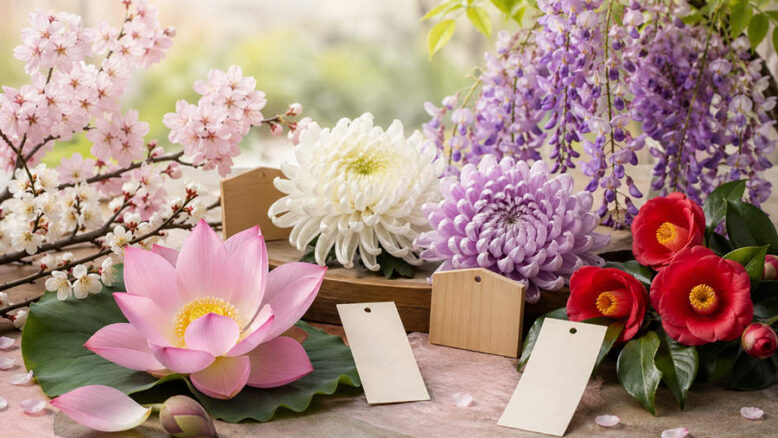
Flower-related Japanese last names can feel graceful, seasonal, and deeply connected to nature. Some surnames use 花, the kanji for “flower,” while others point to specific blossoms such as cherry blossoms, chrysanthemums, wisteria, camellias, plum blossoms, or lotus flowers.
Because Japanese surname meanings depend on the kanji, a name’s meaning is not always fixed by its romanized spelling alone. In this guide, you’ll find flower-inspired Japanese last names with kanji, readings, and simple meanings, along with notes to help you understand which names are direct, symbolic, or tied to a specific flower.
What “Flower” Means in Japanese Last Names
The most direct Japanese kanji for flower is 花. It is commonly read as hana and appears in many surnames. When paired with place-related kanji, it can create images such as a flower field, flower hill, flower garden, or flower village.
Flower surnames are not limited to 花, though. Many Japanese surnames use the kanji for a specific flower or flowering plant. These names may not literally mean “flower,” but they still carry a clear floral meaning.
- 花 — flower
- 桜 — cherry blossom
- 菊 — chrysanthemum
- 藤 — wisteria
- 椿 — camellia
- 梅 — plum, often connected with plum blossoms
- 蓮 — lotus
Japanese surnames can also have more than one possible reading or kanji form. A romanized name may look simple, but the meaning usually comes from the exact characters used. For that reason, it is better to think of these names as kanji-based meanings rather than one fixed English translation.
Japanese Last Names That Directly Use 花
The surnames in this section include 花, meaning “flower.” Many combine it with kanji for land, gardens, villages, hills, wells, or other natural places.
Hana — 花
Hana uses the single kanji 花, meaning “flower.” It is the most direct flower-related form, though Hana is also familiar as a given name. As a surname, it is best treated as distinctive rather than common.
Hanada / Hanata — 花田
花田 combines 花 meaning “flower” with 田 meaning “rice field” or “field.” It can be understood as “flower field” or “flower rice field.” Depending on the family, this kanji form may be read in more than one way, including Hanada or Hanata.
Hanaoka — 花岡
Hanaoka combines 花 meaning “flower” with 岡 meaning “hill.” The kanji create the image of a “flower hill.” It has a scenic, gentle feeling, as if flowers are growing across a hillside.
Hanamura — 花村
Hanamura combines 花 meaning “flower” with 村 meaning “village.” A simple kanji reading gives “flower village.” This surname feels warm, peaceful, and place-based.
Hanazono — 花園
Hanazono combines 花 meaning “flower” with 園 meaning “garden,” “park,” or “enclosed grounds.” It can be read as “flower garden.” This is one of the clearest and prettiest flower-related surname meanings.
Hanazawa — 花沢 / 花澤
Hanazawa is often written with 花 meaning “flower” and 沢 or 澤, which can suggest a marsh, stream valley, or low wetland. The name may be understood as “flower marsh” or “flower valley.” It has a softer, more atmospheric image than a simple field or village name.
Hanai — 花井
Hanai combines 花 meaning “flower” with 井 meaning “well.” A literal reading gives “flower well.” It is short, balanced, and easy to understand from its kanji.
Hanamoto — 花本
Hanamoto combines 花 with 本, which can mean “base,” “origin,” or “source.” The kanji can suggest “base of the flowers” or “origin of flowers.” This name feels more rooted and traditional than decorative.
Hanazaki / Hanasaki — 花崎
花崎 combines 花 meaning “flower” with 崎, meaning “cape,” “promontory,” or a projecting point of land. It can suggest a “flower cape” or “flower point.” The reading may appear as Hanazaki or Hanasaki, depending on the family or source.
Hanabusa — 花房
Hanabusa can be written as 花房, combining 花 meaning “flower” with 房, which can mean a cluster, bunch, or tassel. The name can suggest a “cluster of flowers.” It has an elegant and slightly old-fashioned feeling.
Hanashiro — 花城
Hanashiro combines 花 meaning “flower” with 城 meaning “castle.” The kanji can be read as “flower castle.” Because surname readings can vary, this name should be checked carefully if you need a specific family-name reading for a story or project.
Japanese Last Names Related to Cherry Blossoms
The kanji 桜 means cherry blossom or cherry tree. Surnames with 桜 are not general “flower” names. They are more specifically cherry blossom names, which gives them a strong spring image.
Sakurai — 桜井
Sakurai combines 桜 meaning “cherry blossom” with 井 meaning “well.” It can be understood as “cherry blossom well.” The name feels simple, graceful, and familiar.
Sakuraba — 桜庭
Sakuraba combines 桜 meaning “cherry blossom” with 庭 meaning “garden” or “yard.” The kanji suggest “cherry blossom garden.” This surname has a soft, poetic feeling.
Sakuragi — 桜木
Sakuragi combines 桜 with 木, meaning “tree.” A simple meaning is “cherry blossom tree” or “cherry tree.” It feels strong and natural because it refers to the whole tree, not only the flower.
Sakurada — 桜田
Sakurada combines 桜 with 田, meaning “field” or “rice field.” The kanji suggest a “cherry blossom field.” It has a calm countryside image.
Sakurazawa — 桜沢
Sakurazawa combines 桜 with 沢, which can suggest a marsh, stream valley, or wetland area. It may be read as “cherry blossom valley” or “cherry blossom marsh.”
Japanese Last Names Related to Other Flowers
Some of the most beautiful floral Japanese surnames are tied to one specific flower. These names may feel more precise than surnames using the general kanji 花.
Chrysanthemum Last Names
The kanji 菊 means chrysanthemum. Chrysanthemum surnames often feel dignified and traditional.
Kikuchi — 菊池 / 菊地
Kikuchi is a good example of a surname whose meaning changes slightly by kanji. Written as 菊池, it combines “chrysanthemum” with “pond.” Written as 菊地, it combines “chrysanthemum” with “ground” or “land.” Both forms have a clear chrysanthemum connection.
Kikukawa — 菊川
Kikukawa combines 菊 meaning “chrysanthemum” with 川 meaning “river.” It can be understood as “chrysanthemum river.” The name blends flower and water imagery.
Kikuta — 菊田
Kikuta combines 菊 with 田, meaning “field” or “rice field.” A simple reading gives “chrysanthemum field.”
Wisteria Last Names
The kanji 藤 means wisteria. Many Japanese surnames contain 藤, and not all of them are chosen mainly for floral imagery. Still, the kanji itself has a clear wisteria meaning.
Fujiwara — 藤原
Fujiwara combines 藤 meaning “wisteria” with 原, meaning “field” or “plain.” It can be read literally as “wisteria field” or “wisteria plain.”
Fujita — 藤田
Fujita combines 藤 with 田, meaning “field” or “rice field.” The kanji suggest “wisteria field.” It is clear, simple, and easy to understand.
Fujimoto — 藤本
Fujimoto combines 藤 with 本, meaning “base,” “origin,” or “source.” It can suggest “base of the wisteria” or “origin of wisteria.”
Fujisawa — 藤沢
Fujisawa combines 藤 with 沢, which can refer to a marsh or valley. A simple interpretation is “wisteria valley” or “wisteria marsh.”
Camellia, Plum, and Lotus Last Names
Camellia, plum, and lotus surnames are also part of the wider world of Japanese flower names. They are more specific than general flower surnames and often carry a strong seasonal or natural image.
Tsubaki — 椿
Tsubaki uses the kanji 椿, meaning “camellia.” It is direct, bold, and memorable. Because it uses one strong flower kanji, it feels less place-based than names such as Hanaoka or Sakurada.
Tsubakihara — 椿原
Tsubakihara combines 椿 meaning “camellia” with 原 meaning “field” or “plain.” It can suggest a “camellia field” or “camellia plain.”
Umezawa — 梅沢 / 梅澤
Umezawa combines 梅 meaning “plum” with 沢 or 澤, suggesting a marsh or valley. Although 梅 can refer to the plum tree or fruit, it is also closely associated with plum blossoms in Japanese seasonal imagery.
Umemura — 梅村
Umemura combines 梅 meaning “plum” with 村 meaning “village.” It can be read as “plum village.” The name feels gentle and traditional.
Umehara — 梅原
Umehara combines 梅 with 原, meaning “field” or “plain.” It may be understood as “plum field” or “plum plain.”
Hasuda — 蓮田
Hasuda combines 蓮 meaning “lotus” with 田 meaning “field” or “rice field.” It can suggest a “lotus field.” This is a useful choice for readers who want a flower surname connected with water and quiet beauty.
Hasuike — 蓮池
Hasuike combines 蓮 meaning “lotus” with 池 meaning “pond.” A simple reading gives “lotus pond.” It is one of the clearest lotus-related surname meanings.
Beautiful Flower-Themed Japanese Last Names for Fictional Characters
If you are choosing a Japanese flower last name for a fictional character, it is usually better to use a real surname than to invent a new kanji combination. A name that looks pretty in translation may not sound natural as a Japanese surname.
These flower-themed surnames can work well in fiction:
- Hanaoka — 花岡: soft, scenic, and graceful, with the image of a flower-covered hill.
- Hanamura — 花村: warm and peaceful, suggesting a flower village.
- Hanazono — 花園: bright and elegant, with a clear flower garden meaning.
- Sakuraba — 桜庭: spring-like and poetic, with cherry blossom garden imagery.
- Fujisawa — 藤沢: refined and calm, with wisteria and valley imagery.
- Kikuchi — 菊池 / 菊地: traditional and dignified, with a chrysanthemum element.
- Tsubaki — 椿: strong, simple, and memorable, directly connected to camellia.
- Hasuike — 蓮池: gentle and reflective, with lotus pond imagery.
For a gentle character, Hanamura or Hanaoka may feel natural. For a graceful or reserved character, Sakuraba or Fujisawa may fit better. For a stronger and more striking name, Tsubaki has a clear floral identity without sounding overly soft.
Rare and Distinctive Floral Japanese Last Names
Some flower surnames feel more distinctive to English-speaking readers because they are less familiar outside Japan. That does not always mean they are extremely rare in Japan. It simply means they may sound fresher than names readers see often in anime, films, or common name lists.
- Hanabusa — 花房: suggests a cluster or bunch of flowers.
- Hanazaki / Hanasaki — 花崎: suggests a flowered cape or point of land.
- Tsubakihara — 椿原: a longer camellia surname with a field or plain meaning.
- Sakurazawa — 桜沢: a poetic cherry blossom surname with valley or marsh imagery.
- Hanashiro — 花城: a vivid surname that can be read as “flower castle.”
- Hasuike — 蓮池: a lotus surname with a calm pond image.
These names can be useful for creative projects, but they should still be chosen carefully. A beautiful literal meaning does not automatically make a surname suitable for every character or setting.
How to Choose a Japanese Flower Last Name
Start with the kind of flower image you want. A general flower surname such as Hanaoka feels different from a cherry blossom surname like Sakuraba, a wisteria surname like Fujisawa, or a lotus surname like Hasuike.
Next, check the kanji. Romanized spellings can be misleading because the same sound may be written with different characters. The meaning comes from the written form, not only from the pronunciation.
It is also helpful to think about tone. Some names feel soft and scenic, such as Hanazono and Sakuraba. Others feel more grounded, such as Hanada and Fujita. Names like Tsubaki or Hanashiro feel more striking and memorable.
For fiction, avoid mixing kanji randomly just to create a pretty translation. Real Japanese surnames usually sound more natural and respectful. If you are naming a Japanese character, choose a surname that fits the character’s setting, family background, and overall tone.
Quick List of Japanese Last Names That Mean Flower
| Last Name | Kanji | Simple Meaning | Flower Connection |
|---|---|---|---|
| Hana | 花 | Flower | Direct flower kanji |
| Hanada / Hanata | 花田 | Flower field | Uses 花 |
| Hanaoka | 花岡 | Flower hill | Uses 花 |
| Hanamura | 花村 | Flower village | Uses 花 |
| Hanazono | 花園 | Flower garden | Uses 花 |
| Hanazawa | 花沢 / 花澤 | Flower valley or marsh | Uses 花 |
| Hanai | 花井 | Flower well | Uses 花 |
| Hanamoto | 花本 | Base or origin of flowers | Uses 花 |
| Hanazaki / Hanasaki | 花崎 | Flower cape or point | Uses 花 |
| Hanabusa | 花房 | Cluster of flowers | Uses 花 |
| Hanashiro | 花城 | Flower castle | Uses 花 |
| Sakurai | 桜井 | Cherry blossom well | Cherry blossom |
| Sakuraba | 桜庭 | Cherry blossom garden | Cherry blossom |
| Sakuragi | 桜木 | Cherry blossom tree | Cherry blossom |
| Sakurada | 桜田 | Cherry blossom field | Cherry blossom |
| Kikuchi | 菊池 / 菊地 | Chrysanthemum pond or ground | Chrysanthemum |
| Kikukawa | 菊川 | Chrysanthemum river | Chrysanthemum |
| Kikuta | 菊田 | Chrysanthemum field | Chrysanthemum |
| Fujiwara | 藤原 | Wisteria field or plain | Wisteria |
| Fujita | 藤田 | Wisteria field | Wisteria |
| Fujimoto | 藤本 | Base or origin of wisteria | Wisteria |
| Fujisawa | 藤沢 | Wisteria valley or marsh | Wisteria |
| Tsubaki | 椿 | Camellia | Camellia |
| Tsubakihara | 椿原 | Camellia field or plain | Camellia |
| Umezawa | 梅沢 / 梅澤 | Plum valley or marsh | Plum blossom association |
| Umemura | 梅村 | Plum village | Plum blossom association |
| Umehara | 梅原 | Plum field or plain | Plum blossom association |
| Hasuda | 蓮田 | Lotus field | Lotus |
| Hasuike | 蓮池 | Lotus pond | Lotus |
Conclusion
Japanese last names that mean flower can be direct, specific, or symbolic. Names such as Hana, Hanada, Hanaoka, Hanamura, and Hanazono clearly use 花, the kanji for flower. Others, such as Sakurai, Kikuchi, Fujisawa, Tsubaki, Umezawa, and Hasuike, connect to cherry blossoms, chrysanthemums, wisteria, camellias, plum blossoms, and lotus flowers.
The best way to understand these surnames is to look at both the kanji and the image behind them. A flower-related Japanese surname may suggest a hill, field, village, garden, river, pond, or old place name. That layered meaning is part of what makes these names so beautiful.