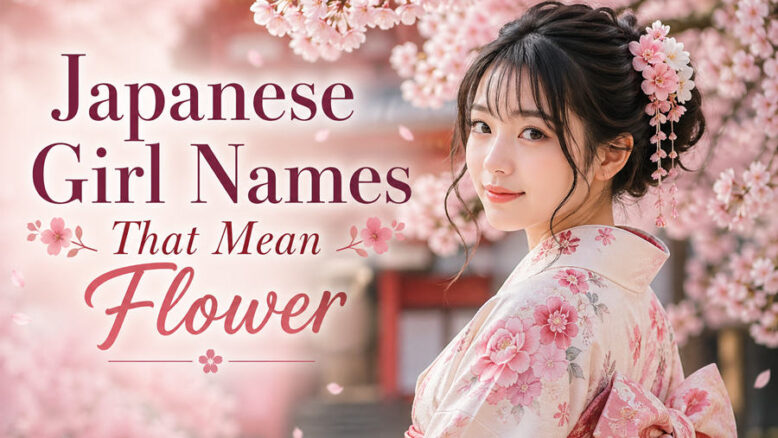
Japanese girl names that mean flower can feel soft, bright, elegant, or poetic. Some names directly use flower kanji such as 花, while others suggest blooming, cherry blossoms, lotus flowers, violets, lilies, or spring scenery. The most important detail is kanji: the same name sound can have different meanings depending on how it is written. This guide explains beautiful floral names for girls while clearly noting which meanings are direct and which are possible meanings based on kanji choice.
What “Flower” Can Mean in Japanese Girl Names
In Japanese names, flower meanings often come from specific kanji. A name may sound pretty on its own, but its meaning depends on the characters chosen by the family.
花 means “flower” and is the most direct kanji for floral names. It appears in names such as Hana, Hanako, Ichika, and Kaho.
華 can also mean “flower,” but it often carries a more elegant feeling of beauty, splendor, or brilliance. Names with 華 may feel polished or refined.
咲 means “to bloom” or “to blossom.” It does not mean “flower” as a noun, but it gives a name a clear blooming image.
桜 means “cherry blossom.” Names with 桜 are strongly tied to spring, beauty, renewal, and the brief season when cherry blossoms bloom.
Other floral kanji include 蓮 for lotus, 菫 for violet, 百合 for lily, 椿 for camellia, 菖蒲 or 彩芽-style spellings for iris-related names, and 葵 for the aoi plant, often understood as hollyhock or mallow. Some modern names also use 莉, a kanji associated with jasmine through the word 茉莉.
A Quick Note About Kanji and Name Meanings
Japanese names should not be judged by sound alone. For example, Hana means “flower” when written as 花, but another name may only become floral if it uses a flower-related kanji. This is why many names in this article are described as “can mean” or “may be written as.”
This matters most if you are choosing a name for a real baby. A name that looks beautiful in English may feel unusual, old-fashioned, or overly creative in Japanese. For fiction, pets, or creative projects, there is more room to choose a name for imagery and mood.
Japanese Girl Names That Directly Mean Flower
These names clearly include 花 or 華, so their flower connection is direct when written with those kanji.
Hana
Hana can be written as 花, meaning “flower.” It is simple, gentle, and easy to pronounce. Hana is one of the clearest choices for anyone looking for a Japanese girl name with a direct flower meaning.
Hanako
Hanako can be written as 花子, meaning “flower child.” The 子 ending means “child” and was especially common in traditional Japanese girl names. Hanako has a classic feeling rather than a very modern one.
Ichika
Ichika can be written as 一花, meaning “one flower” or “single flower.” This gives the name a delicate and special feeling. Ichika has other possible kanji spellings, so the flower meaning depends on using 花.
Kaho
Kaho can use 花 or 華 as the first kanji. Depending on the second kanji, it may suggest meanings such as “flower sail,” “flower ear of grain,” “splendid beauty,” or another graceful image. Kaho feels fresh and feminine, but its exact meaning changes by spelling.
Mihana
Mihana can be written with 美, meaning “beautiful,” and 花, meaning “flower.” This gives the possible meaning “beautiful flower.” It has a gentle, poetic sound and may feel less common than Hana.
Kohana
Kohana can be written as 小花, meaning “little flower.” It is sweet and delicate, especially for a character or pet. As a real baby name, it is worth checking for naturalness because it may sound more creative than everyday choices.
Hanaka
Hanaka can include 花, meaning “flower,” with another kanji such as 香, meaning “fragrance,” or 華, meaning “splendor.” It can suggest “flower fragrance” or a beautiful floral image, depending on the spelling.
Japanese Girl Names That Mean Blossom or Bloom
Names with 咲 are closely connected to blooming. These names may not mean “flower” directly, but they carry a clear blossom image.
Saki
Saki can be written with 咲, meaning “bloom” or “blossom.” It is short, bright, and familiar. Other kanji spellings are possible, so the floral meaning is tied to this specific character.
Misaki
Misaki can be written with 美, meaning “beautiful,” and 咲, meaning “bloom.” In that form, it suggests “beautiful bloom.” Misaki is a graceful name, though it can also be written with non-floral kanji.
Sakiko
Sakiko can use 咲 and 子, giving the sense of “blossom child.” It has a traditional tone because of the 子 ending, but the blooming image is lovely and clear.
Chisaki
Chisaki can include 千, meaning “thousand,” and 咲, meaning “bloom.” This creates the poetic idea of “many blossoms” or “a thousand blooms.” It is best understood as a kanji-based meaning rather than a fixed meaning for every spelling.
Sayaka
Sayaka is not automatically a flower name, but it can include 咲 in some spellings. Depending on the kanji, it may suggest blooming, brightness, or clarity. It is a good example of a name with a softer floral association rather than a direct flower meaning.
Cherry Blossom Girl Names
Cherry blossoms are one of the best-known floral symbols in Japan. Names using 桜 feel springlike, graceful, and deeply connected to seasonal beauty.
Sakura
Sakura means “cherry blossom” when written as 桜. It is one of the most recognizable Japanese flower names. Sakura feels gentle and bright, with strong ties to spring and renewal.
Sakurako
Sakurako can be written as 桜子, meaning “cherry blossom child.” It sounds more formal and traditional than Sakura, but the meaning is clear and beautiful.
Ouka
Ouka can be written with 桜, meaning “cherry blossom,” and another kanji such as 香, meaning “fragrance,” or 歌, meaning “song.” Depending on the spelling, it may suggest “cherry blossom fragrance” or “cherry blossom song.” This name feels poetic and refined.
Sakumi
Sakumi may use 桜 or 咲 with 美, meaning “beauty.” With the right kanji, it can suggest a beautiful cherry blossom or a beautiful bloom. It has a soft, creative feeling.
Haruka
Haruka does not always mean flower, but it can be written with 春, meaning “spring,” and 花, meaning “flower.” In that form, it can suggest “spring flower.” Haruka is a familiar name sound, but the floral meaning depends fully on kanji choice.
Japanese Girl Names Inspired by Specific Flowers
Some names are linked to a particular flower rather than the general idea of flowers. These names can feel more distinctive because each flower has its own image.
Lotus Names
Ren can be written as 蓮, meaning “lotus.” Ren is often used for boys as well as girls, but it has a clean, nature-inspired beauty.
Rena may include 蓮 as one kanji, paired with another feminine name element. This gives it a possible lotus connection while keeping a soft, modern sound.
Renka can be written as 蓮花, meaning “lotus flower.” It is elegant and clearly floral, though it may feel more poetic than common everyday names.
Renge means “lotus flower” as a word, written 蓮華 or 蓮花. It has a strong floral meaning, but it may sound more word-like or literary as a given name.
Jasmine-Associated Names
Riko can include 莉, a kanji associated with jasmine through 茉莉. When paired with 子, it can have a sweet, modern feeling. The jasmine connection depends on the chosen kanji.
Rina can also use 莉. It has a light, feminine sound and a possible floral association rather than a direct flower meaning.
Risa may include 莉 in some spellings. Like Rina and Riko, it should be treated as jasmine-associated only when the kanji supports that meaning.
Arisa can include 莉 as part of a modern kanji combination. It sounds melodic and gentle, with a possible floral note.
Violet, Lily, Iris, and Other Flower Names
Sumire means “violet” when written as 菫. It is a soft, graceful flower name with a gentle sound.
Yuri means “lily” when written as 百合. It is simple, elegant, and directly floral.
Sayuri is often written as 小百合, meaning “little lily.” It has a classic, graceful feeling.
Aoi can be written as 葵, referring to the aoi plant, often understood as hollyhock or mallow. Aoi can also be written with kanji meaning blue or green, so the plant meaning depends on the spelling.
Ayame means “iris” as a word. It has a refined and traditional nature image.
Tsubaki means “camellia.” It feels strong, elegant, and memorable, especially for character naming.
Botan means “peony.” It has a rich, dramatic floral image, though it may feel less common as a given name.
Shion can refer to the aster flower. It has a poetic sound and can feel modern, gentle, or slightly literary depending on context.
Cute Japanese Girl Names With Flower Meanings
For a soft and sweet floral name, these choices are especially approachable:
- Hana — flower
- Saki — bloom or blossom, depending on kanji
- Sakura — cherry blossom
- Ichika — one flower, depending on kanji
- Kaho — flower or splendor-related, depending on kanji
- Riko — possible jasmine association, depending on kanji
- Rina — possible jasmine association, depending on kanji
- Sumire — violet
- Misaki — beautiful bloom, depending on kanji
These names work well because they are not too long and have clear, pleasant sounds. Hana and Sakura have the most direct flower meanings, while names like Riko, Rina, Kaho, and Misaki depend more on kanji choice.
Elegant Japanese Girl Names That Mean Flower
Some flower names feel more refined, traditional, or poetic. These are good choices if you want a name with a graceful image.
- Hanako — flower child
- Sakurako — cherry blossom child
- Renka — lotus flower
- Sayuri — little lily
- Yuri — lily
- Ayame — iris
- Sumire — violet
- Ouka — cherry blossom fragrance or song, depending on kanji
Hanako and Sakurako have a more traditional tone. Renka, Ouka, and Ayame feel more poetic. Yuri, Sayuri, and Sumire are simple but elegant flower names with strong natural imagery.
Rare or Unique Flower-Inspired Japanese Girl Names
Rare floral names can be beautiful, but they should be handled carefully. Some may sound more like character names, literary names, or creative combinations than common everyday names.
Kohana
Kohana can mean “little flower” when written as 小花. It is delicate and charming, especially for fiction or pets.
Rinka
Rinka can include 花 or 華 in some spellings. Depending on the kanji, it may suggest a beautiful flower, dignified beauty, or a bright floral image.
Hanari
Hanari can be built with 花, meaning “flower,” and another name element. It has a soft, lyrical sound, but it is more creative than standard choices.
Shion
Shion can refer to the aster flower. It feels poetic and slightly uncommon, making it especially useful for a thoughtful character name.
Tsubaki
Tsubaki means “camellia.” It has a bold and elegant feeling, with a stronger presence than softer names such as Hana or Sumire.
Botan
Botan means “peony.” The image is rich and dramatic, though the name may feel unusual for everyday use.
Flower Names Best for Babies, Characters, and Pets
The best flower name depends on how you plan to use it. A name for a baby should feel natural in Japanese, while a character name can be more symbolic or dramatic.
Best Flower Names for Babies
Hana, Sakura, Saki, Misaki, Riko, Aoi, and Sumire are among the more approachable choices. They are pleasant to say and can work well with natural kanji. Still, the final meaning depends on the chosen characters.
Best Flower Names for Characters
Renka, Sakurako, Tsubaki, Botan, Shion, Ayame, and Kohana can work well for fictional characters. They carry strong imagery and can help suggest personality, season, color, or mood.
Best Flower Names for Pets
Hana, Sakura, Sumire, Riri, Momo, and Yuzu can make sweet pet names. Some are directly floral, while others are simply soft and nature-inspired. For pets, a short name with clear sounds is often easiest to use.
How to Choose a Japanese Girl Name That Means Flower
A beautiful floral meaning is only one part of choosing a Japanese name. The name should also sound natural, match the right kanji, and fit the person or character using it.
Check the Kanji, Not Just the Sound
This is the most important step. Hana written as 花 means “flower,” but many other names only become floral with certain kanji. If a name has several spellings, do not assume every version has the same meaning.
Decide Whether You Want a Direct Flower Meaning
Names such as Hana, Sakura, Sumire, Yuri, Ayame, Tsubaki, and Botan have direct flower meanings. Names such as Saki, Misaki, Kaho, Riko, and Ichika can have floral meanings or associations depending on kanji. Both styles can be beautiful, but they are not the same.
Think About Style
Hana feels simple and sweet. Sakura feels springlike and familiar. Hanako and Sakurako feel more traditional. Renka, Botan, and Tsubaki feel more poetic or dramatic. Choose a style that matches the purpose of the name.
Consider Pronunciation
Many flower names are easy for English speakers to say, including Hana, Saki, Sakura, Aoi, Riko, Yuri, and Rina. Longer names such as Sakurako, Yurika, or Hanaka may need more explanation but can sound graceful and memorable.
Avoid Forced Kanji Combinations
It can be tempting to combine kanji only because the dictionary meanings look pretty. However, not every combination feels natural as a Japanese name. For real baby naming, it is best to check the name with a native speaker or a reliable Japanese naming source.
Conclusion
Japanese girl names that mean flower can be sweet, elegant, bright, or deeply poetic. Hana, Sakura, Sumire, Yuri, Ayame, Tsubaki, and Botan have direct flower meanings, while names such as Saki, Misaki, Kaho, Ichika, Riko, and Rina can carry floral beauty through specific kanji choices.
The best name is not only pretty in sound. It should also have the right written form, a natural feeling, and a meaning that fits the person, character, or pet. With thoughtful kanji, a flower-inspired Japanese girl name can express beauty, growth, softness, spring, grace, or quiet strength.