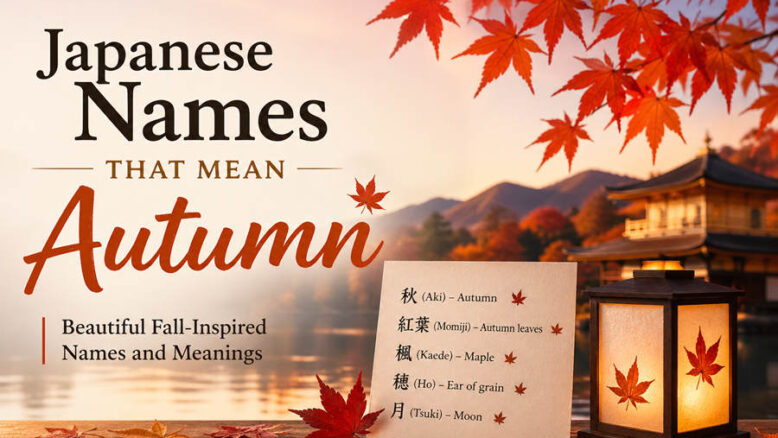
Autumn has a quiet, poetic beauty in Japanese names. It can suggest red maple leaves, golden rice fields, clear moonlit nights, cool air, and the gentle feeling of seasonal change. The most direct Japanese kanji for autumn is 秋, usually read as aki.
Some names use 秋 directly, while others feel autumnal through kanji connected to maple trees, colored leaves, grain, ripeness, harvest, or the moon. Since Japanese name meanings depend on the chosen kanji, this guide includes Japanese writing for each name, along with the reading and meaning.
What Does Autumn Mean in Japanese Names?
The Japanese word for autumn is 秋. In names, it is often read as aki and can appear by itself or as part of longer names such as Akiko, Akimi, Akiho, and Akito. This kanji can bring a feeling of seasonal beauty, maturity, calmness, and harvest.
Not every autumn-inspired Japanese name literally means “autumn.” Some names create a fall feeling through related images. 紅葉 means autumn leaves or colored leaves, 楓 means maple, 穂 means an ear of grain, 実 can suggest fruit or ripeness, and 月 means moon. These kanji help create names that feel connected to autumn, even when 秋 is not included.
Japanese Names That Directly Mean Autumn
These names use the kanji 秋, so their autumn meaning is clear. Some are traditional, while others feel more modern or name-like depending on the second kanji.
Aki — 秋 / あき
Aki is the simplest Japanese name meaning autumn. Written as 秋, it directly means “autumn” or “fall.” It is short, gentle, and easy to understand, though the sound Aki can also be written with other kanji in different names.
Akiko — 秋子 / あきこ
Akiko can be written as 秋子, meaning “autumn child.” The kanji 子 means child and is common in many classic feminine Japanese names. This name feels traditional, warm, and graceful.
Akina — 秋菜 / あきな
Akina can be written as 秋菜. The kanji 秋 means autumn, while 菜 can mean greens or vegetables. This gives the name a fresh harvest-season feeling.
Akina — 秋奈 / あきな
Akina may also be written as 秋奈. Here, 秋 gives the name its autumn meaning, while 奈 is commonly used in names for sound and style. This version still feels autumnal, but the meaning is less literal than 秋菜.
Akimi — 秋美 / あきみ
Akimi can be written as 秋美, meaning “autumn beauty.” The kanji 美 means beauty, making this a soft and elegant seasonal name.
Akiha — 秋葉 / あきは
Akiha can be written as 秋葉, meaning “autumn leaves.” The kanji 葉 means leaf, so the name has a clear image of fall foliage and changing colors.
Akiho — 秋穂 / あきほ
Akiho can be written as 秋穂. The kanji 秋 means autumn, and 穂 means an ear of grain, such as rice. Together, the name suggests autumn grain or a ripened harvest.
Akito — 秋人 / あきと
Akito written as 秋人 can mean “autumn person.” The kanji 人 means person, giving the name a direct and balanced seasonal meaning.
Akito — 秋斗 / あきと
Akito can also be written as 秋斗. In this version, 秋 means autumn, while 斗 can refer to a measure or the Big Dipper. It gives the name a more celestial or stylized feeling than 秋人.
Akio — 秋夫 / あきお
Akio can be written as 秋夫. The kanji 秋 means autumn, while 夫 can mean man or husband. This writing gives the name a traditional masculine tone.
Akio — 秋雄 / あきお
Akio may also be written as 秋雄. Here, 秋 means autumn, and 雄 can suggest masculinity, strength, or heroism. This version feels stronger and more energetic than 秋夫.
Akihiro — 秋広 / あきひろ
Akihiro can be written as 秋広. The kanji 秋 means autumn, and 広 means wide or spacious. The name can suggest a broad autumn sky or an open, generous feeling.
Akinori — 秋紀 / あきのり
Akinori can be written as 秋紀. The kanji 秋 means autumn, while 紀 can suggest a record, chronicle, or order. It has a mature and steady feeling.
Girl Names That Mean Autumn or Feel Like Autumn
Many autumn-inspired girl names have a soft natural image. Some use 秋 directly, while others connect to leaves, grain, flowers, fragrance, or moonlight.
Akiko — 秋子 / あきこ
Akiko means “autumn child” when written as 秋子. It is one of the clearest feminine names with a direct autumn meaning. The name feels classic and gentle.
Akimi — 秋美 / あきみ
Akimi means “autumn beauty” when written as 秋美. It is a graceful choice for readers who want a name with a clear seasonal meaning and a soft sound.
Akiha — 秋葉 / あきは
Akiha means “autumn leaves” when written as 秋葉. It has a colorful fall image and works especially well for a name inspired by foliage.
Akiho — 秋穂 / あきほ
Akiho means “autumn grain” or “autumn ear of rice” when written as 秋穂. It has a warm harvest feeling and a gentle natural sound.
Momiji — 紅葉 / もみじ
Momiji is written as 紅葉, meaning autumn leaves or colored leaves. The word is strongly associated with red and golden leaves in fall, especially maple leaves. As a name, Momiji feels vivid, poetic, and deeply seasonal.
Kaede — 楓 / かえで
Kaede means maple and is written as 楓. It does not literally mean autumn, but maple trees are closely tied to Japanese fall scenery, making this one of the most natural autumn-inspired names.
Miho — 美穂 / みほ
Miho can be written as 美穂, meaning “beautiful ear of grain.” It does not directly mean autumn, but the kanji 穂 gives it a harvest-season feeling.
Honoka — 穂乃花 / ほのか
Honoka can be written as 穂乃花. The kanji 穂 means ear of grain, and 花 means flower. This writing gives the name a soft nature meaning with a gentle harvest connection.
Honoka — 穂香 / ほのか
Honoka may also be written as 穂香. In this form, 穂 means ear of grain and 香 means fragrance. The name can suggest the warm, delicate atmosphere of harvest.
Tsukiko — 月子 / つきこ
Tsukiko can be written as 月子, meaning “moon child.” The moon is not limited to autumn, but autumn moon-viewing gives this name a quiet seasonal beauty.
Boy Names That Mean Autumn or Have Autumn Imagery
Boy names with autumn meanings often feel steady, mature, and grounded. Some use 秋 directly, while others connect to harvest, strength, wide skies, or moonlight.
Akito — 秋人 / あきと
Akito written as 秋人 means “autumn person.” It is simple, clear, and balanced, with a calm seasonal quality.
Akihiro — 秋広 / あきひろ
Akihiro written as 秋広 combines autumn with the idea of width or spaciousness. It can suggest an open autumn sky or a generous spirit.
Akihiro — 秋宏 / あきひろ
Akihiro may also be written as 秋宏. The kanji 宏 can suggest vastness or greatness, giving the name a broader and stronger feeling.
Akinori — 秋紀 / あきのり
Akinori written as 秋紀 uses 秋 for autumn and 紀 for record, chronicle, or order. It has a formal, mature tone.
Akio — 秋雄 / あきお
Akio written as 秋雄 combines autumn with a kanji often associated with masculine strength. It is a good option for readers who want a direct autumn name with a stronger sound.
Minoru — 実 / みのる
Minoru can be written as 実. This kanji is connected to fruit, truth, reality, and ripeness. The verb 実る means “to bear fruit” or “to ripen,” making Minoru a meaningful harvest-inspired name.
Hozumi — 穂積 / ほづみ
Hozumi can be written as 穂積. The kanji 穂 means ear of grain, while 積 can mean to pile up or accumulate. The name suggests gathered grain and has a rich harvest feeling.
Tsukiya — 月也 / つきや
Tsukiya can be written as 月也. The kanji 月 means moon, giving the name a quiet night-sky image. It is not a direct autumn name, but it fits beautifully with the idea of the autumn moon.
Kaede — 楓 / かえで
Kaede, meaning maple, can also work as a boy’s name depending on the context and kanji style. Its autumn feeling comes from the maple tree’s strong connection with fall leaves.
Unisex Japanese Autumn Names
Some Japanese autumn names feel flexible and can work for different uses, especially in fiction, pen names, pet names, or symbolic naming. Their tone often depends on the kanji, setting, and personal preference.
Aki — 秋 / あき
Aki is short, simple, and flexible. Written as 秋, it directly means autumn. It can feel gentle, clean, and quietly seasonal.
Akiha — 秋葉 / あきは
Akiha means “autumn leaves” when written as 秋葉. It has a poetic nature image and can feel soft or strong depending on the person or character using it.
Akiho — 秋穂 / あきほ
Akiho written as 秋穂 means “autumn grain.” It has a warm, grounded feeling and works well as a nature-inspired name.
Kaede — 楓 / かえで
Kaede means maple. Because maple leaves are one of the clearest images of Japanese autumn, this name feels strongly seasonal without using the kanji 秋.
Momiji — 紅葉 / もみじ
Momiji means autumn leaves or colored leaves. It is a beautiful poetic choice for readers who want a name filled with red, gold, and seasonal color.
Minori — 実り / みのり
Minori can be connected to 実り, meaning fruit, ripening, or harvest. This writing gives the name a clear harvest meaning and makes it a natural autumn-inspired choice.
Minori — 美乃里 / みのり
Minori may also be written as 美乃里. In this version, 美 means beauty, 乃 is often used in names for sound and style, and 里 can mean village or hometown. This spelling does not literally mean harvest, but it has a warm, gentle feeling.
Tsuki — 月 / つき
Tsuki means moon. Autumn is often associated with clear skies and moon-viewing, so Tsuki can feel beautifully connected to the season through imagery rather than direct meaning.
Japanese Names Inspired by Autumn Leaves and Maple Trees
Autumn leaves are one of the strongest fall images in Japanese culture. Names in this group use kanji connected to colored leaves, maple trees, or red seasonal imagery.
Momiji — 紅葉 / もみじ
Momiji is one of the most recognizable Japanese words connected to autumn. Written as 紅葉, it refers to colored autumn leaves, especially red maple leaves. It has a vivid image of fall landscapes and seasonal beauty.
Kaede — 楓 / かえで
Kaede means maple tree. While the kanji itself does not mean autumn, maple leaves are closely linked with fall scenery. This makes Kaede one of the best autumn-inspired names that does not use 秋.
Akiha — 秋葉 / あきは
Akiha combines 秋 meaning autumn and 葉 meaning leaf. The meaning is direct and visual: autumn leaves.
Kureha — 紅羽 / くれは
Kureha can be written as 紅羽. The kanji 紅 means crimson, and 羽 means feather or wing. This name does not literally mean autumn, but its deep red color gives it a fall-like image.
Japanese Names Inspired by Harvest and Ripeness
Autumn is also a season of harvest. Names connected to grain, ripeness, fruit, and gathering can feel warm and meaningful. These names may not always say “autumn” directly, but they carry the feeling of fields, abundance, and seasonal maturity.
Akiho — 秋穂 / あきほ
Akiho is one of the strongest harvest names because it combines autumn and grain. Written as 秋穂, it can be understood as “autumn ear of grain.”
Miho — 美穂 / みほ
Miho written as 美穂 means “beautiful ear of grain.” The name is not limited to autumn, but the grain meaning gives it a natural harvest connection.
Honoka — 穂香 / ほのか
Honoka written as 穂香 combines grain and fragrance. It has a soft, warm feeling that can suit a harvest-inspired name.
Hozumi — 穂積 / ほづみ
Hozumi written as 穂積 suggests gathered grain. It has a grounded, abundant feeling and can work especially well for a character name with rural, traditional, or harvest imagery.
Minori — 実り / みのり
Minori can be linked to 実り, meaning ripening, fruit, or harvest. It is a beautiful choice for a name that suggests growth coming to completion.
Minoru — 実 / みのる
Minoru written as 実 connects to fruit, truth, and ripeness. Its autumn feeling comes from the idea of things maturing and bearing fruit at the end of the growing season.
Japanese Names Inspired by the Autumn Moon
The moon is beautiful in every season, but it has a special place in autumn imagery. Clear fall nights, moon-viewing, and quiet evening scenes make moon-related names feel soft and seasonal. These names are not literal translations of autumn, but they can carry the mood of an autumn night.
Tsuki — 月 / つき
Tsuki means moon and is written as 月. It is simple and luminous, with a calm image that pairs naturally with autumn.
Tsukiko — 月子 / つきこ
Tsukiko means “moon child.” The kanji 月 means moon, and 子 means child. This name has a classic, poetic feeling and works well for gentle night imagery.
Mitsuki — 美月 / みつき
Mitsuki can be written as 美月, meaning “beautiful moon.” This name has a graceful feeling and fits naturally with autumn moon imagery.
Mitsuki — 光月 / みつき
Mitsuki may also be written as 光月. The kanji 光 means light, and 月 means moon. This version can suggest moonlight or a shining moon.
Tsukiya — 月也 / つきや
Tsukiya can be written as 月也. It uses 月 for moon and has a calm, night-sky feeling. It is better understood as a moon-inspired name than a literal autumn name.
Runa — 月 / るな
Runa is a modern-style name that can sometimes be written with 月, the kanji for moon. This is a creative name reading rather than the standard reading of 月, which is usually tsuki or getsu. Runa should be understood as a modern moon-associated name, not a traditional word for autumn.
Final Thoughts on Japanese Autumn Names
Japanese autumn names can feel calm, graceful, colorful, and deeply connected to nature. Some names, such as Aki written as 秋, Akiko written as 秋子, Akimi written as 秋美, and Akiho written as 秋穂, use the autumn kanji directly.
Other names create an autumn feeling through seasonal images. Kaede written as 楓 brings to mind maple leaves. Momiji written as 紅葉 means colored autumn leaves. Minori written as 実り suggests harvest and ripening. Tsuki written as 月 carries the calm beauty of the autumn moon.
The key is to look at the kanji, not only the sound. When the writing is chosen carefully, an autumn-inspired Japanese name can feel warm, poetic, and beautifully tied to the season.