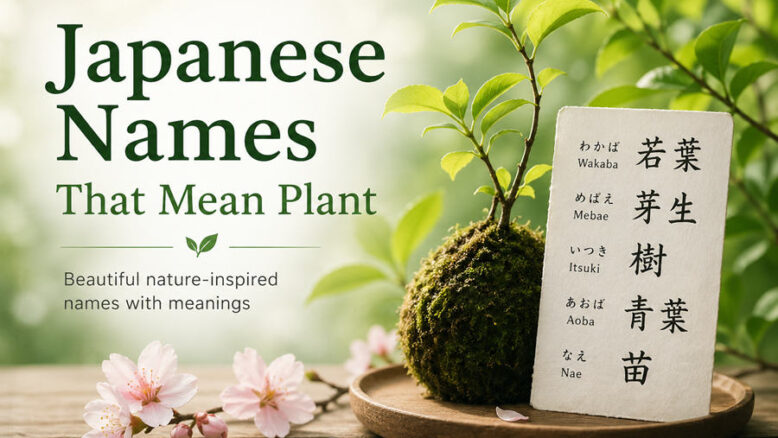
Plant-inspired Japanese names can feel fresh, gentle, and full of life. They may bring to mind young sprouts, green leaves, seedlings, trees, grass, or the quiet strength of something growing over time.
In Japanese, a name’s meaning depends on its kanji. The same sound can be written in different ways, and each spelling can change the meaning. That is why this guide includes the kana reading and kanji writing for each name, along with a careful explanation of where the plant meaning comes from.
What “Plant” Can Mean in Japanese Names
The most direct kanji for “plant” is 植, which can mean “plant” or “to plant.” However, this kanji is more common in words and surnames than in soft given names. Many Japanese names with a plant feeling use kanji connected to sprouts, leaves, greens, seedlings, trees, or natural growth.
Helpful plant-related kanji include:
- 植 — plant, to plant
- 芽 — bud, sprout
- 葉 — leaf
- 菜 — greens, vegetables, leafy plants
- 苗 — seedling, sapling
- 草 — grass, small green plants
- 樹 — tree
- 茂 — lush growth, to grow thickly
Some names in this article have a direct plant meaning. Others are plant-related through leaves, trees, greenery, or growth. This difference matters because not every nature name literally means “plant,” even when it has a beautiful botanical image.
Japanese Girl Names That Mean Plant or Sprout
Many Japanese girl names connected to plants use kanji for sprouts, leaves, greens, and new life. These names often feel soft, bright, and hopeful.
Mei — めい — 芽衣 / 芽依
Mei can be written with 芽, meaning “sprout” or “bud.” In 芽衣, the second kanji 衣 means “clothing” or “garment.” In 芽依, 依 can suggest reliance, connection, or depending on someone.
The plant meaning in Mei comes from 芽. This gives the name a gentle image of young growth, fresh beginnings, and quiet potential.
Mebae — めばえ — 芽生
Mebae is written 芽生. The kanji 芽 means “sprout” or “bud,” while 生 means “life,” “birth,” or “to live.”
This name is closely tied to the idea of new growth. It has a fresh, hopeful feeling, like the first green sign of life appearing from the soil.
Wakaba — わかば — 若葉
Wakaba is written 若葉. The kanji 若 means “young,” and 葉 means “leaf.” Together, the name means “young leaves.”
Wakaba is one of the clearest plant-related names in this list. It brings to mind spring leaves, fresh green color, and a gentle sense of renewal.
Futaba — ふたば — 双葉 / 二葉
Futaba can be written 双葉 or 二葉. Both forms suggest “two leaves” or “paired leaves.” In plant imagery, Futaba can refer to the first small leaves of a young sprout.
This name feels cheerful and youthful. It is a lovely choice for readers who want a name connected to beginnings, growth, and fresh life.
Nana — なな — 菜々 / 菜奈
Nana becomes plant-related when written with 菜, as in 菜々 or 菜奈. The kanji 菜 means “greens,” “vegetables,” or leafy plant life.
In 菜々, the mark 々 repeats the previous kanji. In 菜奈, 奈 is often used for sound. The plant feeling comes mainly from 菜, giving Nana a soft and fresh image.
Nanaha — ななは — 菜葉 / 七葉
Nanaha can be written as 菜葉 or 七葉. In 菜葉, the name combines 菜, meaning greens or leafy plants, with 葉, meaning leaf. In 七葉, it can mean “seven leaves.”
Nanaha has a delicate botanical feeling. It may feel more modern or creative than some familiar names, but its plant imagery is clear and easy to understand.
Wakana — わかな — 若菜
Wakana is written 若菜. The kanji 若 means “young,” and 菜 means “greens” or leafy vegetables. Together, the name can be understood as “young greens.”
Wakana feels natural, gentle, and springlike. It is a beautiful option for anyone who wants a name connected to fresh plants without sounding too unusual.
Japanese Boy Names That Mean Plant, Tree, or Growth
Plant-related boy names in Japanese often lean toward trees, strength, and steady growth. These names may suggest deep roots, upright character, endurance, or natural vitality.
Itsuki — いつき — 樹
Itsuki can be written with the single kanji 樹, meaning “tree.” This makes it one of the clearest plant-related names for boys.
The image behind Itsuki is strong and rooted. A tree grows slowly, stands tall, and endures through the seasons, so the name can suggest patience, strength, and quiet resilience.
Naoki — なおき — 直樹 / 尚樹
Naoki is often written with 樹, meaning “tree.” In 直樹, 直 can mean “straight” or “honest,” while 樹 means tree. In 尚樹, 尚 can suggest esteem or value.
Naoki does not mean “plant” in a general sense, but the tree kanji gives it a strong botanical connection. It feels steady, sincere, and grounded.
Haruki — はるき — 春樹 / 陽樹
Haruki can be written in several ways. Two plant-related forms are 春樹 and 陽樹. In 春樹, 春 means “spring” and 樹 means “tree.” In 陽樹, 陽 suggests sunlight or brightness, while 樹 means tree.
Depending on the kanji, Haruki may suggest a spring tree, a bright tree, or a warm nature image. It feels lively, literary, and full of gentle energy.
Shigeru — しげる — 茂
Shigeru can be written with 茂, a kanji connected to lush growth. It can describe plants growing thickly, richly, or abundantly.
This name has a traditional feeling. Its plant meaning is not about one small leaf or sprout, but about fullness, vitality, and strong natural growth.
Sota — そうた — 草太
Sota may be written as 草太. The kanji 草 means “grass,” while 太 can suggest greatness, thickness, or largeness depending on context.
This spelling gives Sota a green, earthy image. Because 草 is a direct word for grass, this version may feel more unusual than tree-based names, but it fits well in a plant-themed name list or for a nature-inspired character.
Gender-Neutral Japanese Plant Names
Some Japanese plant names feel flexible enough for boys, girls, or fictional characters. These names often focus on leaves, greenery, and natural scenery rather than strongly gendered meanings.
Aoba — あおば — 青葉
Aoba is written 青葉. The kanji 青 can mean blue or green depending on context, and 葉 means leaf. Together, the name can mean “green leaves” or “fresh leaves.”
Aoba feels calm, open, and refreshing. It brings to mind new leaves, clear air, and soft green scenery.
Konoha — このは — 木葉 / この葉
Konoha can be written as 木葉, combining 木, meaning “tree,” with 葉, meaning “leaf.” It may also be written in a softer mixed style such as この葉.
The meaning is close to “tree leaf” or simply “leaf,” depending on the writing. Konoha has a gentle, storylike sound and works especially well for character names, nature writing, or poetic naming.
Hazuki — はづき — 葉月
Hazuki is written 葉月. The kanji 葉 means “leaf,” and 月 means “moon” or “month.”
Hazuki is traditionally associated with the old name for the eighth month. As a personal name, it also carries a graceful leaf-and-moon image. It is not a direct “plant” name, but it belongs in a botanical name list because of 葉.
Chigusa — ちぐさ — 千草
Chigusa is written 千草. The kanji 千 means “thousand,” and 草 means “grass” or small green plants.
The name can suggest “a thousand grasses” or many kinds of greenery. It has a poetic, slightly old-fashioned charm and a soft nature feeling.
Midori — みどり — 緑
Midori is written 緑 and means “green.” It does not literally mean plant, leaf, or sprout, but it strongly suggests forests, gardens, leaves, and living nature.
Midori is plant-related through color and imagery. It feels simple, clear, and deeply connected to the natural world.
Japanese Names Connected to Seedlings and New Growth
Seedling names are especially meaningful because they suggest beginnings, patience, care, and future growth. These names can feel tender, hopeful, and quietly strong.
Nae — なえ — 苗
Nae can be written with 苗, meaning “seedling” or “sapling.” This is one of the most direct names for young plant growth.
The image is small but powerful: a young plant just beginning its life. Nae feels simple, soft, and closely connected to growth from the ground up.
Minae — みなえ — 美苗
Minae can be written 美苗. The kanji 美 means “beauty,” and 苗 means “seedling” or “sapling.”
A careful meaning would be “beautiful seedling” or “beauty and young growth.” Minae has a graceful, feminine feeling and a clear botanical connection.
Kanae — かなえ — 香苗 / 佳苗
Kanae can be written with 苗 in forms such as 香苗 or 佳苗. In these spellings, 苗 means “seedling.” The kanji 香 means “fragrance,” while 佳 can mean “excellent” or “beautiful.”
Kanae has many possible kanji spellings, so it is only plant-related when written with 苗. With these forms, the name can suggest fragrance, beauty, and young growth.
Mebuki — めぶき — 芽吹
Mebuki can be written 芽吹. The name is connected to budding or sprouting, with 芽 meaning “sprout” or “bud.”
Mebuki feels vivid and seasonal, like buds opening in spring. It is especially appealing for nature-themed characters or names connected to renewal.
Wakanae — わかなえ — 若苗
Wakanae can be written 若苗. The kanji 若 means “young,” and 苗 means “seedling.” Together, the name suggests “young seedling.”
This name has a clear plant meaning and a tender, hopeful image. It may feel more poetic or creative than some everyday names, but it fits beautifully in a list of seedling-inspired Japanese names.
Japanese Last Names Related to Plants
Plant-related Japanese surnames are useful for readers looking for character names, family names, or nature-inspired combinations. Many surnames refer to planted land, fields, grasslands, woods, or forests.
Uemura — うえむら — 植村
Uemura can be written 植村. The kanji 植 means “plant” or “to plant,” and 村 means “village.”
A simple interpretation is “village connected with planting.” It has a grounded, rural feeling and a clear link to cultivated land.
Ueda — うえだ — 植田 / 上田
Ueda has more than one spelling. When written 植田, it combines 植, meaning “plant,” with 田, meaning “rice field.” This gives it a strong agricultural meaning.
Ueda can also be written 上田, meaning “upper rice field.” That form is land-related but not specifically plant-related in the same way. The kanji makes the difference.
Kusano — くさの — 草野
Kusano is written 草野. The kanji 草 means “grass,” and 野 means “field” or “plain.”
This surname suggests grassy fields or open green land. It has a clear connection to plants and outdoor scenery.
Hayashi — はやし — 林
Hayashi is written 林 and means “woods” or “grove.”
Although it does not mean a small plant or sprout, it belongs to the wider world of trees and greenery. Hayashi is a familiar Japanese surname with a calm, wooded image.
Morita — もりた — 森田
Morita is commonly written 森田. The kanji 森 means “forest,” and 田 means “rice field.”
This surname combines two strong land-based images: forest and field. It is not a direct plant name, but it carries a natural connection to trees, growth, and cultivated land.
Beautiful Plant-Related Kanji for Names
Understanding the kanji behind these names makes their meanings clearer. A Japanese name may sound the same in romaji, but the kanji determines whether it has a plant meaning.
芽 — Sprout, Bud, Beginning
芽 is one of the most useful kanji for plant-inspired names. It suggests new beginnings, small growth, and fresh potential. Names with 芽 often feel youthful and hopeful.
葉 — Leaf
葉 means “leaf.” It appears in names such as Wakaba, Aoba, Hazuki, Konoha, and Nanaha. This kanji gives names a green, graceful, natural image.
菜 — Greens, Vegetables, Leafy Plants
菜 means greens or vegetables. In names, it often brings a soft plant-life feeling and appears in many gentle, bright-sounding names.
苗 — Seedling, Sapling
苗 means “seedling” or “sapling.” It gives a name a clear image of young plant growth and future potential.
樹 — Tree
樹 means “tree.” It often appears in strong nature names such as Itsuki, Naoki, and Haruki. It can suggest roots, endurance, and steady growth.
草 — Grass, Small Plants
草 means “grass.” It has a direct link to green plant life, though it may feel more unusual in given names than kanji like 葉, 菜, or 樹.
若 — Young, Fresh
若 means “young.” It is not a plant kanji by itself, but when paired with 葉, 菜, or 苗, it creates names connected to young leaves, young greens, or young seedlings.
緑 — Green
緑 means “green.” It is not literally a plant kanji, but it strongly suggests leaves, gardens, forests, and living nature.
Names That Are Plant-Related but Not Literal “Plant” Names
Some Japanese names in this theme do not literally mean “plant.” Instead, they use related images such as leaves, trees, greenery, spring, or color.
For example, Midori means “green,” not plant. Still, the color green naturally brings to mind leaves, forests, gardens, and fresh growth. Haruki may include the kanji for tree, but its full meaning depends on the first kanji. Hazuki includes the kanji for leaf and moon or month, so it has a leafy image rather than a direct “plant” meaning.
This does not make these names wrong for a plant-themed list. It simply means they should be explained with care. The best way to understand a Japanese plant name is to look at the exact kanji, not only the romaji spelling.
Final Thoughts
Japanese names that mean plant can suggest many kinds of natural beauty. Some names point to tiny sprouts and young leaves. Others bring to mind trees, seedlings, grass, forests, green fields, or rich growth.
For the clearest plant meanings, look for kanji such as 芽, 葉, 苗, 菜, 草, 植, and 樹. For a softer nature feeling, names connected to green color, spring, sunlight, or forests can also carry beautiful botanical imagery.
The most meaningful choice is one where the sound, Japanese writing, and image all fit together. A plant-inspired Japanese name can express growth, patience, renewal, and quiet natural strength.