Sky-themed Japanese names have a calm, timeless appeal. They can feel bright, open, peaceful, or quietly poetic, depending on the kanji behind them. Some names connect to the sky directly through characters like 空, while others draw on related ideas such as heaven, blue, light, clouds, stars, or the moon. In this guide, you’ll find Japanese names that mean sky or carry sky-inspired symbolism, along with simple explanations to help you understand the meanings, mood, and kanji choices behind them.
What “Sky” Can Mean in Japanese Names
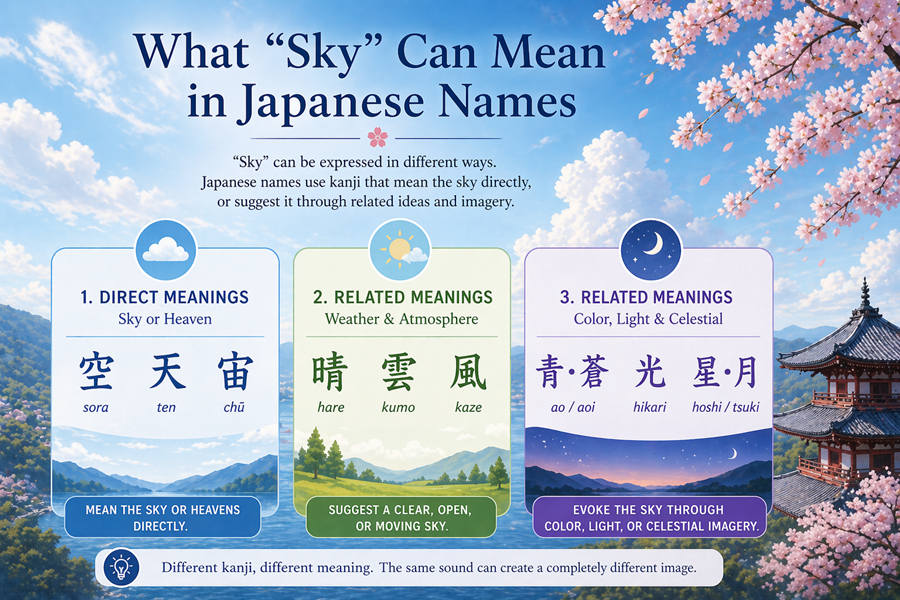
In Japanese naming, “sky” is broader than it first appears. The most direct kanji is 空, which points to the sky itself and also carries a feeling of openness and spaciousness. It is clean, simple, and modern, which is one reason it appears so often in sky-themed naming.
Another important kanji is 天. This one often means heaven or the heavens, but it can also point to the sky above. Compared with 空, it usually feels more elevated, luminous, or celestial. If 空 feels open and airy, 天 often feels higher and grander.
Then there are names that do not mean sky literally, but still belong to the same world of imagery. A name built with 晴 may suggest a clear sky. A name using 青 or 蒼 may lean into blue-sky color. Names built around 光, 星, or 月 move into the brighter or more celestial side of the theme. In other words, some names say “sky” directly, while others paint the sky around it.
That distinction matters throughout this article. Some of the names below have a direct sky meaning. Others are better understood as sky-inspired. Both kinds can be beautiful, but being clear about the difference makes the article more useful and the name choices more honest.
Common Japanese Kanji Associated With Sky-Themed Names
A strong sky-themed article needs a solid kanji foundation. These are the characters readers are most likely to see in names connected to the sky, heavens, weather, color, and celestial imagery.
空
空 is the clearest direct sky kanji in this theme. It gives names a wide, open, airy feeling and often reads as simple and modern.
天
天 usually points to heaven, the heavens, or the sky above. It tends to feel more elevated or celestial than 空.
宙
宙 suggests the open sky or a broad expanse of space. In names, it can feel slightly more expansive or imaginative than 空.
青
青 means blue. In sky-themed names, it often brings in the image of a bright blue sky rather than naming the sky directly.
蒼
蒼 is another blue-related kanji, often felt as deeper, cooler, or more poetic than 青. It is useful in names that want a calm, refined tone.
晴
晴 points to clear weather and bright skies. It is not the same as “sky,” but it is one of the most natural kanji for names that feel sunny, fresh, and open.
雲 and 風
雲 means cloud and 風 means wind. Neither means sky by itself, but both create strong sky-adjacent imagery through atmosphere and movement.
光, 星, and 月
光 brings in light, 星 brings in stars, and 月 brings in the moon. These characters expand the theme from the daytime sky into brightness, night sky, and celestial symbolism.
Together, these kanji show why sky names can feel so varied. Some are direct and simple. Others are poetic, weather-based, or celestial. That variety gives readers more room to choose a meaning that fits the exact mood they want.
Japanese Names That Mean Sky Directly
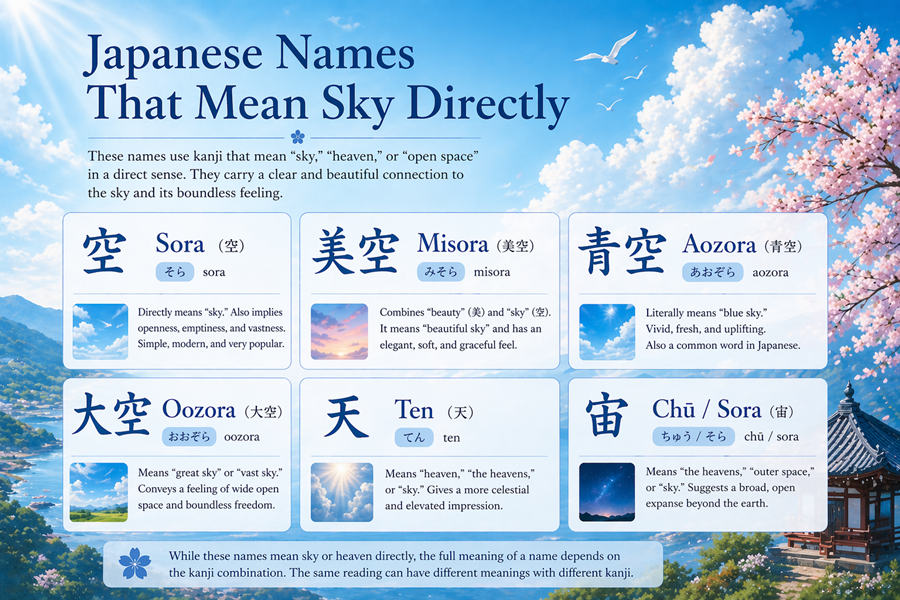
If you want the clearest possible connection, start with names that use sky or heavens kanji directly. These are the strongest choices for readers who want the meaning to be obvious rather than symbolic.
Sora (空)
Sora is the standout name in this entire theme. Written as 空, it directly means sky and carries a feeling that is open, bright, and modern. It is simple, memorable, and still one of the most natural choices for anyone drawn to this meaning.
Misora (美空)
Misora combines beauty with sky, creating the image of a beautiful sky. It feels softer and more elegant than plain Sora, while keeping the sky meaning easy to understand.
Aozora (青空)
Aozora means blue sky. It is more vivid and image-driven than many other options, which gives it a bright and uplifting feel. It reads more poetic and expressive than understated names like Sora, but that is part of its charm.
Oozora (大空)
Oozora means great sky or vast sky. It adds scale and strength to the image, making it a strong choice for readers who want something expansive and bold.
Names using 天
Names built with 天 often lean more toward heaven or the heavens than everyday sky. Even so, they belong in this direct group because the upward and celestial meaning is still clear. These names often feel a little more lofty or spiritual than names based on 空.
Names using 宙
Names built with 宙 can also work as direct sky-related choices, especially when the goal is a broader sense of open space. Compared with 空, they tend to feel slightly more expansive or imaginative.
This direct group is useful because it sets the center of the theme. From here, the article widens into names that feel like the sky through light, weather, blue color, wind, or the night sky.
Japanese Girl Names That Mean Sky or Feel Sky-Inspired
Girl names in this theme often lean graceful, bright, or airy. Some use 空 directly, while others bring in clear weather, beauty, or soft celestial imagery.
Misora (美空)
Misora is one of the strongest choices in this section because it feels both clear and elegant. The sky meaning stays visible, but the added beauty gives it a softer finish.
Haruka with 晴 kanji
When Haruka is written with 晴, it shifts into clear-weather and bright-sky territory. It is not a literal sky name, but it carries a fresh, open atmosphere that fits the theme beautifully.
Miharu (美晴)
Miharu written as 美晴 blends beauty with clear weather. It feels light, polished, and cheerful, making it a strong sky-inspired choice without being too literal.
Chiharu with 晴
Chiharu can also fit the theme when written with 晴. It has a gentler sky connection and works well for readers who prefer brightness and openness over an exact sky translation.
Sorane (空音)
Sorane combines sky with sound, creating a softer and more lyrical feeling. It is less straightforward than Sora, but it brings a lovely airy quality to the page.
Mizuki (美月)
Although Mizuki is better understood through moon imagery than sky in the narrow sense, it still belongs naturally in a sky-themed guide. Written as 美月, it feels gentle, luminous, and calm.
What ties these names together is not that they all translate to sky word for word. It is that they move in the same emotional space: bright, open, graceful, and a little expansive.
Japanese Boy Names That Mean Sky or Feel Sky-Inspired
Boy names in this theme often lean open, high-reaching, or energetic. Alongside direct sky names, there are many strong options that use clear-weather, blue, or soaring imagery.
Sora (空)
Sora works just as well here because of its clean and spacious feel. It is one of the rare names that stays simple while still carrying a strong image.
Oozora (大空)
Oozora brings in a bigger, more forceful version of the sky image. It feels broad, strong, and full of movement.
Haruto (晴翔)
When written as 晴翔, Haruto fits this theme especially well. 晴 points to clear skies, while 翔 adds the image of soaring or flying. The result feels hopeful and full of upward motion.
Haruki with 晴-based writing
Haruki can also enter the theme when written with kanji that bring in brightness or clear weather. This version feels less like a direct sky word and more like a bright-sky atmosphere.
Names using 翔
Even when a name does not contain a sky kanji, 翔 can create a strong sky-related feeling through motion in open air. It is especially useful in names that aim for freedom, ambition, or lift.
Names using 蒼
Names built around 蒼 often feel cooler and more poetic. They work well for readers who want a deep-blue-sky feeling rather than a plain literal reading.
These names show that the sky theme can be strong without being narrow. Some say sky directly. Others suggest it through height, weather, or the feeling of flight.
Unisex Japanese Names Connected to the Sky
Sky-themed names often work especially well as unisex choices because the imagery itself is broad and not strongly gendered. Openness, blue color, light, and clear weather can all feel balanced across styles.
Sora (空)
Sora is the clearest all-around option here. It is simple, direct, and flexible, which makes it one of the safest and strongest sky names in general.
Aozora (青空)
Aozora feels brighter and more vivid than Sora, but it still carries an appealing openness that can suit different styles.
Amane (天音)
Amane is a softer, more lyrical option. It is better understood as heavenly or elevated rather than as a direct sky translation, but it still sits comfortably in this wider theme.
Names using 宙
Names built with 宙 can feel naturally balanced because they carry open-sky or broad-space imagery without sounding overly delicate or overly forceful.
Names using 晴
Clear-weather names can also make excellent unisex choices because their feeling is bright and fresh rather than narrowly coded in one direction.
If you want a sky name that feels flexible and modern, this part of the theme is especially rich.
Japanese Names Inspired by Blue Sky, Clear Weather, and Light
This is where the article moves from direct meaning into strong related imagery. Many readers searching for sky names are really drawn to brightness, blue color, and the feeling of a clear day.
Aozora (青空)
Aozora is still the clearest choice in this group because it gives you blue and sky together in one name.
Names using 蒼空 or similar blue-sky pairings
Combinations that pair blue-related kanji with sky can feel more refined and poetic than Aozora. They often trade brightness for depth.
Haruka, Miharu, and Chiharu with 晴
These names belong here because 晴 points to clear weather rather than sky itself. They work well for readers who want freshness, light, and openness without choosing a direct sky word.
Hikaru and Hikari (光)
Names built with 光 bring in the luminous side of the sky theme. They suggest radiance, sunlight, and brightness, which makes them a natural fit in this section.
Names using 碧
碧 can also support a blue-sky mood because it carries a beautiful blue-green tone and appears in words associated with vivid blue color. It is a good option for readers who want something a little more uncommon and visual.
This category is useful because it shows that a sky-themed name does not always need to say sky outright. Sometimes it is the light, the color, or the weather that makes the name feel right.
Japanese Names Inspired by Clouds, Wind, and Air
Cloud and wind names bring a softer, more atmospheric side to the sky theme. These are especially appealing for readers who want nature-based imagery that feels poetic rather than literal.
Fuuka (風香)
Fuuka combines wind with fragrance, giving it a light and graceful feel. It does not mean sky, but it fits beautifully beside it.
Kazane or other 風-based names
Names built with 風 often carry motion, freshness, and open-air energy. They can feel gentle or lively depending on the second kanji.
Yakumo (八雲)
Yakumo brings in layered cloud imagery and has a more classical, literary tone than many modern sky-inspired names.
Mikumo (美雲)
Mikumo blends beauty with cloud, creating a dreamy and visually soft impression.
These names sit just beside the literal sky category, but that is exactly why they work so well. They let you choose atmosphere instead of a direct statement.
Japanese Names Inspired by the Night Sky, Stars, and Moon
The sky theme does not end with daylight. Night-sky names offer a quieter and often more romantic side of the same idea.
Tsukiko (月子)
Tsukiko is a classic moon-based choice with a graceful, traditional feel. It leans more toward moonlight than open sky, but it belongs naturally in this wider theme.
Mizuki or Mitsuki (美月)
Written as 美月, this name carries the image of a beautiful moon. It feels soft, elegant, and luminous.
Names using 星
Star-based names move the theme into a more celestial direction. They can feel dreamy, bright, and a little magical without becoming too heavy.
Names combining star and moon imagery
When stars and moonlight appear together, the effect is often poetic and atmospheric. These names work especially well for readers who want a night-sky mood rather than a daytime one.
This part of the theme appeals to readers who want something quieter than a bright blue-sky name. It is less about openness and more about stillness, glow, and beauty after dark.
Rare and Unique Japanese Names Related to the Sky
Some readers want a sky-themed name that feels a little less expected. Rare choices can be beautiful, but they work best when they still feel readable and natural.
Sorane (空音)
Sorane stands out because it keeps the sky meaning visible while adding a softer, musical tone.
Amane (天音)
Amane feels elevated and lyrical. It is not the most literal choice, but it carries a strong heavenly atmosphere.
Yakumo (八雲)
Yakumo feels more literary and distinctive than many brighter, more modern sky names.
Names using 宙
宙-based names are often appealing for readers who want something expansive, imaginative, and slightly uncommon.
Poetic blue-sky pairings
Combinations built from blue, sky, light, or clear-weather kanji can feel elegant and original, especially when the balance between beauty and readability stays intact.
The best rare name is usually not the most complicated one. It is the one that feels memorable without losing clarity.
Modern vs Traditional Japanese Sky Names
One of the easiest ways to narrow your options is to decide whether you want the name to feel more modern or more traditional.
Traditional sky-related names
Traditional-leaning names often suggest the sky indirectly through clear weather, moonlight, light, or heaven. They usually feel gentler and more established, with familiar rhythms and softer symbolism.
Modern sky-related names
Modern names are more likely to use direct sky imagery such as Sora, Aozora, or bold sky pairings. They often feel fresher, more visual, and more immediately expressive.
Which style is better?
Neither style is better on its own. A traditional sky name may feel timeless and balanced. A modern sky name may feel open, bright, and striking. The better choice is the one that matches the tone you want.
How Meaning Changes With Kanji Choice
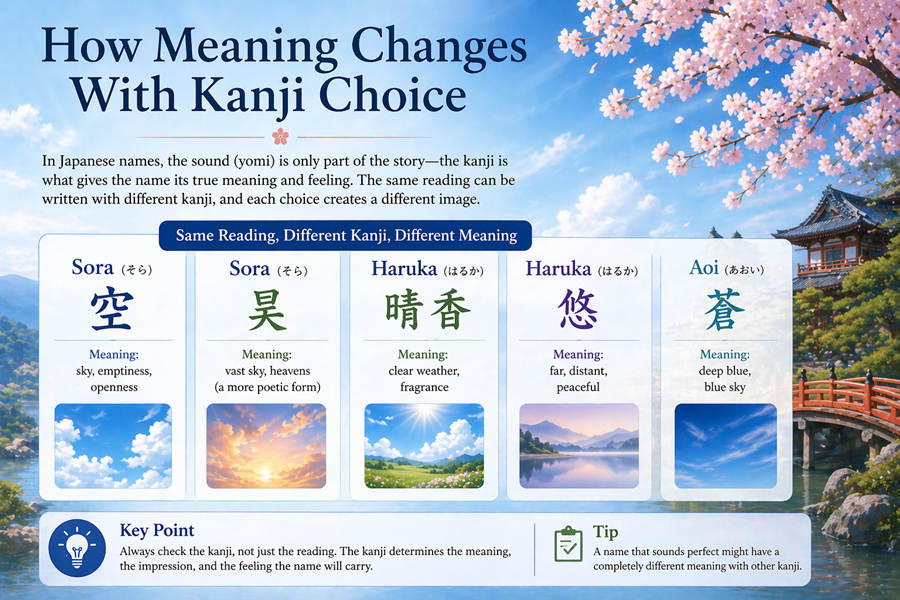
This is one of the most important parts of the article. In Japanese names, the sound is only part of the story. The kanji is what gives the name its actual meaning.
Two names can be pronounced the same way and still carry very different images depending on how they are written. A name may feel sky-related with one kanji set and lose that connection entirely with another. That is why it is not enough to say that a sound “means sky” without checking its written form.
For example, a name built with 空 has a direct sky meaning. A name using 晴 may suggest clear skies instead. A name using 蒼 may bring in blue-sky color. All of these can belong in the same theme, but they are not identical. One is literal, one is weather-based, and one is color-based.
This is not a problem. It is actually part of what makes Japanese names so rich. You can choose a name that says sky clearly, or one that reaches the same emotional space more gently. The important part is to know which kind you are choosing.
How to Choose a Japanese Name That Means Sky
Choosing a sky-themed Japanese name becomes much easier when you think about meaning in layers rather than in one single box.
Decide how direct you want the meaning to be
If you want the clearest possible meaning, focus on 空, 天, or 宙. If you prefer something softer, names built with 晴, 青, 蒼, 光, 星, or 月 may be a better fit.
Pick the mood first
Do you want the name to feel bright, calm, dreamy, strong, airy, or celestial? The sky theme is broad enough to hold all of those moods, but not every name can do all of them at once.
Check the kanji carefully
This is the step that matters most. A beautiful sound is not enough on its own. The written form is what gives the name its meaning, tone, and image.
Balance beauty with readability
Rare combinations can be beautiful, but they can also feel harder to read or more stylized. Many of the strongest names are the ones that stay clear while still feeling special.
Think about the purpose
A baby name, character name, pen name, and creative project name do not all need the same kind of balance. Some can carry more drama or poetry than others.
In the end, the best name is the one where sound, meaning, and written form all feel right together.
Beautiful Japanese Names With Sky Symbolism: Quick Picks
If you want a shorter list of especially strong options, these are some of the best picks from the article.
Bright and clear
Sora, Aozora, and Misora are strong choices for readers who want the sky meaning to feel obvious and uplifting.
Soft and graceful
Haruka with 晴, Miharu, and Amane work well for readers who want sky atmosphere without a direct sky word.
Dreamy and celestial
Mizuki, Tsukiko, and star- or moon-based names bring in the quieter side of the sky theme.
Bold and expansive
Oozora and strong 宙-based names are good choices when you want the image to feel broad and memorable.
Final Thoughts
Japanese names that mean sky can be direct, symbolic, bright, soft, or deeply poetic. Some point straight to the sky through kanji like 空. Others reach the same feeling through heaven, clear weather, blue color, light, clouds, stars, or the moon. That wide range is exactly what makes the theme so appealing.
For some readers, the right choice will be a clear and simple name like Sora. For others, a name such as Misora, Amane, Haruka, or Mizuki may feel more personal because it expresses the sky through mood and imagery rather than through a single literal word.
What matters most is not choosing the most dramatic option. It is choosing the name whose sound, kanji, and feeling all match the image you want. When that balance is right, a sky-themed Japanese name can feel timeless, peaceful, and full of possibility.
That is the lasting beauty of this theme. The sky can feel open and free, calm and bright, or quiet and dreamlike. Japanese names capture all of those shades beautifully.